Your digging level
Description
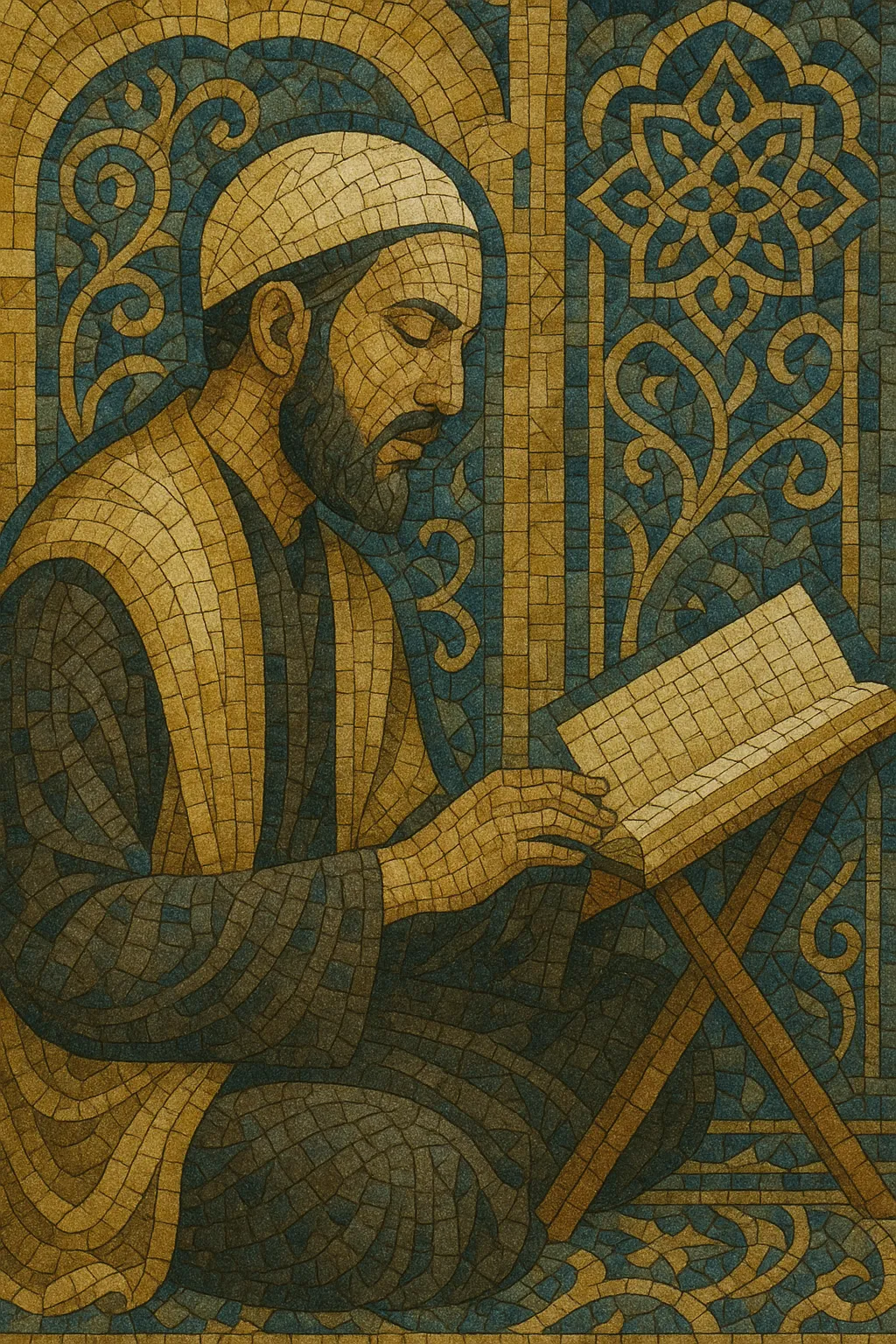
Qur'an recitation (tilāwa/qirāʾa) is the highly disciplined, melodically articulated oral rendering of the Islamic scripture in Classical Arabic. Practitioners do not regard it as "music" in a secular entertainment sense; rather, it is an act of worship governed by tajwīd rules that ensure perfect pronunciation, pacing, and clarity of meaning.
Despite that distinction, many listeners perceive its sonic features—nuanced phrasing, modal color, and controlled vibrato—as musical. Reciters often shape their delivery with melodic contours related to the Arabic maqām system while maintaining a free, speech-like rhythm. Performances range from measured murattal styles for study and daily devotion to more florid mujawwad styles in public or ceremonial contexts. The result is an emotionally expressive but strictly text-centered art of sacred vocal recitation.
History
The Qur'an began to be revealed to the Prophet Muhammad in 610 CE in Mecca (present-day Saudi Arabia). From the outset, the text was taught, transmitted, and preserved through oral recitation. Early Muslims emphasized precise articulation and memorization, establishing the foundations of tajwīd (rules of recitation) to safeguard correct pronunciation, pacing, and meanings.
By the 10th century, Abu Bakr Ibn Mujāhid designated seven canonical qirāʾāt (reading traditions), each with accepted chains of transmission (riwāyāt). Later scholars expanded and clarified these systems. Foundational pedagogical texts—such as Al-Shāṭibiyya (12th c.) and the works of Ibn al-Jazarī (d. 1429)—codified tajwīd principles (e.g., makhārij al-ḥurūf, madd, idghām, ikhfāʾ, qalqalah) and standardized teaching methods across the Islamic world.
As Islam spread, distinct recitational aesthetics developed while remaining within canonical rules, e.g., Egyptian mujawwad and murattal approaches, Maghrebi phrasing, and varied riwāyāt such as Ḥafṣ ʿan ʿĀṣim (widely used), Warsh ʿan Nāfiʿ (North/West Africa), and Qālūn ʿan Nāfiʿ. The 20th century’s radio and recording industries—especially Egyptian radio—amplified the global reach of celebrated qurrāʾ like Mahmoud Khalil Al-Husary, Muhammad Siddiq al-Minshawi, and Abdul Basit Abdus Samad.
Digital media, satellite TV, and streaming platforms have further globalized Qur'anic recitation. International competitions, institute certifications (ijazah), and online pedagogy have broadened access while preserving rigorous standards. Modern reciters continue to explore expressive modal color within tajwīd, using maqām pathways carefully so that beauty serves comprehension and reverence for the text.