Your digging level
Description
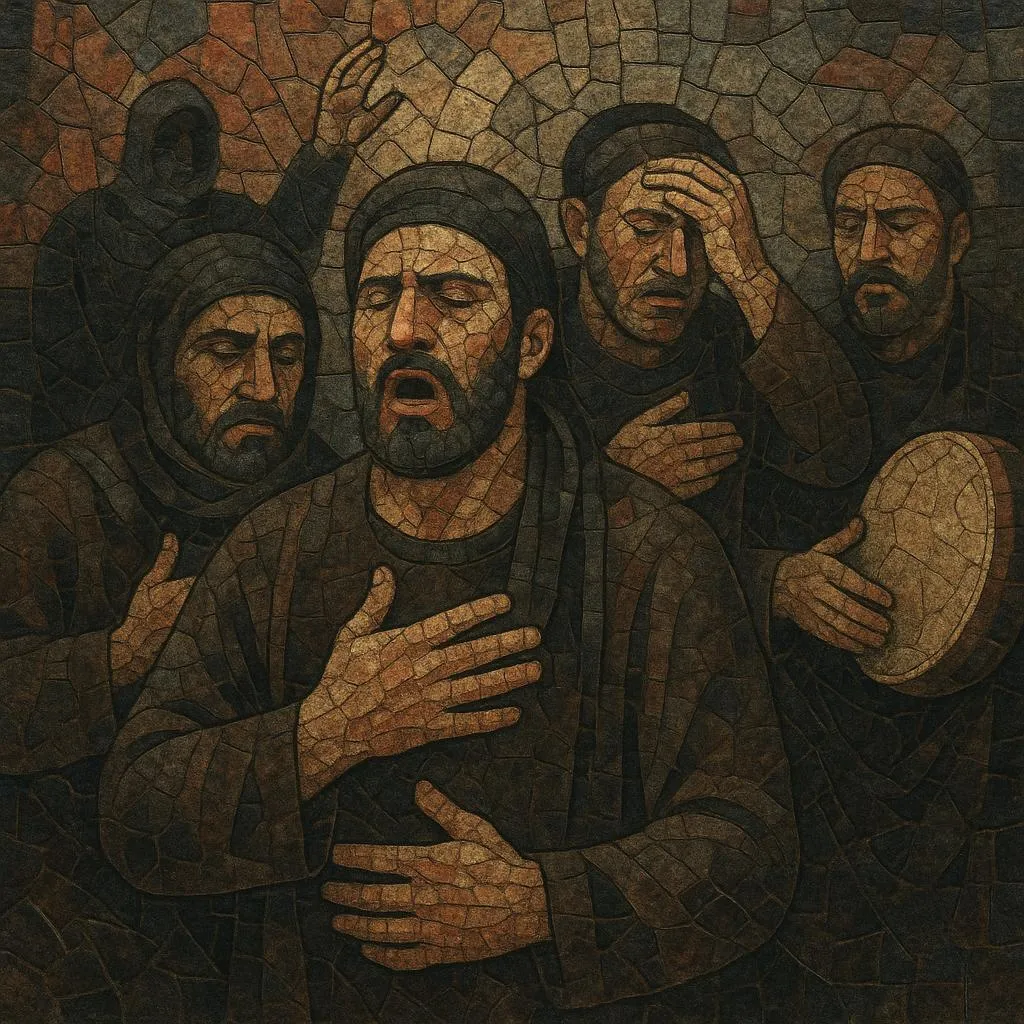
Latmiya (Arabic: لطميات) is a Shia Islamic lamentation genre centered on rhythmic chest-beating (latm) and collective mourning chants that commemorate the martyrdom of Imam Husayn ibn Ali and the events of Karbala.
Typically led by a reciter (rādūd) with call-and-response refrains, latmiyāt are performed in mourning gatherings, processions, and during Muharram and Arbaʿeen. The melodic language draws on Arabic maqām traditions (often Ḥijāz, Nahāwand, Kurd, or Bayāt), while the rhythm is set by the beat of hands on the chest, producing a powerful, communal pulse. Many performances are fully a cappella; in some contemporary, recorded contexts, minimal percussion (e.g., daf/frame drum) or light keyboards and strings are added.
Texts are devotional and elegiac—lamenting the tragedy of Karbala, praising the Ahl al-Bayt, invoking moral lessons of sacrifice, justice, and steadfastness, and often culminating in collective acclamations (e.g., labbayka yā Ḥusayn). Although closely related to Persian nohe/maddahi and South Asian nauha traditions, “latmiya” refers most specifically to the Arabic-chant, chest-beating form prevalent in Iraq and the Gulf.
History
The roots of latmiya lie in the immediate post-Karbala period (680 CE), when the Shia community began reciting elegies for Imam Husayn and his companions. Public, organized mourning developed significantly under the Buyids in 10th‑century Baghdad, where processions and audible lamentations with rhythmic chest‑beating (latm) were encouraged.
From the 16th–17th centuries, especially under the Safavids, Shia devotional arts expanded institutionally. Poetic lament forms and ceremonials spread across Iraq, Iran, and the Gulf. The role of the rādūd (chant leader) became increasingly codified, and the musical language settled around Arabic maqām practice, while texts emphasized the didactic and spiritual resonance of Karbala.
In the 20th century, microphones, cassettes, and later satellite TV enabled rādūds to reach global Shia diasporas. Urban centers in Iraq, Bahrain, Kuwait, and the Eastern Province of Saudi Arabia nurtured distinctive local styles. While ritual norms preferred unaccompanied chanting, some recorded latmiyāt introduced restrained accompaniment and studio arrangements, always keeping textual clarity and communal rhythm central.
Social media and streaming platforms accelerated dissemination, yielding refined studio productions, multi‑part suites, and multilingual refrains. Large Muharram gatherings (e.g., in Karbala, Najaf, and Manama) showcase both traditional a cappella latmiyāt and carefully produced versions. Debates continue over instrumentation in sacred contexts, but the genre’s core—poetry-led lament in communal rhythm—remains intact.