Your digging level
Description
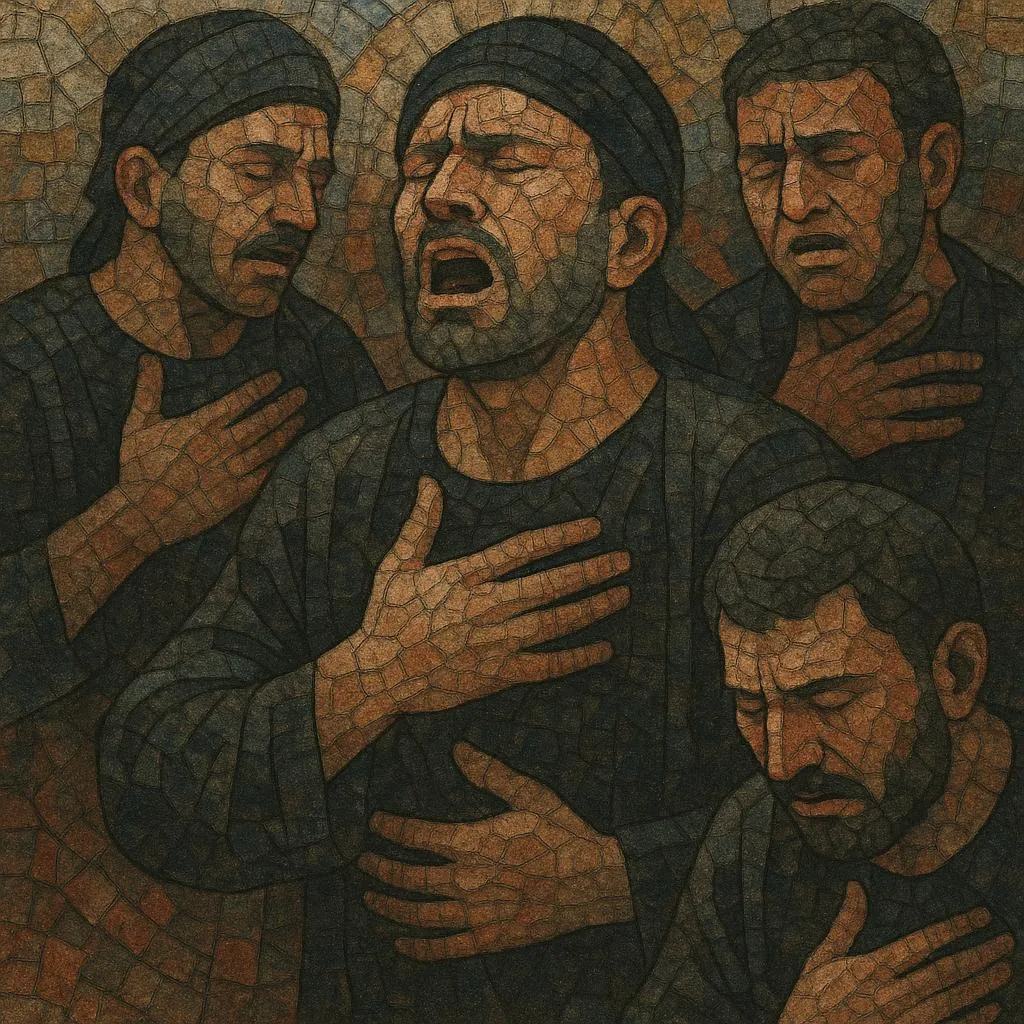
Nohay (also written nauha in Urdu and noheh in Persian) are lamentation chants within Shia Muslim devotional culture, performed to mourn the tragedy of Karbala and other sufferings of the Prophet's family (Ahl al-Bayt). They are typically intoned in group settings, especially during the month of Muharram and on Arba'een, and are closely tied to the rhythmic ritual of chest‑beating (matam).
Musically, nohay are primarily a cappella and strophic, delivered in a declamatory, chant‑like style that sits between recitation and melody. The lead reciter (nauha‑khwan) often employs call‑and‑response with a chorus, building intensity through repetition, cadential cries, and dynamic swells synchronized with communal matam. Texts are poetic and elegiac, commonly in Urdu, Persian, and Arabic, and focus on themes of martyrdom, grief, steadfastness, and moral resistance. While instruments are generally avoided in traditional contexts, the ensemble timbre is shaped by voices, handclaps, and the percussive sound of chest‑beating.
Melodic contours draw on local modal sensibilities (Arabic maqam and, in South Asia, Hindustani modal nuance), but remain relatively narrow in range to prioritize text clarity, pathos, and collective participation.
History
Nohay originate in the broader Islamic tradition of ritual lament (Arabic 'nawḥ'), which emerged after the events of Karbala in 680 CE. Early practices centered on poetry and weeping, gradually forming distinct liturgical and para‑liturgical genres across Arabic‑, Persian‑, and later South Asian communities.
In the Indian subcontinent, especially in Lucknow (Awadh), the Shia courtly milieu fostered elaborate mourning literature—most famously marsiya (long narrative elegies) by poets such as Mir Anis and Mirza Dabeer. Shorter, more rhythmically driven pieces suitable for communal lament and processions crystallized as nauha/nohay, with performance conventions of a lead reciter and responsive chorus aligned to matam patterns. By the 1800s, these features were widely recognized across Shia gatherings (majalis) and street processions (juloos).
Radio, cassettes, and later CDs (and VCDs) in Pakistan, India, and the Gulf popularized distinctive regional styles of nohay and enabled star reciters to shape repertoire and delivery. In Iran, the closely related Persian noheh intersected with revolutionary devotional song during the late 1970s–1980s. Global migration of South Asian and Middle Eastern Shia communities spread nohay practice to the UK, North America, East Africa, and Australasia, creating multilingual and transregional exchange.
Today, nohay range from strictly traditional a cappella forms (focused on text, pacing, and ritual ethos) to studio‑produced recordings with layered choruses, subtle drones, or frame‑drum textures. Social media and streaming have accelerated repertoire circulation, seasonal releases (for Muharram/Arba'een), and cross‑influence between Urdu, Persian, and Arabic scenes (including the closely related Gulf 'latmiya'). Despite modernization in recording aesthetics, live ritual contexts continue to emphasize textual fidelity, respectful delivery, and communal participation.