Your digging level
Description
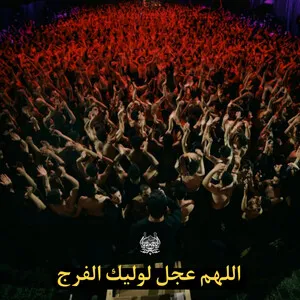
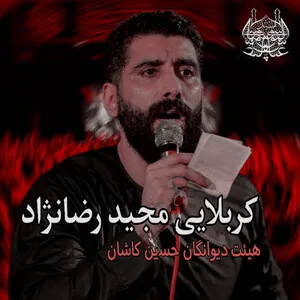
Shoor is a devotional mourning eulogy in the Shi’a tradition, marked by intense emotional fervor and a strongly rhythmic delivery. It is performed by a lead eulogist (maddah) who guides congregants through chant-like lines that swell into driving, percussive cadences designed for synchronized chest-beating.
Unlike the slower, purely lamenting modes, shoor emphasizes propulsion and collective catharsis: poetic verses about Karbala and the martyrdom of Imam Husayn are set to memorable melodic contours in Persian dastgāh/Arabic maqam flavors and anchored by insistent 2/4 or 6/8 pulses. The result is a ritual form that fuses grief with embodied, communal intensity.
History
Shoor emerges from the broader Shi’a eulogistic complex that took recognizable public form in Iran between the Safavid and Qajar eras, when lament-poetry (marsiyah/nowheh) and guilds of professional eulogists (maddahan) developed. Over the 19th–early 20th centuries, urban hey’ats (religious congregational circles) shaped a participatory sound—alternating solo leading lines with congregational refrains and measured chest-beating—that set the stage for the faster, more driving shoor style.
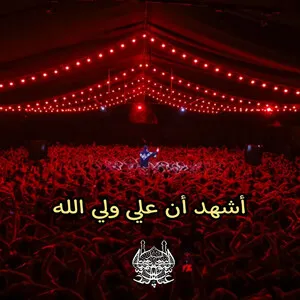
Across the 1900s, microphones, sound systems, and large indoor gatherings allowed eulogists to refine pacing and dynamics. In this context, shoor crystallized as a distinct, high-energy segment within Muharram ceremonies: after free-rhythm lament, the leader pivots into pulse-forward refrains that mobilize a tightly locked crowd response. Melodically, performers blended Persian dastgāh (notably Shur, Homayun, Segah) with maqam-derived gestures (Hijaz, Nahawand), while rhythmically emphasizing duple and lilting compound meters for coordinated chest-beating.
Following the 1970s–1980s expansion of mass religious culture in Iran, shoor spread via cassettes, satellite TV, and online platforms. Reciprocal influence with Iraqi and Gulf latmiya strengthened the quick-tempo, call-and-response profile of shoor. Today it remains a hallmark of Muharram, Arba’een, and other commemorative gatherings, with leading maddahan cultivating signature shoor pieces that balance poetic content, modal color, and crowd energy.
Modern shoor favors clear stanzaic structures, emotive hooks, and a dynamic arc from restrained grief to collective catharsis. While fundamentally vocal and percussive (the congregation itself as the primary “drum”), some settings add frame drums or subtle backing to support tempo and entrances. Digital production—reverb-rich vocals, crowd mics—now extends the ritual immediacy to recordings without losing the genre’s communal core.