Your digging level
Description
Music of Chad refers to the traditional and contemporary musical practices found across the territory of Chad, a culturally and linguistically diverse country in Central Africa.
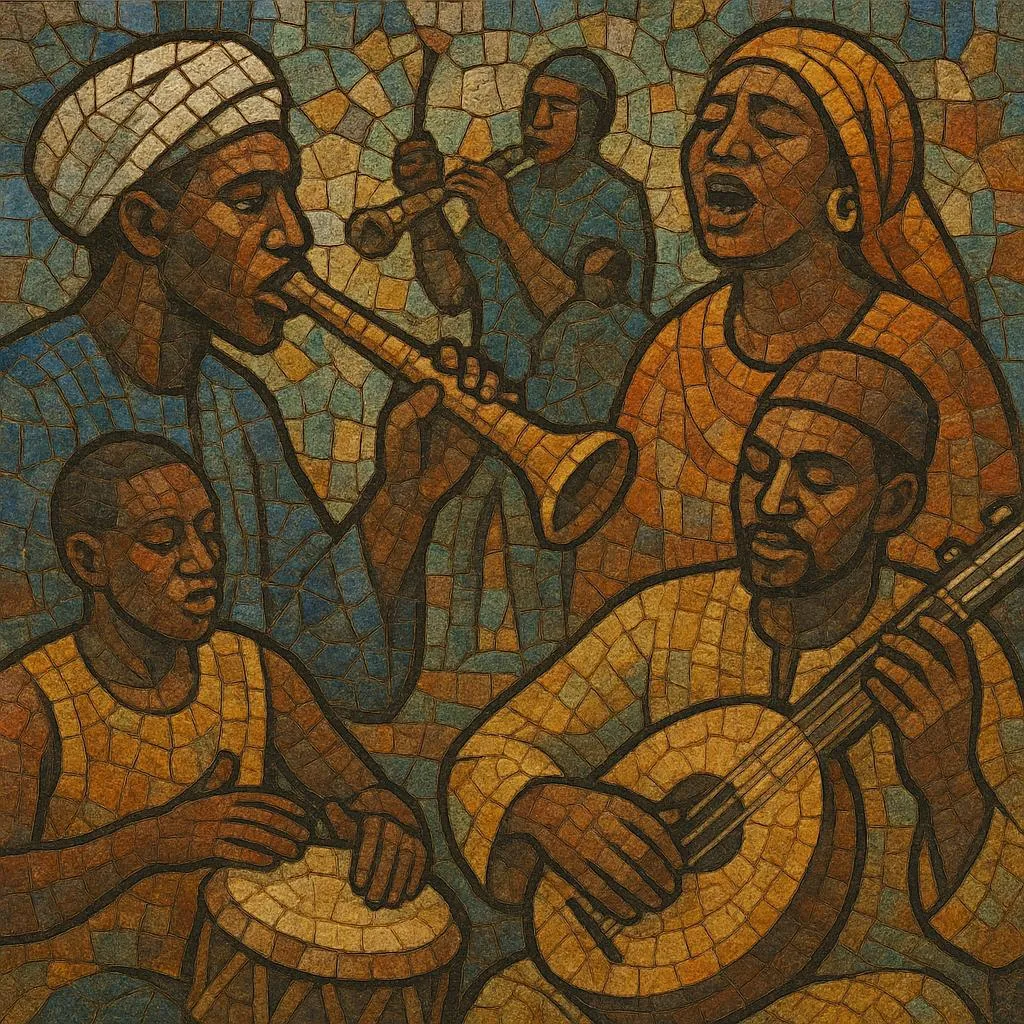
Because Chad straddles the Sahara, Sahel, and savannah, its soundworld blends Saharan/Tibesti lute-and-fiddle traditions, Sahelian horn ensembles (notably the long royal trumpets known locally as waza/kakaki), Central African drumming and xylophone idioms (balafon), and Arabic-influenced vocal and modal practices. The Fulani (Fula) use single-reed flutes; griots preserve history with praise-singing accompanied by five‑string kinde and other lutes; and in Tibesti, Teda-Daza musicians employ bowed fiddles and spike-lutes.
Alongside deep-rooted ceremonial and communal music for weddings, harvests, and coronations, 20th‑century urban bands (for example, Chari Jazz) fused local rhythms with Afro-jazz, rumba, and funk, while recent generations incorporate hip hop, Afro-electronic, and pan-Sahel sounds. The result is a mosaic of repertoires that remain tied to dance, storytelling, and social life.
History
Chad’s musical ecology long predates the modern state. Court and ritual contexts in the north and east used horn-and-trumpet ensembles—most famously the waza/kakaki—for processions, coronations, and elite ceremonies shared across the Chad–Sudan cultural sphere. In the south and center, Sara, Ngambaye, and related communities cultivated polyrhythmic drumming, xylophone (balafon) repertoires, and call-and-response singing for agricultural rites, weddings, and storytelling. Griot (jali) traditions with five‑string kinde and other lutes preserved genealogies and oral histories, while Fulani single‑reed flutes and Tibesti lute/fiddle (spike-lute and one‑string bowed fiddles) anchored nomadic and oasis music.
With missionary, military, and urban influences during the late 19th and early 20th centuries, new instruments (guitars, accordions, brass) reached Chadian towns. After independence (1960), dance bands emerged, the most iconic being Chari Jazz, which blended local rhythms with Congolese rumba, highlife, and jazz. Radio and state festivals encouraged a national style while leaving regional idioms intact.
Amid political upheavals, musicians continued to record and tour in Central Africa. Maître Gazonga became widely known in the 1980s with his group L’International Challal, popularizing a Chadian dance-band sound rooted in local grooves and Sahelian song forms. Singers such as Abdoulaye Nderguet and later Mounira Mitchala brought Chadian languages and themes to broader African and European audiences.
Hip hop, gospel, and Afro-pop flourished in N’Djamena, while the Chadian diaspora helped globalize local idioms. The Montreal-based group H’Sao showcased sophisticated vocal harmony steeped in Chadian traditions, and AfrotroniX (Caleb Rimtobaye) fused Sahelian rhythms, Chadian melodies, and electronic production, reimagining ceremonial trumpet calls and balafon lines for festival stages. Today, traditional ensembles (waza/kakaki processional groups, Fulani flute circles, Sara balafon troupes) coexist with bands and producers who connect Chad’s heritage to pan‑African and global sounds.