Your digging level
Description
Cumbia andina mexicana (often also called cumbia sureña in Mexico) is a Mexican branch of Andean cumbia that blends the steady, dance‑floor‑friendly cumbia beat with melodies, timbres, and pentatonic modes drawn from Andean folk (huayno, saya/caporales).
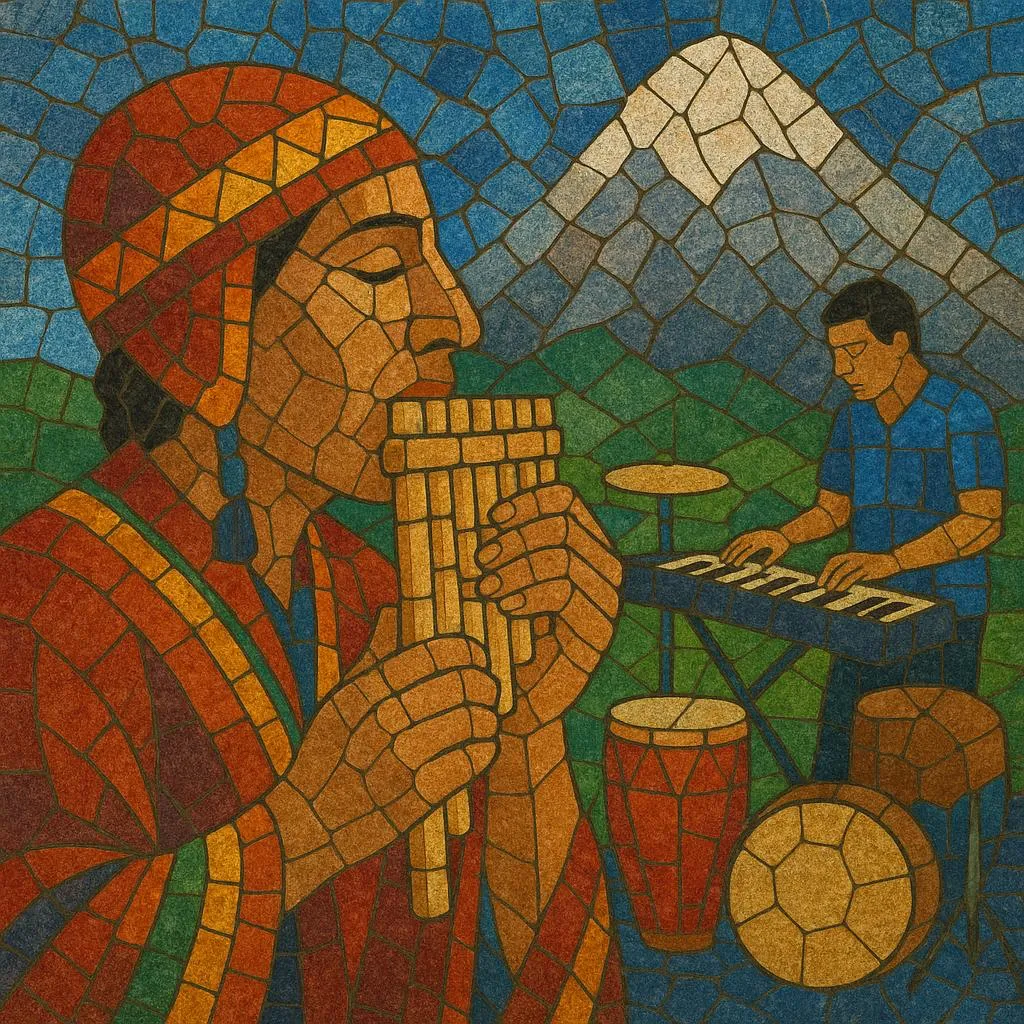
Typical arrangements keep the Mexican cumbia rhythm section (drum kit or programmed drums, congas, güiro, electric bass) while the lead voices are carried by Andean flutes (quena, zampoña/siku) or, more commonly, by synthesizers and keyboards using pan‑flute and “charango” patches. Bright, singable hooks, call‑and‑response choruses, and lyrical themes of romance, migration, and highland imagery are central to the style.
The genre grew inside central Mexican sonidero circuits, where DJs and neighborhood sound systems popularized faster, flute‑led cumbias and Andean covers/reharmonizations. The result is a vibrant, pan‑Andean sound made distinctly Mexican by its groove, production aesthetics, and social context.

History
Cumbia andina mexicana emerged in the 1990s in central Mexico (Mexico City, State of Mexico, Puebla, Tlaxcala) as local cumbia bands and the sonidero scene embraced Andean repertoires and timbres. Migratory and cultural exchange with Peru and Bolivia—where chicha/Andean cumbia and saya/caporales were flourishing—brought Andean melodies into Mexican dance halls.
Powerful neighborhood sound systems (sonideros) amplified the trend by spinning Andean cumbias, editing them for dance floors, and favoring tracks with soaring flute/keyboard leads and quick, clean cumbia backbeats. Mexican groups began composing originals in that idiom, standardizing synth‑pan‑flute leads, charango‑like strums (often on guitar/keys), and romantic Spanish lyrics.
The style keeps a 2/4 or straight 4‑on‑the‑floor cumbia pulse at brisk, danceable tempos. Melodic writing leans on Andean pentatonicism, often outlining simple I–V or I–IV–V progressions colored by modal inflections. Production commonly uses bright, chorus‑laden keyboards, octave‑doubling flutes, and short instrumental interludes designed for dancers and sonidero MC shout‑outs.
Through the 2000s, the genre cemented its identity in central Mexico’s popular fiestas, radio, and local labels. Digital platforms and DIY video culture helped circulate both Mexican originals and Peruvian/Bolivian classics to new audiences, while DJs created edits that further linked the style to newer urban and club forms. Today, cumbia andina mexicana remains a staple of sonidero nights and a living bridge between Mexican cumbia and the broader Andean sound world.