Your digging level
Description
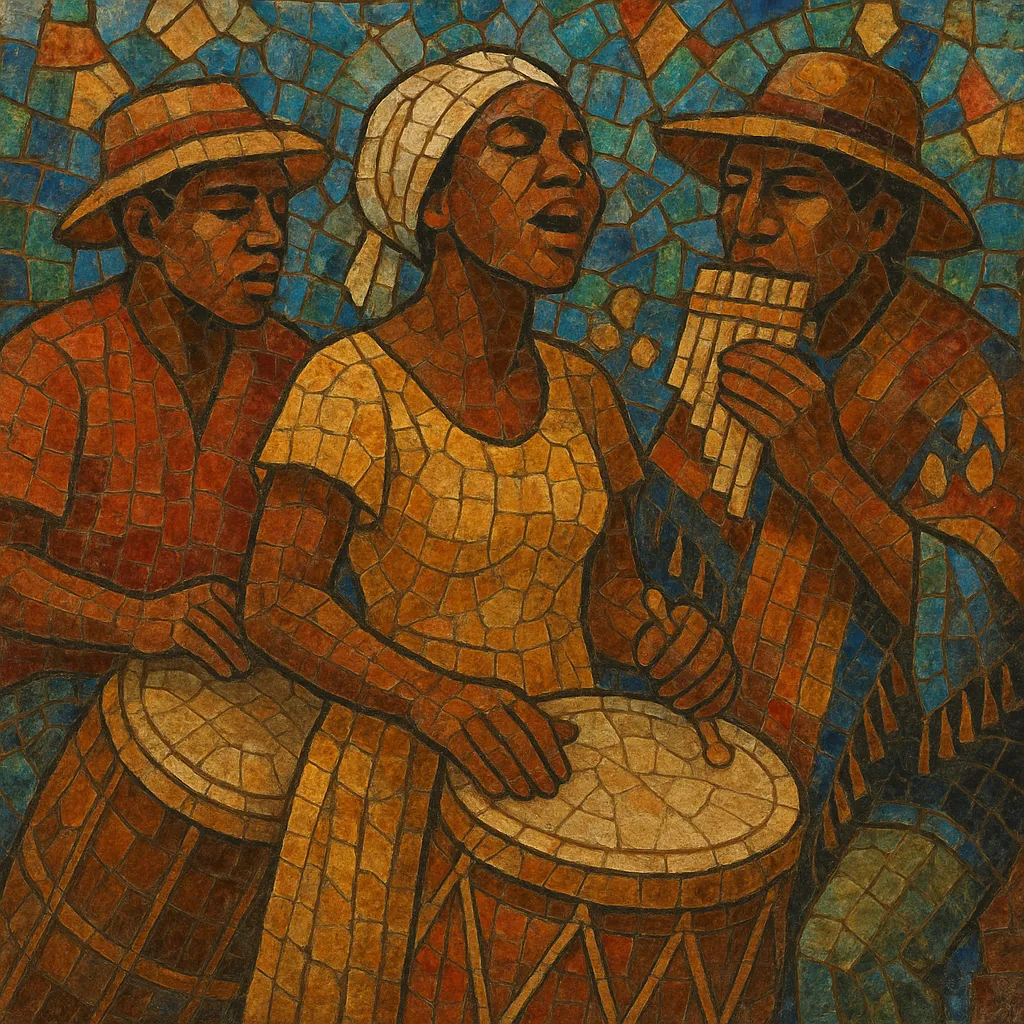
Saya is a fast‑paced, percussive Afro‑Andean music and dance created by Afro‑Bolivian communities and historically performed across the Collao (Altiplano) region that straddles Peru and Bolivia.
Built on interlocking drum patterns, call‑and‑response singing, and processional movement, saya blends West and Central African rhythmic sensibilities with Andean timbres and languages. In contemporary folklore it is heard at fiestas, carnavales, and urban parades, and it is closely associated with the vibrant Afro‑Bolivian presence in the Yungas and the broader highland cultural circuit.
History
Saya emerged among Afro‑descendant communities brought to the Andean region during the colonial period. Enslaved and later free Afro‑Bolivians adapted West/Central African drumming, responsorial song, and procession into the Andean environment, creating a distinct Afro‑Andean form. While the strongest community roots are in Bolivia’s Yungas, the genre circulated widely across the Collao Meseta (Altiplano) linking Peru and Bolivia through markets, mines, and pilgrimage routes.
Through the 20th century saya became a centerpiece of Afro‑Bolivian communal identity—performed at local fiestas with large drums (bombos), hand percussion, and choral refrains. The rise of folkloric festivals and radio helped project saya beyond its rural base, encouraging ensembles to incorporate Andean melodic instruments (panpipes, charango, quena) alongside traditional percussion.
From the 1960s onward, urban folklore movements in La Paz and other Andean cities staged saya for national audiences. Processional choreographies and uniformed troupes emphasized spectacle while preserving the core call‑and‑response and cyclical rhythm. This period also set the stage for derivative parade forms and for the rhythm to be arranged by Andean popular groups, amplifying saya’s profile across the Andean region and internationally.
Today saya functions both as a living Afro‑Bolivian communal tradition and as a widely recognized folkloric rhythm. Community ensembles maintain its ceremonial and social roles, while professional Andean groups produce staged, amplified arrangements for festivals and recordings. The genre remains emblematic of Afro‑Bolivian cultural resilience and a key Afro‑Andean contribution to highland music.