Your digging level

For this genre
0/8
🏆
Sign in, then listen to this genre to level up

Description

Cumbia boliviana is a regional Andean offshoot of cumbia that crystallized in Bolivia in the 1980s and flourished through the 1990s with the rise of affordable electronic keyboards.

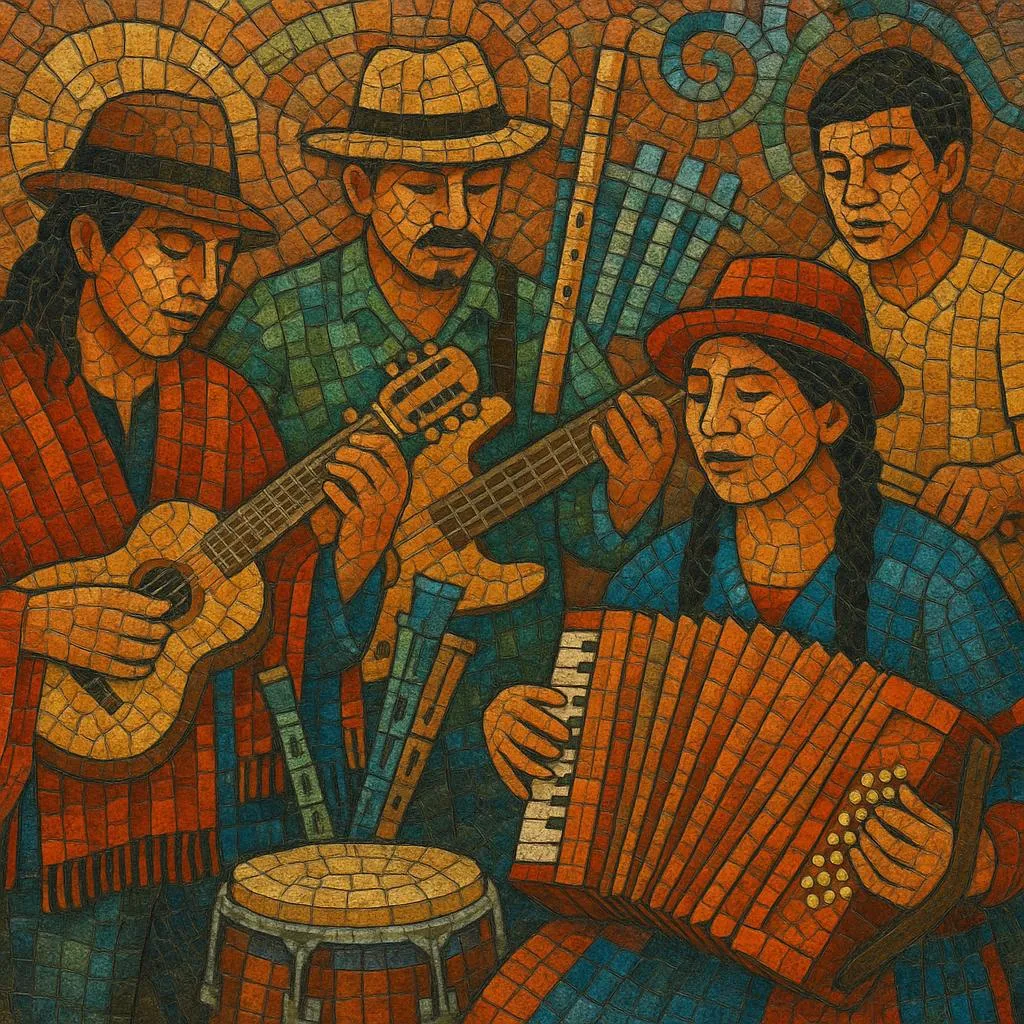
It retains cumbia’s danceable 2/4 groove but is distinguished by bright, lead‑melody synthesizers that emulate panpipes and quena, clean chorus‑tinged guitars, and a strong Andean melodic sensibility (often minor‑mode or pentatonic turns). The result is a bittersweet, romantic party music equally at home in urban salons and rural fiestas.

Typical songs foreground yearning vocals, call‑and‑response hooks, and catchy synth riffs; tempos tend to be medium to brisk, inviting couples to dance in a close embrace or lively circle steps.


Sources: Spotify, Wikipedia, Discogs, RYM, MB, user feedback and other online sources

History

Roots and formation (1980s)

Cumbia arrived in Bolivia in earlier decades via Colombian and Peruvian recordings, but its local identity coalesced in the 1980s as bands incorporated Andean folk melodic shapes and the huayno’s emotive contours. Low‑cost synthesizers enabled musicians to voice lead melodies that recalled sikus (panpipes) and quena, creating a signature timbre distinct from coastal and tropical cumbia bands.

Golden era and national spread (1990s–2000s)

Through the 1990s, cumbia boliviana expanded from Cochabamba, La Paz, Oruro, and Santa Cruz into nationwide popularity. Groups professionalized sound systems, adopted crisp drum kits and electronic percussion in place of traditional güiro, and crafted romantic repertoire aimed at weddings, town fiestas, and urban dance halls. Cassette and later CD circulation, plus regional television shows, helped canonize the style.

Cross‑border circulation and stylistic dialogue

The genre traveled with Bolivian migrant communities to Argentina, Chile, and Peru, where it conversed with chicha (Peruvian cumbia), tecnocumbia, and Mexican Andean cumbia scenes. These exchanges reinforced the bright keyboard leads, bittersweet harmonies, and love‑lament themes now associated with the style.

Contemporary scene

Today, cumbia boliviana persists both in heritage bands and newer acts that blend modern production—side‑chained kicks, wider stereo synths, and pop‑EDM polish—while keeping the essential Andean melodic language and danceable cumbia pulse.

How to make a track in this genre

Instrumentation
•   Lead synth (or accordion) as the melodic voice, often patched to emulate Andean flutes (bright, slightly breathy, with portamento or pitch‑bend grace notes). •   Clean electric guitar with light chorus or tremolo for rhythmic arpeggios and countermelodies. •   Electric bass performing a steady cumbia tumbao (anticipations on the “&” of beats; root–5th motions). •   Drum kit (kick on 1, snare/clave‑like accents, open hi‑hat or shaker for the off‑beats) replacing or doubling the traditional güiro. •   Optional charango or Andean flutes for color; modern acts may add pads and subtle EDM percussion.
Rhythm & tempo
•   Meter: 2/4; feel is lilting yet driving. •   Tempo: typically 95–115 BPM. •   Groove: keep the cumbia marcha pulse—syncopated bass anticipations and a lightly swung hi‑hat/shaker; interlock guitar upstrokes with snare accents.
Harmony & melody
•   Commonly in minor keys or modal centers with Andean pentatonic figures; frequent use of i–VII–VI, or i–VI–VII progressions; cadences may pivot to the relative major for a hopeful chorus. •   Melodic phrasing uses neighboring tones, pentatonic turns, and ornamental slides to mimic quena/siku inflections. •   Call‑and‑response hooks between lead vocal and synth lead are idiomatic.
Form & arrangement
•   Intro (signature synth riff) → Verse (story/heartbreak) → Pre‑chorus (lift) → Chorus (anthemic, sing‑along) → Synth solo or guitar break → Final chorus with ad‑libs. •   Keep arrangements clear: drums and bass lock the dance floor; guitar figures leave space for the lead synth.
Lyrics & delivery
•   Themes: love, separation, longing, reunions, and festive celebration. •   Vocal style: earnest, slightly nasal Andean pop delivery; harmonize in thirds or sixths for choruses.
Production & mix
•   Push the lead synth forward; add a gentle high‑shelf to give sparkle. •   Tight low‑end from kick + bass; side‑chain subtly if modern. •   Use short plate or room reverbs for vocals and leads to keep clarity while evoking dance‑hall ambience.

Top tracks

Locked
Share your favorite track to unlock other users’ top tracks

Upcoming concerts

in this genre
Influenced by
Has influenced

Download our mobile app

Get the Melodigging app and start digging for new genres on the go
© 2026 Melodigging
Melodding was created as a tribute to Every Noise at Once, which inspired us to help curious minds keep digging into music's ever-evolving genres.
Buy me a coffee for Melodigging