Your digging level
Description
Balkan brass is a high‑energy brass‑band tradition from the central and western Balkans, most strongly associated with Serbia but also vibrant in Romania and North Macedonia.
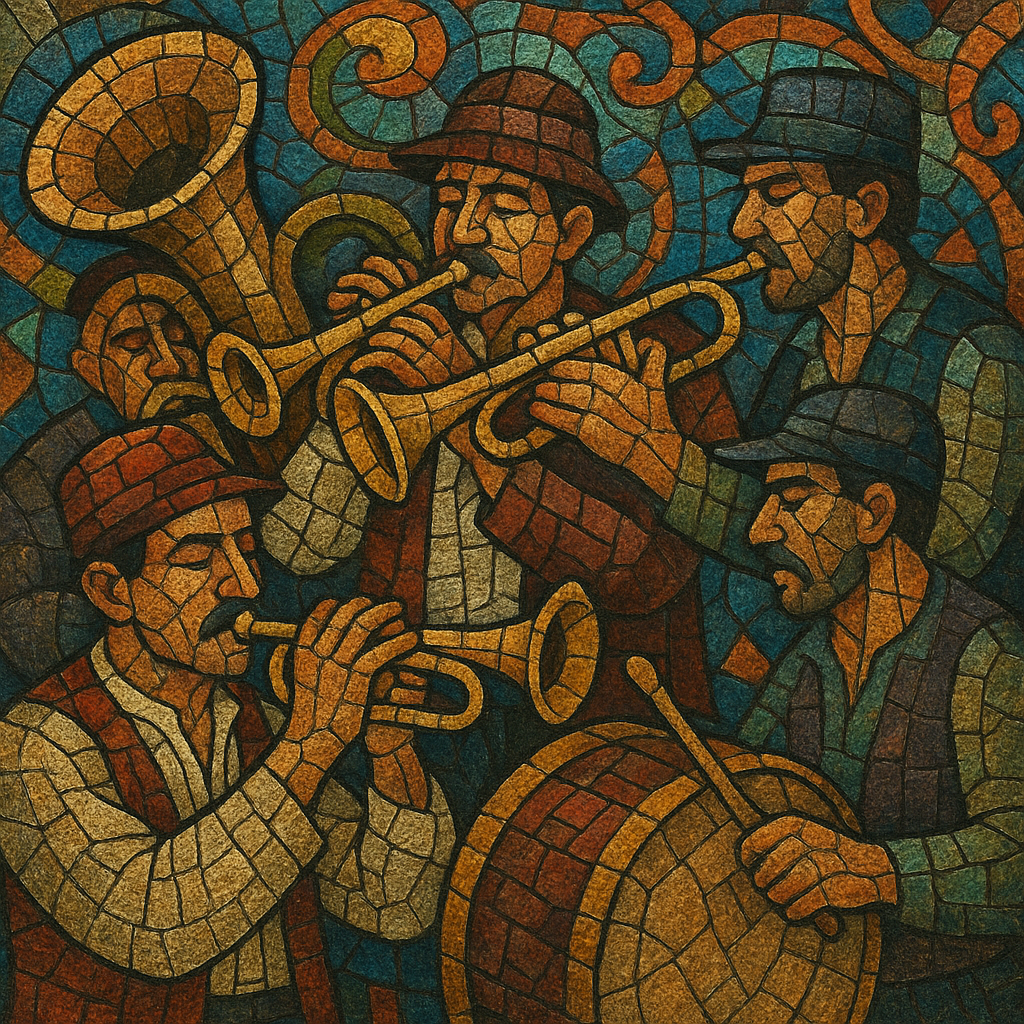
It grew out of 19th‑century military and ceremonial brass ensembles and was transformed by Romani musicians into a virtuosic, highly danceable style for weddings, street processions, and festivals. Hallmarks include blazing trumpet leads, powerful tubas/helikons, the deep thud of the tapan (davul) drum, and tight snare patterns.
Rhythmically it mixes straightforward marches in 2/4 with asymmetrical Balkan meters (7/8, 9/8, 11/8), and harmonically it favors minor modes and the Phrygian dominant (Hijaz) color, with ornamented melodies, call‑and‑response, and frequent accelerandi. Since the 1990s the genre has traveled globally through films, festivals, and club culture, inspiring crossovers and "Balkan beats" DJ scenes.
Sources: Spotify, Wikipedia, Discogs, Rate Your Music, MusicBrainz, and other online sources
History
Military brass bands introduced across the Balkans in the 1800s—via Ottoman mehter legacy and central European fanfare/march traditions—provided the instrumentation and ensemble model. Romani musicians adapted these brass resources for local festivities, weddings, and processions, infusing them with Balkan folk dance forms (čoček, kolo, oro) and modal flavors (notably the Hijaz/Phrygian dominant sound).
By the early 1900s, regional civilian brass bands were common in rural and small‑town life. After WWII, community cultural houses and local celebrations kept the style active, while state ensembles sometimes absorbed brass elements into folk orchestrations. The core remained community‑based Romani and village bands playing for dance.
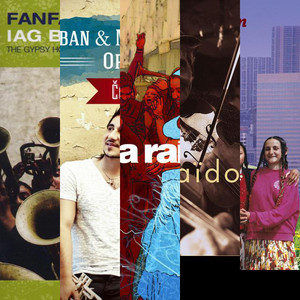
Founded in 1961, Serbia’s Guča Trumpet Festival became the genre’s flagship event, fostering friendly competition and virtuoso bandleaders (e.g., Fejat Sejdić, Boban Marković). Parallel scenes flourished in Romania (Fanfare Ciocărlia) and North Macedonia (Kočani Orkestar). In the 1990s–2000s, films and global touring brought the sound to international audiences, while DJs popularized "Balkan beats" club nights.
Today, Balkan brass thrives at home and abroad, heard at weddings, festivals, and concert halls. Bands collaborate with rock, jazz, and electronic musicians; producers sample brass riffs for dance tracks; and ensembles outside the Balkans (e.g., in Western Europe and the U.S.) sustain the style, often blending it with local genres.