Your digging level

For this genre
0/8
🏆
Sign in, then listen to this genre to level up

Description

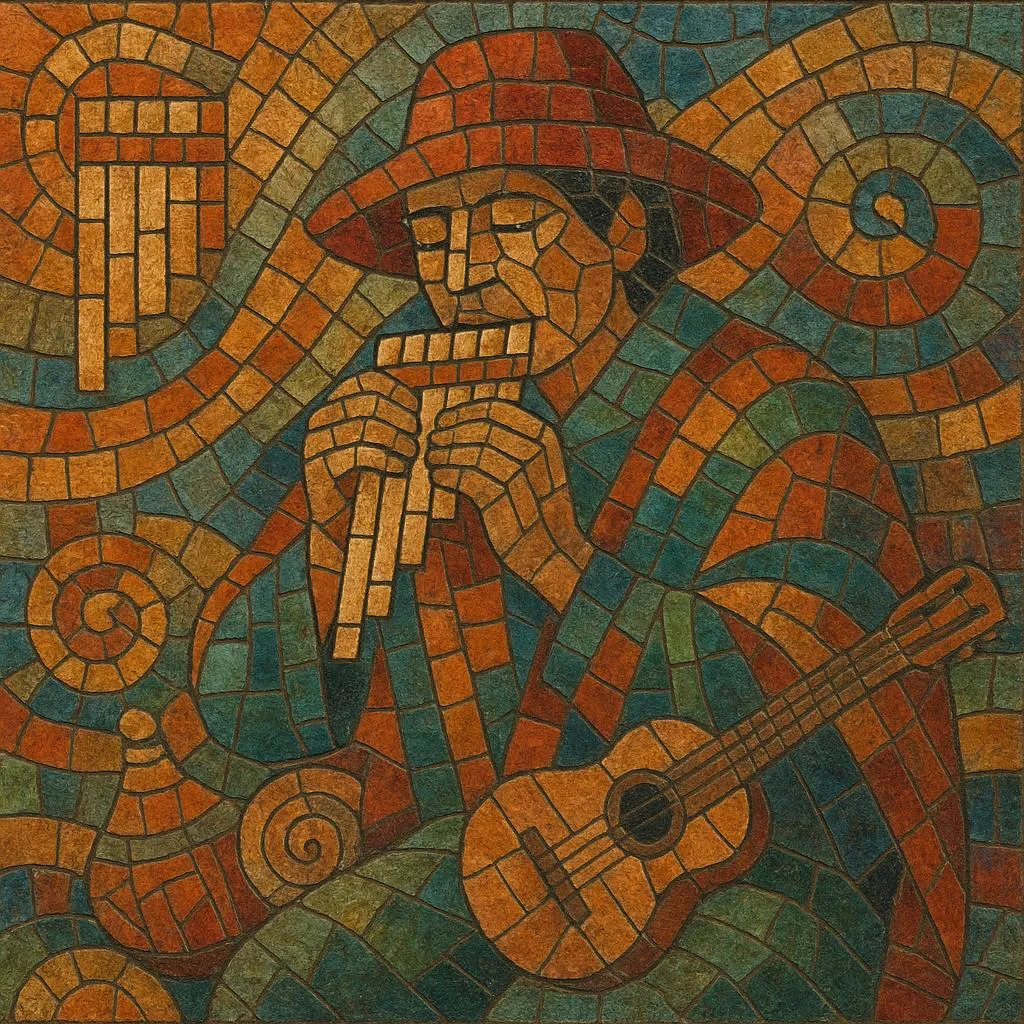
Andean flute is a performance-driven folk genre centered on the indigenous aerophones of the Central Andes—above all the siku/zampoña (panpipes), quena/khena (end-blown notch flute), and their lower-pitched relatives (quenacho, toyo). Ensembles often combine interlocking panpipe parts with charango, guitar, bombo and hand percussion, creating bright, breathy textures and danceable ostinatos.

While the instruments and repertories are pre‑Columbian, the genre name in recorded music coalesced during the 1960s–1970s global folk revival, when Andean groups toured internationally and the sound entered world/"new age" markets. Melodies frequently use pentatonic or anhemitonic scales, parallel fourths and fifths, drones, and the characteristic hocketing between paired siku rows (ira/arca). Rhythms draw on huayno, sikuri, sanjuanito and other regional dances, ranging from lilting 6/8 to driving 2/4 with hemiola.


Sources: Spotify, Wikipedia, Discogs, RYM, MB, user feedback and other online sources

History

Deep Roots

Archaeological and iconographic evidence shows panpipes and end‑blown flutes in the Andes for well over a millennium before European contact. Community siku bands on the Altiplano (today in Peru and Bolivia) developed the hallmark hocketing practice, splitting a scale across two complementary instruments (ira and arca) that must alternate pitches to complete a melody.

20th‑Century Consolidation

In the early–mid 20th century, urban folklorization, radio, and nationalist movements helped codify regional dance types (huayno, sikuri, sanjuanito, saya), with flutes central to their timbre. Local luthiers standardized quena sizes and panpipe tunings for ensemble use alongside charango, guitar, and bombo.

Global Popularization (1960s–1980s)

The international folk revival and Nueva Canción networks brought Andean ensembles (Los Incas/Urubamba, Los Calchakis, Inti‑Illimani, Illapu) to European and North American stages. Recordings of “El Cóndor Pasa” and similar themes made the breathy panpipe and quena sound globally legible as a distinct genre. Parallel ‘relaxation/new age’ markets embraced the timbre for contemplative listening, sometimes with synthesizers and reverb‑rich production.

Contemporary Developments

Today, Andean flute thrives in multiple lanes: community sikuri processions; concert ensembles that foreground virtuosic quena; folkloric groups mixing panpipes with drums and charango; and crossover projects with ambient, electronic and cinematic production. Indigenous collectives maintain ceremonial and calendrical repertories, while urban artists fuse Andean flutes with digital cumbia, downtempo and film/game music.

How to make a track in this genre

Core Instruments
•   Flutes: siku/zampoña (panpipes in multiple sizes), quena (end-blown notch flute), quenacho (lower quena), toyo/bajo siku (bass panpipes). •   Strings & percussion: charango, guitar, ronroco; bombo legüero and small hand percussion (chajchas, wankara).
Scales, Melody, Timbre
•   Favor pentatonic or anhemitonic tetrachords; diatonic minor (often natural/Aeolian) is common. •   Use short, breath‑led phrases with ornamental slides, grace notes and aspirated attacks on quena. •   Employ parallel 4ths/5ths and occasional drones to strengthen modality.
Rhythm & Groove
•   Draw from huayno (often fast duple with 3:2 cross‑accents), sikuri processional feels, sanjuanito (Ecuador, lilting 6/8), and saya/caporal ostinati. •   Establish a steady bass (bombo) on strong beats, with guitar/charango arpeggios or rasgueos driving the pulse.
Ensemble Techniques
•   For siku, write interlocking (hocketed) lines split between ira and arca parts so the full melody emerges only in alternation. •   Arrange in antiphonal blocks (two panpipe choirs answering) and thicken cadences with unison or octave doublings.
Harmony & Form
•   Keep harmony sparse: drones, pedal tones, or two‑chord vamp progressions (i–VII, i–VI) underneath modal melodies. •   Use strophic song forms or cyclic dance structures with clear refrain figures and call‑and‑response.
Production Tips (Crossover/New Age)
•   Capture breath noise and room for intimacy; add plate or natural reverbs to evoke open spaces. •   Layer subtle pads, cajón or light electronic percussion only if cross‑genre; preserve flute transients and stereo interplay of ira/arca.
Cultural & Performance Practice
•   Respect communal origins: sikuri is traditionally collective and processional; tempo and phrasing follow the walking/dancing feel. •   Tune sets (siku rows) carefully; Andean intonation may differ slightly from equal temperament—match within the ensemble for a coherent blend.

Top tracks

Locked
Share your favorite track to unlock other users’ top tracks

Upcoming concerts

in this genre
Influenced by
Has influenced

Download our mobile app

Get the Melodigging app and start digging for new genres on the go
© 2026 Melodigging
Melodding was created as a tribute to Every Noise at Once, which inspired us to help curious minds keep digging into music's ever-evolving genres.
Buy me a coffee for Melodigging