Genres
Artists
Albums
Make Music
Sign in
Sign in
Artists
African-American Classical
Artists
African-American Classical
Wild Up
2021
·
1 album
Listen
2
/5
Genres
Modern Classical
Modern classical is a contemporary strand of instrumental music that applies classical composition techniques to intimate, cinematic settings. It typically foregrounds piano and strings, is sparsely orchestrated, and embraces ambience, repetition, and timbral detail. Rather than the academic modernism of the early 20th century, modern classical as used today refers to accessible, mood-driven works that sit between classical, ambient, and film music. Felt pianos, close‑miked string quartets, tape hiss, drones, soft electronics, and minimal harmonic movement are common, producing a contemplative, emotionally direct sound that translates well to headphones, streaming playlists, and screen media.
Discover
Listen
Modern Chamber Music
Modern chamber music is the contemporary evolution of the intimate, small‑ensemble tradition, reimagined through 20th–21st century compositional ideas, timbral exploration, and cross‑genre collaboration. It typically features 2–15 performers in flexible instrumentations (strings, winds, piano, percussion, voice, electronics), foregrounding clarity of gesture and detail of sound. Composers employ techniques from minimalism, serialism, spectralism, extended techniques, and electroacoustic practice, often blending notated precision with improvisation or graphic scores. While it preserves the chamber ideal of close listening and conversational interplay among parts, modern chamber music embraces new technologies, amplified instruments, multimedia, and non‑Western inspirations, yielding music that can be meditative and translucent, rhythmically driven, or dramatically intense.
Discover
Listen
Process Music
Process music is a movement in which a composition is generated by a clearly defined procedure or rule-set. Sometimes this procedure is made audible—so the listener can follow the gradual changes as they unfold—and sometimes the process remains hidden behind the surface of the sound. Typical processes include phasing (two identical patterns drifting out of sync), additive or subtractive procedures (expanding or contracting a pattern by fixed steps), iterative feedback (repeating an operation so the output becomes the next input), permutations, stochastic or probabilistic rules, or instruction-based performance systems. The aesthetic ranges from hypnotic and pulse-driven to fragile and static, but the core idea remains: the music arises from the process.
Discover
Listen
Experimental
Experimental music is an umbrella term for practices that prioritize exploration, process, and discovery over adherence to established genre norms. It embraces new sound sources, nonstandard tuning systems, indeterminacy and chance operations, graphic and open-form scores, extended techniques, and technology-led sound design (tape, electronics, computers, and live processing). Rather than a single style, it is a methodology and ethos: testing hypotheses about sound, structure, and performance, often blurring boundaries between composition, improvisation, sound art, and performance art. Listeners can expect unfamiliar timbres, unusual forms, and an emphasis on how music is made as much as the resulting sound.
Discover
Listen
American Contemporary Classical
American contemporary classical is the broad umbrella for concert music created in the United States from the mid‑20th century to the present. It includes post‑war modernist currents, radical experimentalism, minimalist process music, and today’s post‑genre, postmodern eclecticism. Hallmarks include expanded harmonic palettes (from atonality and serialism to neo‑tonality and modal writing), rhythmic innovation (pulse‑driven minimalism, additive meters, phasing), a keen interest in timbre (extended techniques, prepared instruments, unconventional ensembles), and a deep engagement with technology (tape, electronics, live processing). American strands often braid in vernacular influences—jazz, rock, folk hymnody—alongside rigorous “uptown” academic traditions, yielding a scene that is both institutionally grounded and fiercely independent.
Discover
Listen
African-American Classical
African-American classical refers to concert music in the Western art-music tradition written or led by African-American composers and performers. It encompasses orchestral, chamber, choral, operatic, and solo repertoire that speaks in the language of classical form and notation while drawing on the rhythms, scales, timbres, and stories of the African diaspora in the United States. Typical markers include the incorporation of spirituals, blues inflections, call-and-response textures, cakewalk and ragtime rhythms, and programmatic subjects tied to Black history and experience. Stylistically it ranges from late-Romantic symphonic writing through mid‑century modernism and post‑minimalism to today’s genre-fluid concert music.
Discover
Listen
Classical
Classical music is the notated art-music tradition of Europe and its global descendants, characterized by durable forms, carefully codified harmony and counterpoint, and a literate score-based practice. The term “classical” can refer broadly to the entire Western art-music lineage from the Medieval era to today, not just the Classical period (c. 1750s–1820s). It privileges long-form structures (such as symphonies, sonatas, concertos, masses, and operas), functional or modal harmony, thematic development, and timbral nuance across ensembles ranging from solo instruments to full orchestras and choirs. Across centuries, the style evolved from chant and modal polyphony to tonal harmony, and later to post-tonal idioms, while maintaining a shared emphasis on written notation, performance practice, and craft.
Discover
Listen
Show all 7 genres
Albums
2021
1
/5
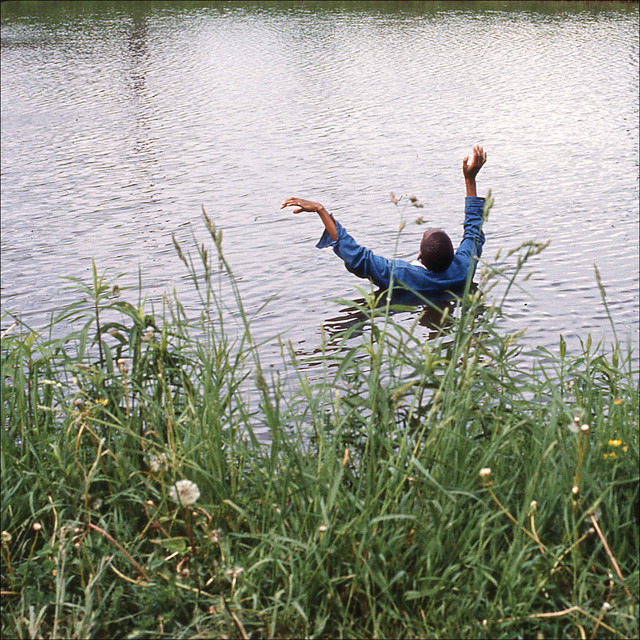
Julius Eastman Vol. 1: Femenine
Julius Eastman / Wild Up
American Contemporary Classical
African-American Classical
Modern Chamber Music
Similar artists
4
/5
Harold Budd
Ambient
Classical
Electronic
2
/5
Christopher Rountree
Minimalism
African-American Classical
American Contemporary Classical
2
/5
Julius Eastman
Process Music
African-American Classical
American Contemporary Classical
4
/5
Brian Eno
Ambient
Krautrock
Electronic
3
/5
Steve Reich
Minimalism
Classical
Modern Classical
2
/5
Terry Riley
Electronic
Minimalism
Avant-Garde
2
/5
Karlheinz Stockhausen
Integral Serialism
Serialism
Darmstadt School
4
/5
London Symphony Orchestra
Classical
Ballet
American Classical Piano
4
/5
Paul McCartney
Pop
Pop Rock
Rock
4
/5
Philip Glass
Classical
Minimalism
Modern Classical
Download our mobile app
Get the Melodigging app and start digging for new genres on the go
Download on the App Store
Get it on Google Play
© 2026 Melodigging
Give feedback
Legal
Melodding was created as a tribute to
Every Noise at Once
, which inspired us to help curious minds keep digging into music's ever-evolving genres.