Your digging level
Description
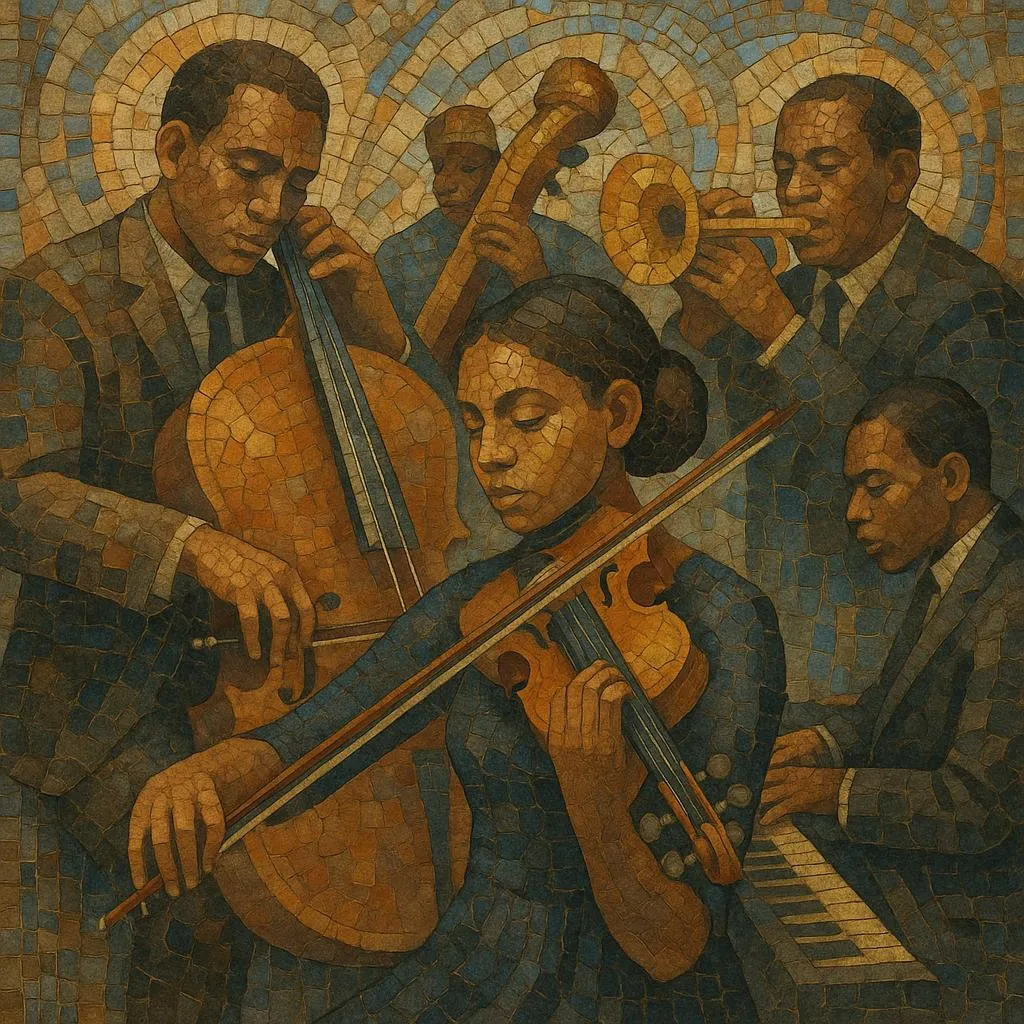
African-American classical refers to concert music in the Western art-music tradition written or led by African-American composers and performers. It encompasses orchestral, chamber, choral, operatic, and solo repertoire that speaks in the language of classical form and notation while drawing on the rhythms, scales, timbres, and stories of the African diaspora in the United States.
Typical markers include the incorporation of spirituals, blues inflections, call-and-response textures, cakewalk and ragtime rhythms, and programmatic subjects tied to Black history and experience. Stylistically it ranges from late-Romantic symphonic writing through mid‑century modernism and post‑minimalism to today’s genre-fluid concert music.
History
Black composers and bandleaders such as Francis Johnson and Edmond Dédé worked within European concert traditions in the 1800s, while touring choirs popularized harmonized spirituals on the concert stage. Conservatory training expanded access at the century’s end, laying foundations for a distinct African‑American voice in classical media.
The cultural flowering of the 1920s–30s encouraged orchestral and choral works that braided spiritual melodies, blues color, and ragtime/cakewalk rhythms into symphonies, suites, and cantatas. Composers forged a recognizable symphonic idiom that was both rigorously "classical" and unmistakably rooted in Black musical practice, winning major premieres with U.S. orchestras and opera companies.
From the 1940s through the 1970s, composers navigated neoclassicism, serialism, and American modernism while addressing social realities. Works ranged from spiritual‑based oratorios and art songs to abstract chamber music and symphonies. Milestones included prize‑winning careers, academic appointments, and the growing presence of Black conductors and soloists on major stages.
The later 20th century saw bold formal experiments—minimalist processes, open forms, electronic media, and jazz‑classical hybridity—alongside operas treating contemporary Black life. Advocacy groups, festivals, and ensembles (e.g., community orchestras and chamber collectives focused on equity) broadened programming and commissioning, building audiences for this repertoire.
A wave of rediscoveries, new recordings, and frequent commissions has brought historical and living African‑American composers into the mainstream repertoire. Orchestras and conservatories have integrated this literature into curricula and seasons; new operas win major awards; and cross‑genre fluency (with gospel, hip‑hop, and electronic practices) increasingly informs concert works while remaining anchored in classical craft.