Genres
Artists
Albums
Make Music
Sign in
Sign in
Artists
Experimental
Artists
Experimental
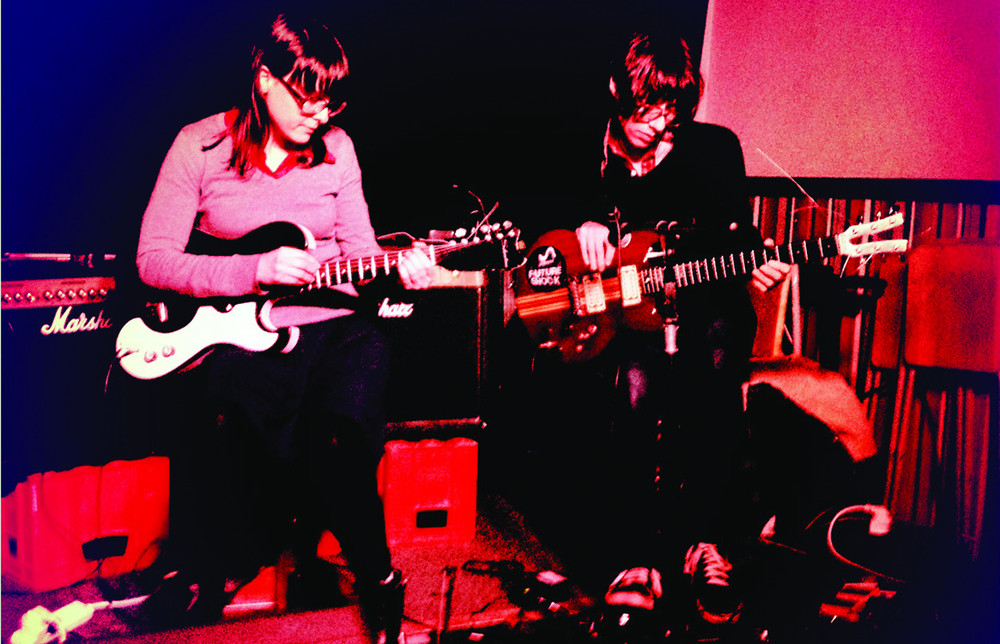
The Dwarfs of East Agouza
2016
·
1 album
Listen
1
/5
Genres
Free Folk
Free folk is an experimental strain of folk music that blends the acoustic timbres and modal melodies of traditional folk with the spontaneity of free improvisation, the textures of drone and noise, and an often lo‑fi, home‑recorded aesthetic. It favors collective, open‑ended forms over verse‑chorus songcraft and treats folk instruments as sources of sound exploration as much as tools for melody. Emerging from DIY and improv circles, free folk sessions often involve extended, slowly evolving pieces where banjo, fiddle, acoustic guitar, harmonium, flutes, hand percussion, and small electronics intertwine. Field recordings, room ambience, and tape hiss are typically embraced, producing an intimate, woodland or ritual atmosphere that feels both archaic and forward‑looking.
Discover
Listen
Krautrock
Krautrock is an experimental form of rock that emerged in late-1960s West Germany, characterized by hypnotic repetition, long-form structures, and a forward-looking embrace of electronics and studio experimentation. It typically features a steady, driving 4/4 “motorik” beat, circular bass ostinatos, sparse harmonic movement, and textural layering that draws from minimalism, free improvisation, and avant-garde composition. Rather than virtuosic solos, the emphasis is on collective groove, trance-inducing momentum, and timbral exploration. The sound ranges from raw, percussive jams to spacious, cosmic electronics, often eschewing conventional Anglo-American blues forms in favor of a distinctly European modernist aesthetic.
Discover
Listen
Avant-Folk
Avant-folk is a strand of folk music that applies avant-garde, experimental, and modernist techniques to traditional song forms, instrumental vocabularies, and storytelling. It retains acoustic timbres and folk modalities while embracing unusual tunings, extended techniques, drones, free improvisation, tape collage, and nonstandard song structures. The result is music that sounds rooted and ancient yet exploratory and boundary-pushing, often intimate in texture but radical in form.
Discover
Listen
Experimental Rock
Experimental rock is a broad, exploratory branch of rock music that prioritizes innovation over convention. It stretches rock’s core instrumentation and song forms through unusual timbres, extended techniques, nonstandard tunings, chance procedures, and studio-as-instrument production. Drawing on avant-garde composition, free jazz, minimalism, and electronic/tape music, experimental rock often rejects verse–chorus structures in favor of drones, suites, collage, and improvisation. It embraces dissonance and noise as expressive tools, employs odd or fluid meters, and incorporates non-rock instruments, found sounds, and unconventional recording methods. The result is a lineage of music that treats rock not as a fixed style but as a laboratory for new sound worlds.
Discover
Listen
Free Improvisation
Free improvisation is a practice of spontaneous music-making that avoids fixed idioms, stylistic templates, and pre-agreed structures. Musicians prioritize listening, interaction, and the exploration of sound itself—timbre, texture, dynamics, and silence—over conventional melody, harmony, or pulse. Guitarist Derek Bailey popularized the notion of "non-idiomatic improvisation," describing a music that deliberately resists falling into recognizable genre habits. While often overlapping with free jazz and contemporary classical experimentalism, free improvisation is not confined to either. It welcomes any instrument or sound source—acoustic, electronic, or everyday objects—and frequently uses extended techniques, feedback, and unconventional performance gestures. Performances can range from whisper-quiet, pointillistic interplay to ferocious, high-energy noise, with the ensemble shaping form in real time through attention and constraint.
Discover
Listen
Experimental
Experimental music is an umbrella term for practices that prioritize exploration, process, and discovery over adherence to established genre norms. It embraces new sound sources, nonstandard tuning systems, indeterminacy and chance operations, graphic and open-form scores, extended techniques, and technology-led sound design (tape, electronics, computers, and live processing). Rather than a single style, it is a methodology and ethos: testing hypotheses about sound, structure, and performance, often blurring boundaries between composition, improvisation, sound art, and performance art. Listeners can expect unfamiliar timbres, unusual forms, and an emphasis on how music is made as much as the resulting sound.
Discover
Listen
Ethio-Jazz
Ethio‑jazz (Ethiopian jazz) is a distinctive fusion of traditional Ethiopian modal melody and rhythm with the harmonies, improvisational language, and instrumentation of jazz. Rooted in Ethiopia’s pentatonic qenet (modes)—such as tizita, bati, ambassel, and anchihoye—it places these characteristic scales over Western jazz ensembles (horn sections, piano/organ, guitar, bass, drums) and, at times, indigenous instruments like krar, masenqo, and kebero. The result ranges from sultry, minor‑tinged laments to hypnotic, groove‑forward vamps, often colored by vibraphone, organ, and saxophone timbres. Over time, Ethio‑jazz absorbed elements of soul, funk, Afro‑Latin and Afro‑Cuban rhythms, contributing to a sound that can be both melancholic and danceable, nostalgic and cosmopolitan. Mulatu Astatke—widely considered the father of Ethio‑jazz—was pivotal in crystallizing this language and popularizing it internationally.
Discover
Listen
Free Jazz
Free jazz is a radical branch of jazz that rejects fixed chord progressions, strict meter, and conventional song forms in favor of collective improvisation, textural exploration, and spontaneous interaction. Musicians prioritize timbre, dynamics, and gesture as much as pitch and harmony, often using extended techniques (multiphonics, overblowing, prepared piano) and unconventional sounds. While rooted in the blues and earlier jazz vocabularies, free jazz frees improvisers from pre-set harmonic cycles, allowing lines to unfold over tonal centers, shifting modes, drones, or complete atonality. Rhythm sections may float without a steady pulse, or drive with layered polyrhythms and “energy playing.” The result ranges from contemplative soundscapes to cathartic, high-intensity eruptions. Culturally, the genre intersected with the civil rights era and broader avant-garde movements, emphasizing autonomy, community, and new possibilities for musical expression.
Discover
Listen
Jazz
Jazz is an improvisation-centered music tradition that emerged from African American communities in the early 20th century. It blends blues feeling, ragtime syncopation, European harmonic practice, and brass band instrumentation into a flexible, conversational art. Defining features include swing rhythm (a triplet-based pulse), call-and-response phrasing, blue notes, and extended harmonies built on 7ths, 9ths, 11ths, and 13ths. Jazz is as much a way of making music—spontaneous interaction, variation, and personal sound—as it is a set of forms and tunes. Across its history, jazz has continually hybridized, from New Orleans ensembles and big-band swing to bebop, cool and hard bop, modal and free jazz, fusion, and contemporary cross-genre experiments. Its influence permeates global popular and art music.
Discover
Listen
Show all 9 genres
Albums
2016
1
/5
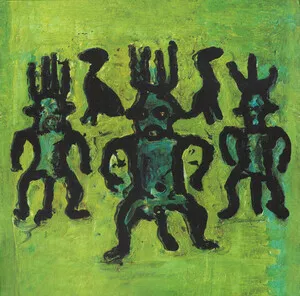
Bes
The Dwarfs of East Agouza
Free Folk
Experimental
Jazz
Similar artists
1
/5
Various Artists
Afro-Funk
Alternative Rock
Ambient
2
/5
Sunburned Hand Of The Man
Free Folk
Experimental
Krautrock
1
/5
Art Zoyd
Rock In Opposition
Avant-Garde
Avant-Prog
1
/5
No-Neck Blues Band
Avant-Garde
Drone
Experimental
1
/5
Toshi Ichiyanagi
Avant-Garde
Experimental
Free Jazz
4
/5
Brian Eno
Ambient
Krautrock
Experimental
3
/5
Stereolab
Experimental Rock
No Wave
Post-Rock
2
/5
Faust
Krautrock
Experimental
Art Rock
2
/5
Horse Lords
Totalism
Experimental
Experimental Indie Rock
2
/5
Natural Snow Buildings
Drone
Experimental
Free Folk
Download our mobile app
Get the Melodigging app and start digging for new genres on the go
Download on the App Store
Get it on Google Play
© 2026 Melodigging
Give feedback
Legal
Melodding was created as a tribute to
Every Noise at Once
, which inspired us to help curious minds keep digging into music's ever-evolving genres.