Genres
Artists
Albums
Make Music
Sign in
Sign in
Artists
Gregorian Chant
Artists
Gregorian Chant
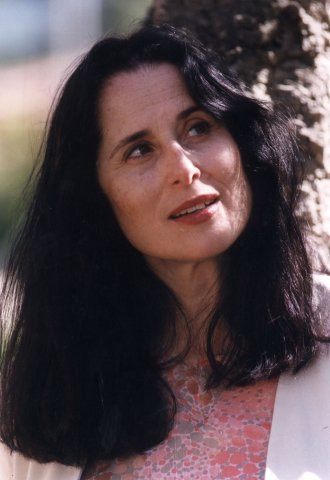
Montserrat Figueras
1999–2013
·
7 albums
Listen
2
/5
Genres
Lullaby
A lullaby is a soothing song or instrumental piece intended to calm and help infants or young children fall asleep. It is typically slow, soft, and repetitive, with a narrow melodic range and gentle rhythms that mimic the rocking motion of cradling. While lullabies exist in virtually every culture, they share common musical traits: simple harmonies (often I–IV–V progressions), stepwise melodies, and meters such as 3/4 or 6/8 that suggest sway. Lyrics often reference sleep, safety, night-time imagery, and parental care. In classical contexts, the term “berceuse” (French for lullaby) denotes a lullaby-like character piece.
Discover
Listen
Catalan Folk Music
Catalan folk music encompasses the traditional songs, dances, and instrumental practices of Catalonia and the wider Catalan-speaking world. It is best known for the sardana circle dance accompanied by the distinctive cobla wind ensemble, as well as seafaring havaneres sung along the coast. The idiom blends medieval and rural song traditions with 19th‑century codification and urban revival. It features modal, diatonic melodies; lively dance rhythms; and a strong social dimension in communal dancing, festivals, and choral singing. Characteristic instruments include the tenora and tible (Catalan shawms), flabiol i tamborí (pipe and tabor), gralla, sac de gemecs (bagpipe), accordion, guitar, and the full cobla instrumentation with brass and double bass. Across regions and repertoires—from sardanes and jotes ebrencs to work songs, goigs, caramelles, and tavern-style havaneres—Catalan folk music remains a living, participatory tradition closely tied to local identity and public celebration.
Discover
Listen
Latin American Classical Music
Latin American classical music is the concert-music tradition cultivated across the Americas south of (and including parts of) Mexico, drawing on European art-music forms while integrating Indigenous, Afro‑Latin, and criollo musical languages. It encompasses sacred and secular repertoires from the colonial baroque through romantic nationalism, modernism, and contemporary experimental currents. Stylistically, it blends European harmony, counterpoint, and orchestral practice with regional rhythmic cells (sesquiáltera/hemiola, 3‑2/2‑3 clave, malambo, huapango), modal and pentatonic inflections from Andean and Mesoamerican sources, and timbral colors inspired by local instruments and dances. The result ranges from exuberant, rhythmically vital symphonic music to intimate guitar works and choral music suffused with local idioms.
Discover
Listen
Spanish Classical Music
Spanish classical music refers to the art-music tradition created by composers active in Spain from the Renaissance to the present, encompassing sacred polyphony, court and theatrical genres, instrumental idioms for guitar and keyboard, and nationalist currents that elevate regional dance and song types. It is characterized by the coexistence of European common-practice techniques with distinctively Iberian colors: modal inflections (especially the Phrygian flavor), the Andalusian cadence, dance-derived rhythms (fandango, seguidilla, jota, bolero), and an idiomatic centrality of the guitar alongside choirs, keyboard, chamber, and orchestral forces. Across centuries, Spanish composers have contributed both to pan-European classical forms (mass, motet, sonata, concerto, symphony, opera) and to uniquely Spanish hybrids (zarzuela, tonadilla), while absorbing deep historical layers that include medieval chant, Renaissance polyphony, and interactions with Sephardic, Moorish/Andalusian, and folk–flamenco traditions.
Discover
Listen
Sephardic Music
Sephardic music is the song and liturgical tradition of the Sephardic Jews—descendants of the Jewish communities of medieval Iberia—carried and reshaped across the Mediterranean after the 1492 expulsion from Spain. It encompasses both secular Judeo‑Spanish (Ladino) repertories of romances, kantikas, and life‑cycle songs, and sacred Hebrew piyyutim set to modal melodies. Musically it blends medieval Iberian balladry with the modal systems and rhythmic cycles of the Ottoman, Maghrebi, and Balkan worlds. Melodies often use maqam-like modes (e.g., Hijaz/Phrygian dominant, Bayat, Nahawand), asymmetrical “aksak” meters (7/8, 9/8, 10/8), and ornamented, melismatic vocal lines. Typical instruments include oud, qanun, violin, guitar, clarinet, and frame drums such as riq, bendir, and daf, with textures that are primarily monophonic or heterophonic rather than harmonically driven.
Discover
Listen
Renaissance
Renaissance music (c. 1400–1600) marks the shift from medieval sonorities to a clearer, triad-based polyphony in which multiple independent voices are treated with near-equal importance. It favors modal counterpoint, pervasive imitation, smooth voice-leading, and carefully prepared cadences. Text intelligibility and expressive text-setting become central concerns, especially in sacred motets and masses and in secular forms like the Italian madrigal and the French chanson. While much of the repertory is a cappella, instrumental consorts (viol, recorder, sackbut, cornett, organ) play a growing role. A steady tactus underpins rhythms, and tuning systems such as meantone temperament shape its characteristic color. Music printing (from 1501) accelerates stylistic diffusion across Europe.
Discover
Listen
Medieval Lyric Poetry
Medieval lyric poetry refers to the monophonic, poet-composer song traditions that flourished in medieval Europe, especially from the 12th to the 14th centuries. It centers on refined, metrically crafted texts set to memorable modal melodies and performed by court poets, minstrels, or itinerant singer-poets. The genre is best known through the Occitan troubadours and northern French trouvères, but related traditions also thrived among the German Minnesänger and the Galician‑Portuguese cantigueiros. Typical themes include courtly love (fin'amor), longing and absence, moral or political commentary (sirventes), crusade songs, and nature imagery, articulated through strict stanzaic forms, elaborate rhyme schemes, and refrains. Performance was usually solo voice accompanied by medieval instruments (vielle, harp, lute, psaltery, flutes), with a predominantly syllabic text setting, modal pitch organization (e.g., Dorian, Mixolydian), and strophic repetition that highlighted poetic craft.
Discover
Listen
Classical
Classical music is the notated art-music tradition of Europe and its global descendants, characterized by durable forms, carefully codified harmony and counterpoint, and a literate score-based practice. The term “classical” can refer broadly to the entire Western art-music lineage from the Medieval era to today, not just the Classical period (c. 1750s–1820s). It privileges long-form structures (such as symphonies, sonatas, concertos, masses, and operas), functional or modal harmony, thematic development, and timbral nuance across ensembles ranging from solo instruments to full orchestras and choirs. Across centuries, the style evolved from chant and modal polyphony to tonal harmony, and later to post-tonal idioms, while maintaining a shared emphasis on written notation, performance practice, and craft.
Discover
Listen
Gregorian Chant
Gregorian chant is the central Western tradition of plainchant: a monophonic, unaccompanied sacred song in Latin (and occasionally Greek) used in the Roman Catholic liturgy. It employs free rhythm guided by the prosody of the text rather than by strict meter, and is sung in unison by clerics or scholas. Its melodies are organized by the system of eight church modes, with characteristic finalis (final), tenor/reciting tones, and melodic formulas. Repertoires include the Proper and Ordinary of the Mass (e.g., Introit, Gradual, Alleluia, Offertory, Communion, Kyrie, Gloria, Credo, Sanctus, Agnus Dei) and the Divine Office (e.g., Antiphons, Responsories, Hymns, Psalms). Although legend credits Pope Gregory I, modern scholarship sees Gregorian chant as a Carolingian synthesis of Old Roman and Gallican chants, standardized across Frankish realms and later the broader Latin West.
Discover
Listen
Plainchant
Plainchant (cantus planus) is the monophonic, unaccompanied chant of the Western Christian liturgy. Sung in Latin (with occasional Greek), it uses modal scales rather than major–minor tonality and unfolds in flexible, speech-like rhythms shaped by the sacred text. Melodically, plainchant ranges from simple syllabic formulas for reciting psalms to ornate melismatic lines for processional and festal moments. It is performed in unison by a schola or congregation, often organized antiphonally or responsorially across the liturgical actions of the Mass and the Divine Office. Its austere sonority, modal color, and text-centered phrasing give it a contemplative, timeless quality.
Discover
Listen
Medieval
Medieval music refers to the diverse sacred and secular musical practices of Europe between the fall of the Western Roman Empire and the dawn of the Renaissance. It spans more than eight centuries, from early monophonic chant to the first notated polyphony. Core features include the use of church modes rather than major/minor, extensive reliance on vocal music (Latin sacred chant as well as vernacular song), and the progressive development from unmeasured chant to rhythmic modal notation and, later, mensural notation. Texture evolves from monophony (plainchant, troubadour songs) to organum, conductus, and the motet, culminating in complex isorhythmic works by the late 13th–14th centuries. Secular traditions—troubadours and trouvères in France, Minnesänger in German lands, and the Iberian Cantigas—coexisted with and influenced sacred practice. Instruments such as the vielle, harp, psaltery, recorder, shawm, hurdy-gurdy, and portative organ often doubled or accompanied voices, though much music remained purely vocal.
Discover
Listen
Medieval Classical Music
Medieval classical music refers to the body of sacred and secular art music created in Europe from roughly the 5th to the late 15th centuries. It encompasses the Christian chant traditions of the early Middle Ages, the emergence of notated polyphony in the High Middle Ages, and the rhythmically and formally sophisticated Ars Nova of the 14th century. At its core are modal melodies (church modes), primarily vocal textures, and a gradual evolution from monophony (single melodic line) to increasingly complex polyphony. Notation develops from adiastematic neumes to staff-based pitch notation and, later, mensural systems that codify rhythm. Characteristic sonorities emphasize perfect consonances (octaves, fifths, and fourths), with triadic harmony only beginning to coalesce near the end of the period. Though rooted in the liturgy (Mass, Office, and Latin song), the era also nurtured rich vernacular traditions—troubadours, trouvères, Minnesänger—and instrumental practices on harp, vielle, recorder, lute, and organ. The period laid the foundational techniques, theories, and repertories that define the entire subsequent Western classical tradition.
Discover
Listen
Show all 12 genres
Albums
2013
1
/5
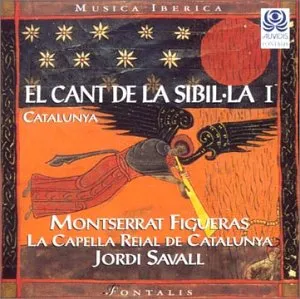
El cant de la Sibil·la I: Catalunya
[anonymous]
Gregorian Chant
Plainchant
Medieval Classical Music
2010
2
/5
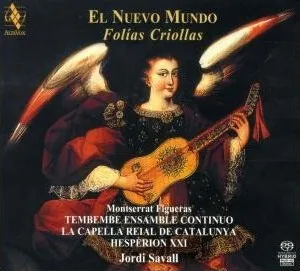
El Nuevo Mundo. Folías Criollas
Montserrat Figueras / Tembembe Ensamble Continuo / La Capella Reial de Cataluny…
Latin American Classical Music
2009
1
/5
Cançons de la Catalunya mil·lenària: Planys & Llegendes
La Capella Reial de Catalunya / Jordi Savall / Montserrat Figueras
Catalan Folk Music
2009
1
/5
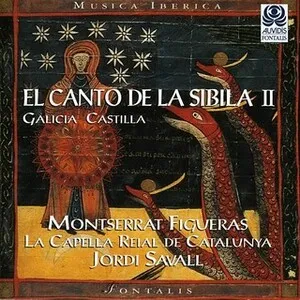
El canto de la Sibila II: Galicia / Castilla
Alfonso X "El Sabio"
Medieval Lyric Poetry
Spanish Classical Music
2004
2
/5
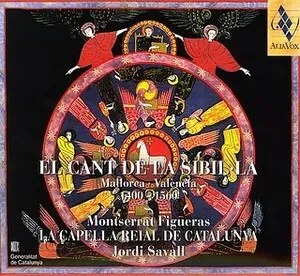
El cant de la Sibil·la: Mallorca/València 1400–1560
[anonymous]
Gregorian Chant
Spanish Classical Music
Plainchant
2002
1
/5
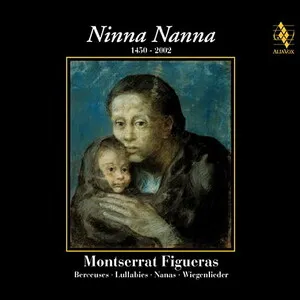
Ninna nanna
[anonymous] / Montserrat Figueras
Lullaby
1999
1
/5
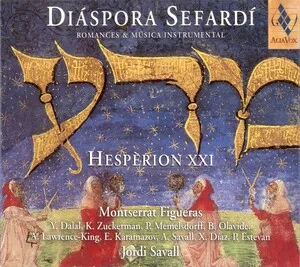
Diáspora Sefardí: Romances & música instrumental
Hespèrion XXI / Jordi Savall / Montserrat Figueras / Yair Dalal / Ken Zuckerman…
Sephardic Music
Similar artists
3
/5
Jordi Savall
Renaissance
Baroque
Classical
3
/5
Oxford Camerata
Gregorian Chant
Medieval
Classical
3
/5
Jeremy Summerly
Gregorian Chant
Medieval
Classical
2
/5
The Hilliard Ensemble
Madrigal
Gregorian Chant
Medieval Classical Music
3
/5
Peter Phillips
Choral
Renaissance
Requiem
3
/5
The Tallis Scholars
Choral
Renaissance
Requiem
3
/5
Anonymous
Ars Antiqua
Gregorian Chant
Medieval
3
/5
Hildegard von Bingen
Gregorian Chant
Plainchant
Classical
3
/5
Marcel Pérès
Gregorian Chant
Plainchant
Ars Antiqua
2
/5
Ensemble Organum
Gregorian Chant
Plainchant
Ars Antiqua
Download our mobile app
Get the Melodigging app and start digging for new genres on the go
Download on the App Store
Get it on Google Play
© 2026 Melodigging
Give feedback
Legal
Melodding was created as a tribute to
Every Noise at Once
, which inspired us to help curious minds keep digging into music's ever-evolving genres.