Your digging level

For this genre
0/8
🏆
Sign in, then listen to this genre to level up

Description

Medieval classical music refers to the body of sacred and secular art music created in Europe from roughly the 5th to the late 15th centuries. It encompasses the Christian chant traditions of the early Middle Ages, the emergence of notated polyphony in the High Middle Ages, and the rhythmically and formally sophisticated Ars Nova of the 14th century.

At its core are modal melodies (church modes), primarily vocal textures, and a gradual evolution from monophony (single melodic line) to increasingly complex polyphony. Notation develops from adiastematic neumes to staff-based pitch notation and, later, mensural systems that codify rhythm. Characteristic sonorities emphasize perfect consonances (octaves, fifths, and fourths), with triadic harmony only beginning to coalesce near the end of the period.

Though rooted in the liturgy (Mass, Office, and Latin song), the era also nurtured rich vernacular traditions—troubadours, trouvères, Minnesänger—and instrumental practices on harp, vielle, recorder, lute, and organ. The period laid the foundational techniques, theories, and repertories that define the entire subsequent Western classical tradition.


Sources: Spotify, Wikipedia, Discogs, RYM, MB, user feedback and other online sources

History

Early Middle Ages (c. 5th–11th centuries)
•   After the fall of the Western Roman Empire, Christian liturgical chant became the central musical practice in Western Europe. Regional chant traditions (Ambrosian, Mozarabic, Gallican) coexisted, but by the 9th–10th centuries, the Roman rite consolidated into what we now call Gregorian chant. •   Notation evolved from neumes—graphic signs indicating melodic contour—to neumes on staff lines (Guido of Arezzo’s innovations), enabling more precise pitch transmission and a pan-European repertoire.
High Middle Ages and the Birth of Polyphony (c. 12th–13th centuries)
•   At the Cathedral of Notre Dame in Paris, composers like Léonin and Pérotin developed florid organum and discant styles, expanding chant into multi-voice architectures and codifying rhythmic modes. •   Secular monophony flourished among troubadours (Occitan) and trouvères (Old French), and Minnesänger (German), who cultivated courtly love poetry with strophic songs accompanied or unaccompanied. •   Emerging genres included conductus and early motets, which layered texts and voices over sustained chant tenors.
Ars Nova and Fourteenth-Century Innovation (c. 1300–1377)
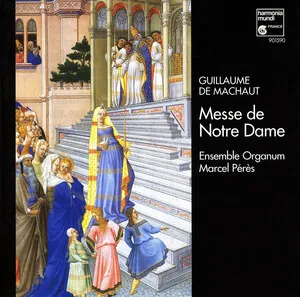
•   The Ars Nova (Philippe de Vitry, Guillaume de Machaut) introduced mensural notation, enabling complex rhythms, syncopation, isorhythmic techniques (talea/color), and clearer distinction of duple/triple time. •   Machaut’s complete Mass cycle (Messe de Nostre Dame) represents a milestone in unified polyphonic liturgy. Secular forms fixed—ballade, rondeau, virelai—intertwined poetry and music at high sophistication.
Late Medieval and Transition to the Renaissance (c. 14th–15th centuries)
•   Italian Trecento (Landini, Squarcialupi Codex) favored forms like ballata and madrigale with sweet melodic lyricism and the famed “Landini cadence.” •   By the 15th century, English composers (John Dunstaple) influenced continental style with consonant thirds and sixths (“contenance angloise”), helping usher in early Renaissance aesthetics (Dufay, Binchois) and the gradual normalization of triadic harmony.
Legacy
•   Medieval theory (modes, counterpoint rudiments), notation, and forms established the conceptual bedrock for Renaissance, Baroque, and later Western art music. Chant repertories remain integral to sacred practice and early-music performance today.

How to make a track in this genre

Core Aesthetics and Materials
•   Modes: Write melodies in church modes (e.g., Dorian, Phrygian, Lydian, Mixolydian). Emphasize finalis (modal final) and reciting tones; avoid functional tonal cadences. •   Texture: Begin with monophony (chant-like melody). For polyphony, add voices that primarily use perfect consonances (unison, octave, fifth; fourth as a consonance in earlier styles) and controlled dissonance at weak positions. •   Sonority: Favor open intervals and parallel or contrary motion against a tenor (often a chant or drone). Reserve thirds and sixths more prominently in later medieval/early Renaissance styles.
Rhythm and Notation Practice
•   Early styles: Treat rhythm flexibly or apply rhythmic modes (patterns of long/short) in Notre Dame-style discant sections. •   Ars Nova: Use isorhythm—organize a tenor into repeating rhythmic (talea) and pitch (color) cycles; permit syncopation and coloration to mark triple/duple divisions.
Sacred vs. Secular Forms
•   Sacred: Compose chant (monophonic), organum (2–4 voices over a chant tenor), conductus (note-against-note, newly-composed Latin poetry), and motet (polytextual in earlier practice with a cantus firmus in the tenor). •   Secular: For French Ars Nova, set formes fixes—ballade (often solemn), rondeau (refrain-driven), and virelai (dance-like). For Italian Trecento, try ballata or madrigale with graceful melodic writing and cadences (e.g., Landini cadence: 7–6–1 over the final).
Instrumentation and Performance
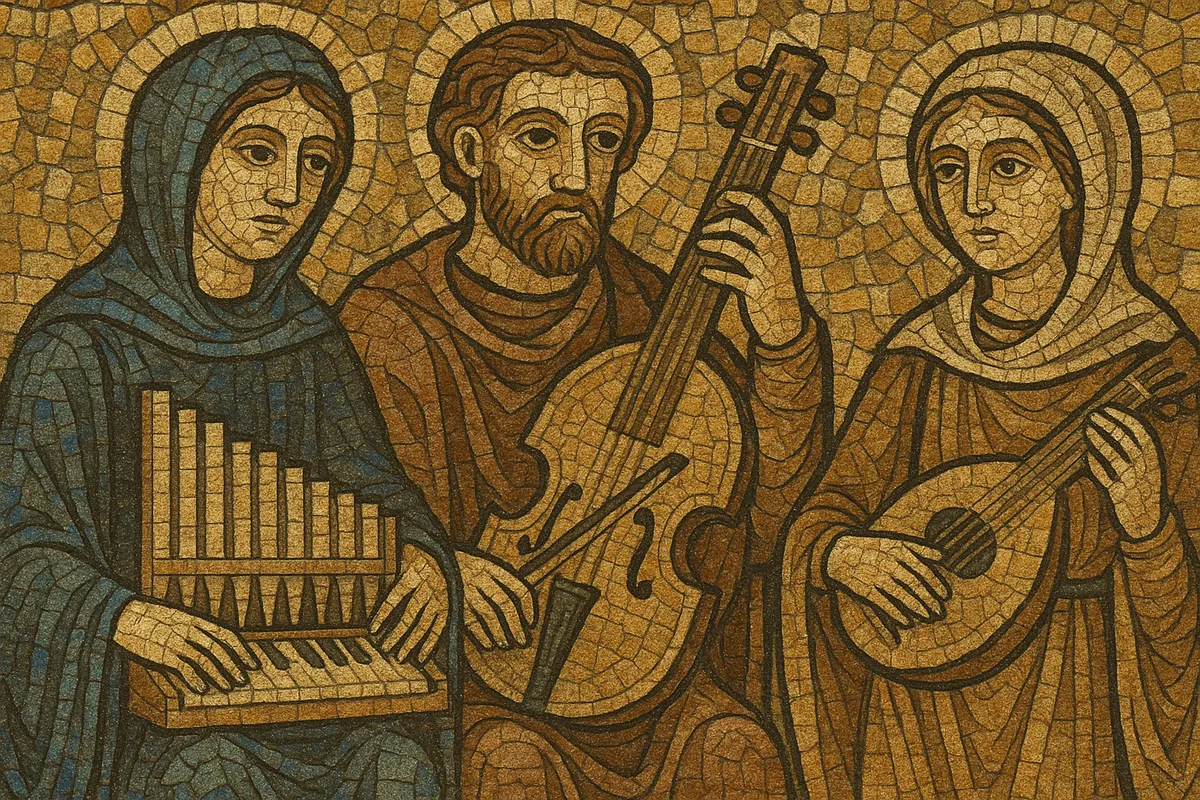
•   Primarily vocal; add medieval instruments for color: vielle, harp, psaltery, recorder, shawms, bagpipes, hurdy-gurdy, lute, portative organ. •   Tuning: Use Pythagorean intonation (purity of fifths); expect bright thirds in later repertoire but less central than in tonal music.
Practical Workflow
    •   

    Choose a mode and craft a chant-like cantus with stepwise motion and narrow ambitus.

    •   

    If writing organum, fix the tenor (chant) and add upper voices: florid melismas over sustained notes (organum purum) or measured discant in rhythmic modes.

    •   

    For Ars Nova motet, design an isorhythmic tenor and layer motetus/triplum with differentiated texts, ensuring cadences on modal finals.

    •   

    In secular songs, set strophic poetry; use refrain structures (Rondeau) and balanced phrases, cadencing with open fifths/octaves (earlier) or with Landini/double-leading-tone cadences (later).

    •   

    Notation: Emulate neumatic/mensural conventions in appearance and rhythmic logic; avoid tonal progressions and dominant–tonic clichés.

Top tracks

Locked
Share your favorite track to unlock other users’ top tracks

Upcoming concerts

in this genre
Influenced by
Has influenced

Download our mobile app

Get the Melodigging app and start digging for new genres on the go
© 2026 Melodigging
Melodding was created as a tribute to Every Noise at Once, which inspired us to help curious minds keep digging into music's ever-evolving genres.
Buy me a coffee for Melodigging