Genres
Artists
Albums
Make Music
Sign in
Sign in
Artists
Tropicanibalismo
Artists
Tropicanibalismo
Meridian Brothers
2008–2024
·
12 albums
Listen
2
/5
Genres
Latin Afrobeat
Latin Afrobeat is a contemporary fusion style that welds the polyrhythmic engine of West African Afrobeat with Latin American and Caribbean grooves. It often marries Afrobeat’s interlocking drum kit, shekere, and highlife‑style guitars with salsa/cumbia percussion sections, montuno piano figures, and bold horn arrangements. The result is a dance‑forward, big‑ensemble sound: long vamps, call‑and‑response vocals (frequently in Spanish or Portuguese), syncopated bass ostinati, and brass stabs—recorded with a warm, live, analog aesthetic. While it honors Fela Kuti’s Afrobeat blueprint, it colors that framework with Afro‑Cuban jazz harmony, salsa horn voicings, and coastal Colombia/Brazilian percussion idioms.
Discover
Listen
Electro Bailando
Electro bailando is a Spanish‑language, club‑ready dance‑pop microgenre that blends big‑room/electro‑house sonics with Latin pop songwriting and Caribbean rhythms. It favors four‑on‑the‑floor kicks, bright supersaw leads, handclaps, and festival‑style builds and drops, while keeping lyrics simple, catchy, and centered on dancing, romance, and summer nightlife. Typical tracks run in the 120–130 BPM range, use ear‑worm hooks in Spanish, and may weave in short dembow or merengue‑influenced percussion breaks. The overall feel is glossy, uplifting, and designed for mass‑appeal dance floors and radio.
Discover
Listen
Tropicanibalismo
Tropicanibalismo is a Colombian scene and aesthetic that emerged in the early 2000s to reinvent coastal musics such as cumbia, porro, champeta, currulao, and chirimía through a contemporary, experimental lens. Artists in this movement treat the traditional repertoire as raw material to be “cannibalized”: they splice Afro‑Colombian rhythms with fuzz guitars, Farfisa/organ timbres, dub mixing, tape echo, and left‑field studio techniques. The result moves between sweaty dance‑floor energy and playful, psychedelic collage, while still keeping the hand‑drummed swing and call‑and‑response singing of the Caribbean and Pacific coasts. Beyond a sound, tropicanibalismo is a DIY, crate‑digging attitude: recover forgotten records and rhythms, filter them through modern electronics and art‑rock sensibilities, and feed them back into Colombia’s urban club and indie circuits.
Discover
Listen
Digital Cumbia
Digital cumbia (often called nu cumbia) is a contemporary, electronically produced reinterpretation of traditional cumbia from Colombia and its many regional offshoots across Latin America. Producers sample or re-record classic cumbia elements—guacharaca scrapes, accordion riffs, woodwinds, and tumbao-style basslines—and set them against modern electronic frameworks such as downtempo, house, hip hop, dub, and dancehall. The result is a mid‑tempo, bass-forward sound (typically around 85–110 BPM) that balances folkloric groove with club-ready synthesis, creative sampling, and spacious dub effects. The scene first cohered in Buenos Aires club nights and netlabels before spreading across Latin America and diasporic hubs, becoming a key pillar of the broader “global bass” movement. Its aesthetics often embrace psychedelic textures, Andean timbres, and sound design techniques that feel both earthy and futuristic.
Discover
Listen
Latin Electronic
Latin electronic is a broad umbrella for electronic music that fuses Latin American and Caribbean rhythms, instrumentation, and timbres with modern production techniques. It blends house and techno beats with cumbia, salsa, and afro-diasporic grooves; layers samplers and synths over hand percussion; and weaves field recordings and folk melodies into club-ready structures. Across the scene, you’ll hear the swing of cumbia’s 3–3–2 feel, the dembow/reggaeton cadence, dub-informed space and bass, and Andean or tropical motifs reimagined through contemporary sound design. While geographically diverse, the style coalesced in the 2000s through DIY labels and collectives in Buenos Aires, Mexico City, Bogotá, and Lima, and later spread globally via digital culture and boutique festivals.
Discover
Listen
Electrocumbia
Electrocumbia (often called digital cumbia or nu-cumbia) is a contemporary, electronic reinterpretation of traditional cumbia. It merges cumbia’s signature off‑beat percussion, guacharaca/güiro textures, and tumbao bass with modern production elements such as synthesizers, drum machines, sampling, and dub-style effects. While rooted in Colombian cumbia, the style took shape across Latin America—especially within Buenos Aires’ club scene—where producers fused folkloric rhythms with downtempo, house, hip hop, and dub aesthetics. The result is a sound that can be both hypnotic and dance‑forward, oscillating between dreamy, psychedelic atmospheres and gritty, bass‑heavy grooves.
Discover
Listen
Salsa
Salsa is a pan–Latin dance music forged primarily in New York City by Puerto Rican, Cuban, and other Caribbean diasporas. It synthesizes Afro‑Cuban rhythmic blueprints, Puerto Rican bomba and plena, jazz harmony, big‑band horn writing, and Nuyorican street culture into a tightly arranged yet improvisation‑friendly style. The music lives on the clave (either 2‑3 or 3‑2), with layered percussion (congas, bongó, timbales, cowbell, güiro, maracas), a tumbao bass that anticipates the beat, and piano montuno guajeos that interlock with the rhythm section. Call‑and‑response vocals (coro/pregón), punchy horn mambos and moñas, and instrumental solos energize the montuno section. Tempos range from medium to fast in 4/4, optimized for social dancing (commonly “on1” or “on2”). Across decades, salsa has branched into harder, percussion‑forward “salsa dura,” smoother “salsa romántica,” and regional scenes in Puerto Rico, Venezuela, and Colombia, while continuing to influence—and be influenced by—neighboring tropical and jazz idioms.
Discover
Listen
Chicha
Chicha is a Peruvian branch of cumbia that crystallized in urban migrant neighborhoods during the late 1960s and 1970s. It fuses Colombian cumbia rhythms with Andean huayno melodies, played on electric guitars that carry surf- and psychedelic-rock inflections. The style is defined by bright, reverb-soaked lead guitar lines in pentatonic (often Andean) motifs, Farfisa- or Hammond-type organs doubling riffs, and a steady cumbia groove driven by drum kit, güiro, and congas. Lyrics frequently reflect internal migration, working-class life, love, longing, and the bittersweet experience of cultural hybridity in Lima and other Peruvian cities. Chicha is sometimes called cumbia peruana (though that umbrella also includes Amazonian cumbia). Its imagery and street-poster aesthetics—neon colors and bold typography—became synonymous with the sound’s vibrant, grassroots identity.
Discover
Listen
Art Pop
Art pop is a strand of pop music that treats the pop song as a canvas for high-concept ideas, experimental techniques, and cross-media aesthetics. It marries accessible melodies and hooks with the visual culture of art schools, the conceptual rigor of the avant-garde, and the studio-as-instrument ethos. Sonically, art pop favors eclectic instrumentation (synths, orchestral timbres, guitars, found sounds), unusual song forms, and sophisticated harmony. It often employs collage, musique concrète–like textures, and theatrical vocal delivery while still keeping a pop-facing surface. Beyond sound, art pop is deeply visual and conceptual: albums are framed as coherent artworks, stagecraft and video are integral, and lyrics tend toward intertextuality, character work, irony, and social commentary. The result is pop that is both immediate and idea-driven.
Discover
Listen
Psychedelic
Psychedelic is an umbrella term for music that seeks to evoke, emulate, or accompany altered states of consciousness through sound, arrangement, and studio technique. It emphasizes timbral color, drones, modal harmony, surreal or mystical lyrics, and immersive production, often using tape manipulation, extended effects, and non‑Western instruments (notably from Indian classical traditions). The result ranges from delicate, dreamlike textures to dense, kaleidoscopic soundscapes intended to expand perception and dissolve conventional song form.
Discover
Listen
Cumbia Colombiana
Cumbia colombiana is the foundational, coastal style of cumbia that emerged on Colombia’s Caribbean littoral. It fuses Indigenous gaita flute traditions, Afro-Colombian drumming, and Iberian melodic sensibilities into a hypnotic, swaying dance music. Traditional ensembles center on gaita hembra and gaita macho flutes, a three-drum battery (tambora, alegre, and llamador), and maracas; later urban and big-band formats added brass, accordion, electric bass, and piano. The groove sits in 2/4 or relaxed 4/4 with a characteristic tresillo and offbeat maraca chatter, while melodies often trace minor or Dorian contours. Its earthy, processional feel—once associated with candlelit courtship dances—became a national sound and a pan–Latin blueprint for countless cumbia variants.
Discover
Listen
Latin
Latin (as a genre label) is a broad umbrella used by the recording industry to categorize popular music rooted in Latin America, the Caribbean, and the Iberian world, often characterized by syncopated Afro-diasporic rhythms, dance-forward grooves, and lyrics primarily in Spanish or Portuguese. As a marketplace category that took shape in the mid-20th century United States, it gathers diverse traditions—Afro-Cuban, Brazilian, Mexican, and Caribbean styles—into a shared space. In practice, "Latin" spans everything from big-band mambo and bolero ballads to contemporary pop, rock, hip hop, and dance fusions produced by artists of Latin American heritage.
Discover
Listen
Vallenato
Vallenato is a traditional folk-pop genre from Colombia’s Caribbean region that centers on storytelling and danceable rhythms. Its signature sound comes from a trio: the diatonic button accordion (melody and riffs), the caja vallenata (a small, single-headed drum providing punchy accents), and the guacharaca (a ribbed scraper driving the groove). Classic vallenato is organized into four main aires (rhythmic-feel types): paseo (lyrical and versatile), merengue (not to be confused with the Dominican genre; it is brisk and bouncy), puya (the fastest and most virtuosic), and son (the slowest, deeply expressive and sentimental). Themes often revolve around love, everyday life, travel, and regional identity, delivered through vivid narrative verses and memorable choruses. Over time, vallenato has absorbed elements of cumbia, porro, son cubano, and bolero, and it has also blended with pop and rock to create modern variants. In 2015, UNESCO recognized the “Traditional Vallenato music of the Greater Magdalena region” as Intangible Cultural Heritage in need of safeguarding, underscoring both its cultural importance and the need to preserve its roots.
Discover
Listen
Electronic
Electronic is a broad umbrella genre defined by the primary use of electronically generated or electronically processed sound. It encompasses music made with synthesizers, drum machines, samplers, computers, and studio/tape techniques, as well as electroacoustic manipulation of recorded or synthetic sources. The genre ranges from academic and experimental traditions to popular and dance-oriented forms. While its sonic palette is rooted in electricity and circuitry, its aesthetics span minimal and textural explorations, structured song forms, and beat-driven club permutations. Electronic emphasizes sound design, timbre, and studio-as-instrument practices as much as melody and harmony.
Discover
Listen
Cumbia
Cumbia is a syncretic dance-music tradition from Colombia’s Caribbean coast that blends African rhythmic heritage, Indigenous (especially gaita flute) melodic practice, and Spanish colonial instrumentation and forms. Traditionally performed in a moderate 2/4 (often felt in 4/4 today), it features interlocking hand-drum parts (tambora, alegre, llamador), guacharaca or maracas for steady texture, and long cane flutes (gaita hembra and gaita macho) carrying call-and-response melodies. As it spread in the 20th century, orchestras and dance bands added accordion, horns, piano, bass, and later electric guitar and synthesizers, creating urban and pan–Latin American variants. Harmonically simple and rhythm-forward, cumbia places groove, ostinati, and vocal refrains at the center, making it both ceremonial in origin and enduringly popular on social dance floors across the Americas.
Discover
Listen
Show all 15 genres
Albums
2024
2
/5
Mi Latinoamérica sufre
Meridian Brothers
Cumbia Colombiana
Tropicanibalismo
Cumbia
2022
1
/5
Meridian Brothers & El Grupo Renacimiento
Meridian Brothers
Tropicanibalismo
Salsa
2021
1
/5
Paz en la tierra
Meridian Brothers & Conjunto Media Luna
Vallenato
Tropicanibalismo
2020
1
/5
Cumbia Siglo XXI
Meridian Brothers
Digital Cumbia
Tropicanibalismo
Cumbia
2017
1
/5
¿Dónde estás María?
Meridian Brothers
Digital Cumbia
Tropicanibalismo
Cumbia
2016
1
/5
El Advenimiento del Castillo Mujer
Meridian Brothers
Tropicanibalismo
2015
1
/5
Los suicidas
Meridian Brothers
Digital Cumbia
Tropicanibalismo
Cumbia
2014
1
/5
Salvadora Robot
Meridian Brothers
Digital Cumbia
Tropicanibalismo
Cumbia
2012
1
/5
Desesperanza
Meridian Brothers
Digital Cumbia
Tropicanibalismo
Latin Electronic
2012
1
/5
VII
Meridian Brothers
Tropicanibalismo
2009
1
/5
Este es el corcel heroico que nos salvará de la hambruna y corrupción
Meridian Brothers
Tropicanibalismo
2008
1
/5
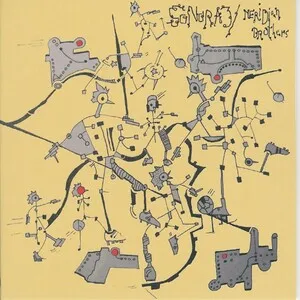
Sonora 3 / Meridian Brothers
Meridian Brothers
Tropicanibalismo
Similar artists
2
/5
Los Pirañas
Cumbia
Chicha
Tropicanibalismo
4
/5
Bomba Estéreo
Cumbia
Digital Cumbia
Electrocumbia
3
/5
Chancha Via Circuito
Nu-Cumbia
Digital Cumbia
Electrocumbia
3
/5
Nicola Cruz
Downtempo
Electrocumbia
Tulum
1
/5
Gonzalo Martinez
Cumbia
Digital Cumbia
Latin Electronic
4
/5
Los Ángeles Azules
Cumbia Mexicana
Latin
Cumbia
1
/5
Grupo Jejeje
Cumbia Sonidera
Cumbia
Cumbia Mexicana
2
/5
El Hijo De La Cumbia
Cumbia
Chicha
Cumbia Sonidera
3
/5
NELSON DÍAZ Y LA CONSTELACIÓN
Salsa
Cumbia
Cumbia Sonidera
3
/5
DEMBOW 714 RECORDS
Cumbia Sonidera
Guaracha
Salsa
Download our mobile app
Get the Melodigging app and start digging for new genres on the go
Download on the App Store
Get it on Google Play
© 2026 Melodigging
Give feedback
Legal
Melodding was created as a tribute to
Every Noise at Once
, which inspired us to help curious minds keep digging into music's ever-evolving genres.