Genres
Artists
Albums
Make Music
Sign in
Sign in
Artists
Carnatic Classical
Artists
Carnatic Classical
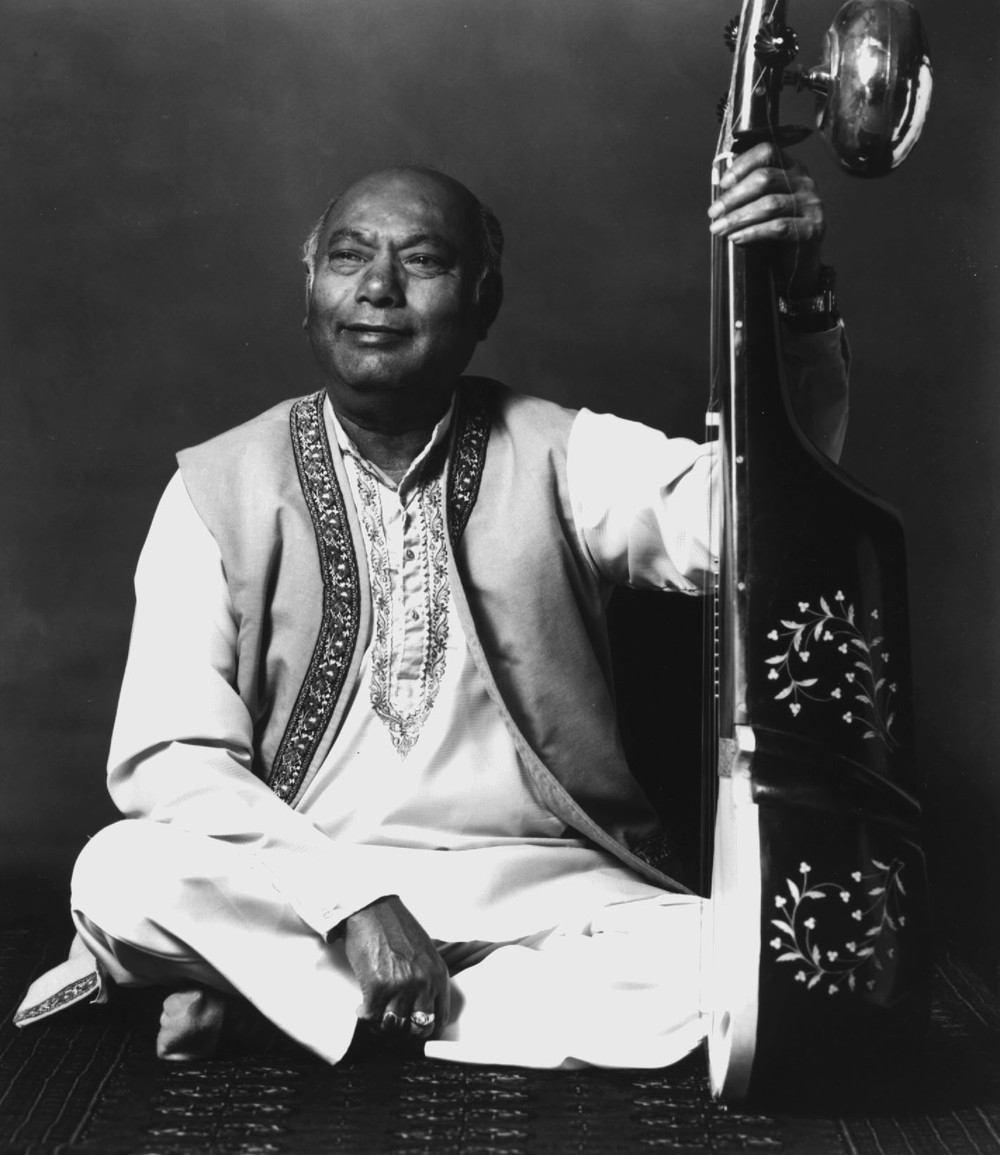
M.S. Gopalakrishnan
1992
·
5 albums
Listen
1
/5
Genres
Carnatic Classical
Carnatic classical (Karnāṭaka saṅgīta) is the South Indian tradition of art music, centered in the Dravidian cultural regions of Andhra Pradesh, Karnataka, Kerala, Tamil Nadu, and Telangana. It is a raga–tala system: melody is organized by rāga (a melodic framework with characteristic phrases and ornamentation called gamaka) and rhythm is organized by tāla (cyclic meters with intricate subdivisions). The repertoire is strongly devotional, with the vast majority of canonical compositions (kritis/keerthanas and varnams) in Telugu and Sanskrit, alongside important works in Tamil and Kannada. Performance is voice-led (even in instrumental music), with a kutcheri (concert) format that balances composed items and improvisation: ālāpana (unmetered raga exploration), niraval (melodic–lyric expansion), kalpana swaras (solfège improvisation), and the climactic rāgam–tānam–pallavi. Core timbres include tambura (drone), violin or veena for melody, and mridangam, ghatam, kanjira, and morsing for percussion. Compared to North India’s Hindustani music, Carnatic music retained a more continuous temple and bhakti (devotional) lineage and less Persian/Islamicate influence, yielding dense gamaka, brisk development, and highly codified rhythmic arithmetic.
Discover
Listen
South Asian Music
South Asian music is a broad regional meta-genre that encompasses the diverse classical, devotional, folk, and popular traditions of the Indian subcontinent, including India, Pakistan, Bangladesh, Nepal, Sri Lanka, Bhutan, and the Maldives. It is organized primarily around modal melody (raga/ragini systems and related regional modes), cyclical rhythm (tala and folk meters), and a strong emphasis on improvisation, ornamentation, and timbral nuance. A constant drone (often tanpura or shruti box) and intricate percussion languages (bols) are characteristic across many forms. Devotional currents (bhajan, kirtan, qawwali), courtly and Sufi lineages, and countless folk idioms feed into modern popular styles from filmi/Bollywood to regional pop and diaspora fusions. While the roots reach back to ancient Vedic chant and early treatises, much of the classical grammar and performance practice recognizable today coalesced between the late medieval and early modern periods, shaped by temple, court, and Sufi contexts and later interfacing with colonial modernity and global pop.
Discover
Listen
Indian Classical
Indian classical music (Shastriya Sangeet / Mārga Sangeet) is the art-music tradition of the Indian subcontinent, organized around melodic frameworks called raga and cyclical meters called tala. It has two major streams: Hindustani music in the North, which foregrounds extended improvisation and raga exploration, and Carnatic music in the South, which is composition-centric with structured but highly sophisticated improvisation. A related eastern tradition is Odissi (from present-day Odisha), whose classical lineage spans roughly two millennia. Despite regional distinctions, these systems share common theoretical roots, performance aesthetics, and a spiritual-philosophical view of music as a vehicle for rasa (embodied aesthetic emotion).
Discover
Listen
South Asian Classical Music
South Asian classical music is the art-music tradition of the Indian subcontinent built around raga (melodic frameworks) and tala (cyclical rhythmic structures). It emphasizes microtonal nuance, ornamentation (gamaka), and a continuous drone, producing a highly expressive, meditative, and often devotional soundworld. The tradition cohered from ancient liturgical and courtly practices and later diverged into two major streams: Hindustani (North Indian) and Carnatic (South Indian). Both systems share the raga–tala grammar but differ in repertoire, performance format, instrumentation, and stylistic emphasis. Improvisation is central in both, balancing formal compositions with spontaneous exploration.
Discover
Listen
Albums
1992
1
/5
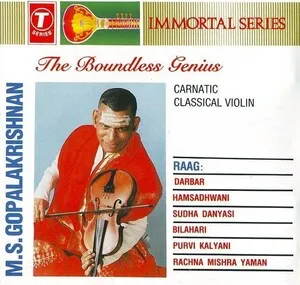
The Boundless Genius
M.S. Gopalakrishnan
Carnatic Classical
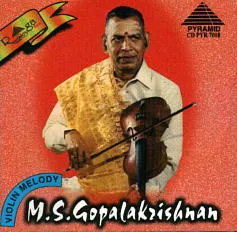
Violin Melody
M.S. Gopalakrishnan
Indian Classical
Violin Melody
M.S. Gopalakrishnan
Carnatic Classical
Violin Melody
M.S. Gopalakrishnan
South Asian Classical Music
Violin Melody
M.S. Gopalakrishnan
South Asian Music
Similar artists
2
/5
L. Subramaniam
Carnatic Classical
Asian Music
Indian Classical
1
/5
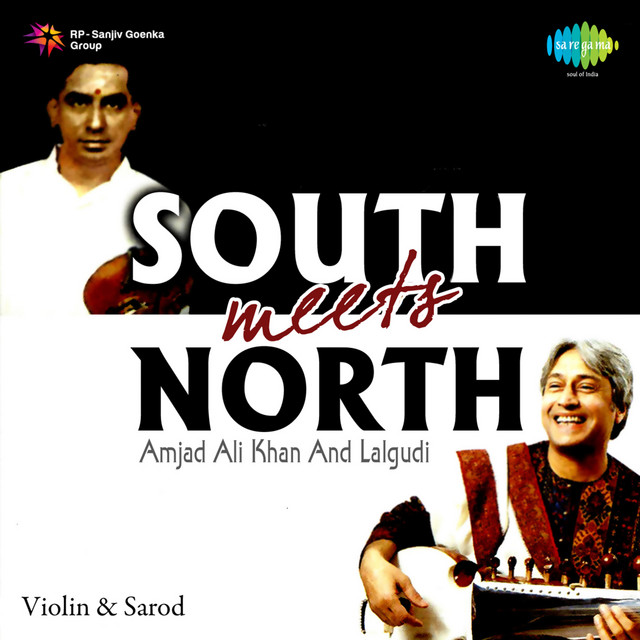
Ustad Amjad Ali Khan
Asian Music
Carnatic Classical
Indian Classical
1
/5
Sangeetha Kalanidhi Lalgudi G.Jayaraman
Asian Music
Carnatic Classical
Indian Classical
1
/5
Various Artists
Afro-Funk
Alternative Rock
Ambient
1
/5
L. Shankar
Carnatic Classical
Indian Classical
Indo Jazz
4
/5
Nusrat Fateh Ali Khan
Qawwali
World
Sufi
3
/5
Ry Cooder
Piedmont Blues
Blues
Jazz
3
/5
Ravi Shankar
Indian Classical
South Asian Classical Music
Hindustani Classical
2
/5
Ali Akbar Khan
Dhrupad
Indian Classical
Hindustani Classical
2
/5
Kishori Amonkar
Khyal
Bhajan
Devotional
Download our mobile app
Get the Melodigging app and start digging for new genres on the go
Download on the App Store
Get it on Google Play
© 2026 Melodigging
Give feedback
Legal
Melodding was created as a tribute to
Every Noise at Once
, which inspired us to help curious minds keep digging into music's ever-evolving genres.