Genres
Artists
Albums
Make Music
Sign in
Sign in
Artists
Symphonic Poem
Artists
Symphonic Poem
Gustav Holst
1981–2017
·
9 albums
Listen
3
/5
Genres
English Pastoral School
The English Pastoral School is an early 20th‑century current in British classical music that evokes the landscapes, folk traditions, and choral heritage of England. Its sound is lyrical, modal, and often deliberately diatonic, favoring transparent textures and long, singing lines over dense chromaticism. Composers in this movement frequently drew on English folk songs and hymnody, and rediscovered techniques from Tudor and Renaissance polyphony. Orchestration tends to feature warm strings, solo woodwinds (especially oboe and cor anglais), horn choirs, and harp, with choral and organ writing closely allied to Anglican liturgy. The mood ranges from serenely bucolic to elegiac, reflecting both an idealized countryside and the losses of the First World War.
Discover
Listen
Pops Orchestra
Pops orchestra refers to symphonic ensembles and programs that present popular repertoire with orchestral forces. Typical programs combine light classics, Broadway and film music, jazz and swing medleys, holiday standards, and orchestral arrangements of contemporary pop and rock songs. The style emphasizes lush string writing, tuneful melodies, prominent counter‑melodies in woodwinds and brass, dramatic swells, and clear, audience‑friendly rhythms. While the instrumentation is that of a symphony orchestra, pops concerts often add a rhythm section (drum kit, bass, guitar, keyboard) and feature guest vocalists or crossover soloists.
Discover
Listen
Symphonic Poem
A symphonic poem (also called a tone poem) is a single-movement orchestral work that conveys an extra-musical narrative, image, or idea through purely instrumental means. Rather than following traditional multi-movement symphonic forms, it uses flexible structures—often rhapsodic or episodic—to mirror a story, painting, landscape, poem, or philosophical concept. Rooted in Romantic aesthetics, the symphonic poem emphasizes vivid orchestration, thematic transformation, and striking harmonic color to achieve narrative coherence. It commonly deploys leitmotif-like themes that evolve as the program progresses, creating an arc that feels cinematic long before the advent of film scoring.
Discover
Listen
Romantic Classical
Romantic classical (Romantic-era) music is the 19th‑century phase of Western art music in which expression, individuality, and imagination came to the fore. Composers expanded the orchestra, embraced chromatic harmony and bold modulations, and favored long‑breathed, emotive melodies. Aligned with the wider Romantic movement in literature and the arts, it prized the subjective—love, nature, the supernatural, nationalism, and the sublime—often through programmatic narratives. New and transformed genres (the symphonic poem, grand opera, the art song/Lied, concert overtures) coexisted with reimagined Classical forms (symphony, sonata, concerto) that grew in scale and harmonic daring. From ca. 1800 through the early 20th century, Romantic music stretched from Beethoven’s heroic style and Schubert’s lyricism to Wagner’s leitmotivic dramas and Tchaikovsky’s symphonic ballet-infused language, culminating in late-Romantic gigantism and post-Romantic continuations.
Discover
Listen
Symphony
A symphony is a large-scale composition for orchestra, typically cast in multiple movements that contrast in tempo, key, and character. In the Classical era, the most common layout was four movements: a fast opening movement (often in sonata form), a slow movement, a dance-like movement (minuet or later scherzo), and a fast finale. Over time, the symphony evolved from compact works of the mid-18th century into expansive, architecturally ambitious statements in the 19th and 20th centuries. Composers increasingly treated the symphony as a vehicle for thematic development, cyclical unity, and dramatic narrative—sometimes programmatic, sometimes abstract—using the full coloristic range of the modern orchestra. While rooted in Classical balance and clarity, symphonies incorporate a wide spectrum of harmonic languages and orchestral techniques. From Haydn’s wit and structural innovation to Beethoven’s heroic scope, Mahler’s cosmic breadth, and Shostakovich’s modern intensity, the symphony has remained a central pillar of Western concert music.
Discover
Listen
Orchestral
Orchestral music refers to compositions written for an orchestra—a large ensemble typically built around a string section (violins, violas, cellos, double basses), complemented by woodwinds, brass, percussion, and often harp, keyboard, or other auxiliary instruments. A conductor coordinates the ensemble, shaping balance, phrasing, and expression. The style emphasizes coloristic timbre combinations, dynamic range from the softest pianissimo to explosive tuttis, and textures that can shift seamlessly between transparent chamber-like writing and monumental masses of sound. Orchestral writing underpins concert genres such as symphonies, overtures, and tone poems, as well as opera, ballet, and modern film and game scores. While orchestral writing evolved across centuries, its core craft centers on melody, counterpoint, harmony, register, and orchestration—the art of assigning musical ideas to instruments to achieve clarity, contrast, and narrative impact.
Discover
Listen
Ballet
Ballet (as a musical genre) refers to orchestral music written to accompany choreographed dance on stage. It prioritizes clear tempi, strongly articulated rhythms, and memorable leitmotifs to support narrative, character, and movement. While rooted in court entertainment, ballet music evolved into a sophisticated, self-sufficient concert art: many ballets yield popular orchestral suites that are performed independently. Typical numbers include adagios, variations, codas, divertissements, character dances, and large ensemble scenes that mirror the dramatic arc of the choreography. Stylistically, ballet spans Baroque courtly idioms, Classical clarity, Romantic lyricism, and 20th‑century modernism and neoclassicism. It is predominantly instrumental (full orchestra), but can occasionally include choral or vocal parts when dramaturgy requires it.
Discover
Listen
Opera
Opera is a large-scale theatrical genre that combines music, drama, and visual spectacle, in which the story is primarily conveyed through singing accompanied by an orchestra. It unites solo voices, ensembles, and chorus with staging, costumes, and often dance to create a total artwork. Emerging in late Renaissance Italy and flourishing in the Baroque era, opera developed signature forms such as recitative (speech-like singing that advances the plot) and aria (lyrical numbers that explore character and emotion). Over the centuries it evolved diverse national styles—Italian bel canto, French grand opéra, German music drama—while continually experimenting with orchestration, harmony, narrative structure, and stagecraft.
Discover
Listen
Classical
Classical music is the notated art-music tradition of Europe and its global descendants, characterized by durable forms, carefully codified harmony and counterpoint, and a literate score-based practice. The term “classical” can refer broadly to the entire Western art-music lineage from the Medieval era to today, not just the Classical period (c. 1750s–1820s). It privileges long-form structures (such as symphonies, sonatas, concertos, masses, and operas), functional or modal harmony, thematic development, and timbral nuance across ensembles ranging from solo instruments to full orchestras and choirs. Across centuries, the style evolved from chant and modal polyphony to tonal harmony, and later to post-tonal idioms, while maintaining a shared emphasis on written notation, performance practice, and craft.
Discover
Listen
Show all 9 genres
Albums
2017
1
/5
The Planets
Gustav Holst / New York Philharmonic / Leonard Bernstein
Symphonic Poem
2007
1
/5
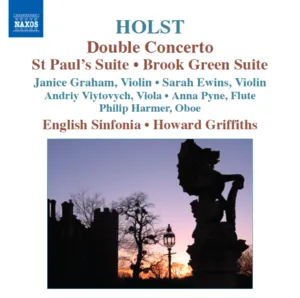
Double Concerto; St Paul's Suite; Brook Green Suite
Gustav Holst / English Sinfonia / Howard Griffiths
English Pastoral School
2007
2
/5
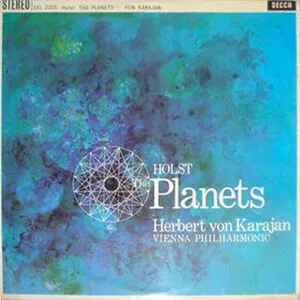
The Planets
Gustav Holst / Wiener Philharmoniker / Herbert von Karajan
Symphonic Poem
2000
1
/5
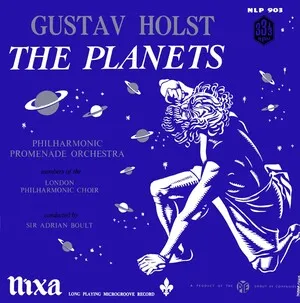
The Planets
Gustav Holst / London Philharmonic Orchestra / Adrian Boult
Symphonic Poem
1998
1
/5
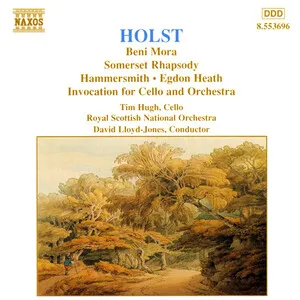
Beni Mora; Somerset Rhapsody; Hammersmith; Egdon Heath; Invocation for Cello and Orchestra
Gustav Holst
English Pastoral School
1987
2
/5
The Planets
Gustav Holst / Orchestre symphonique de Montréal / Charles Dutoit
Symphonic Poem
Classical
1987
2
/5
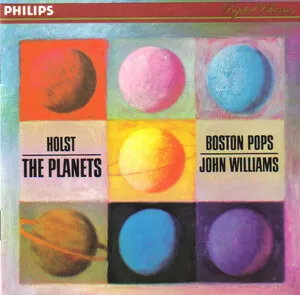
The Planets
Gustav Holst / Boston Pops John Williams
Pops Orchestra
1986
1
/5
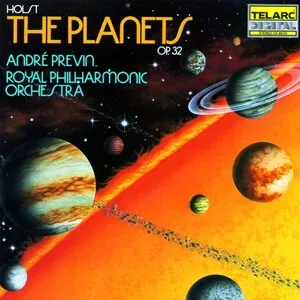
The Planets, Op. 32
Gustav Holst / Royal Philharmonic Orchestra / André Previn
Symphonic Poem
1981
3
/5
The Planets
Gustav Holst / Berliner Philharmoniker / Herbert von Karajan
Symphonic Poem
Similar artists
4
/5
Royal Philharmonic Orchestra
Calming Instrumental
Classical
Deep Soundtrack
4
/5
André Previn
Orchestral Performance
Classical
Deep Soundtrack
4
/5
Herbert von Karajan
Classical
Symphonic Poem
Symphony
3
/5
Richard Strauss
Symphonic Poem
Classical
Orchestral
4
/5
Berliner Philharmoniker
Classical
Romantic Classical
Romanticism
4
/5
London Symphony Orchestra
Classical
Ballet
Concerto
3
/5
Jean Sibelius
Classical
Concerto
Impressionism
3
/5
Modest Mussorgsky
Classical
Saint Petersburg School
Orchestral
4
/5
Pyotr Ilyich Tchaikovsky
Classical
Moscow School
Ballet
4
/5
Academy of St. Martin in the Fields
Classical
Classical Performance
Baroque
Download our mobile app
Get the Melodigging app and start digging for new genres on the go
Download on the App Store
Get it on Google Play
© 2026 Melodigging
Give feedback
Legal
Melodding was created as a tribute to
Every Noise at Once
, which inspired us to help curious minds keep digging into music's ever-evolving genres.