Genres
Artists
Albums
Make Music
Sign in
Sign in
Artists
Bebop
Artists
Bebop
Dizzy Gillespie
1954–2024
·
11 albums
Listen
3
/5
Genres
Souldies
Souldies is a modern revival of classic lowrider “oldies” soul—slow, tender ballads rooted in 1960s and early-’70s sweet soul and doo‑wop aesthetics, reimagined by a new generation of largely Chicano/Latinx artists in Southern California. Characterized by warm, analog-leaning production, mellow backbeats, honeyed vocal harmonies, and heart‑on‑sleeve lyricism, the style favors mid‑slow tempos, tape‑like saturation, spring/plate reverb, and minimalist yet expressive arrangements. English and Spanish (or Spanglish) lyrics often explore love, longing, devotion, and cruising/lowrider culture. Souldies sits at the intersection of classic soul, rhythm & blues, northern soul selections, and Latin soul, offering a contemporary, community‑centered sound that feels both timeless and newly personal.
Discover
Listen
Contemporary Post-Bop
Contemporary post-bop is a modern continuation of the post-bop language, balancing the harmonic sophistication of bebop and hard bop with modal harmony, free-jazz openness, and updated rhythmic concepts. It typically favors small acoustic ensembles (saxophone or trumpet-led groups with piano, double bass, and drums), although guitar often substitutes or augments the piano in many groups. Compared with classic post-bop of the 1960s, contemporary post-bop embraces broader metric variety (odd meters, mixed meter, and polyrhythms), more flexible forms, and a wider palette of timbres. The writing often features original compositions with memorable heads, extended harmonies, motivic development, and space for improvisation that can move fluidly from inside playing to harmonically “outside” lines. The aesthetic ranges from straight-ahead swing to straight-eighth textures, with influences from ECM-style lyricism, modern classical voicings, and contemporary groove-oriented feels. The result is music that sounds rooted in the jazz tradition yet distinctly current in touch and tone.
Discover
Listen
Hard Bop
Hard bop is a mid‑1950s subgenre of jazz that extends bebop’s virtuosic improvisation while bringing back a more explicitly African‑American groove. It incorporates pronounced influences from blues, rhythm & blues, and gospel—especially evident in riff‑based heads, church‑like harmonic movements on piano, and earthy saxophone phrasing. Compared with bebop, hard bop favors stronger backbeat accents, more grounded bass lines, and memorable, soulful melodies, all while retaining fast, harmonically rich improvisation when desired. Typical ensembles are small groups (often quintets) with trumpet, tenor sax, piano, bass, and drums. The style’s hallmark is the blend of bop harmony and lines with blues/gospel feeling and a driving swing feel.
Discover
Listen
Bebop
Bebop is a modern jazz style characterized by fast tempos, intricate melodies, and harmonically advanced improvisation. It moved jazz from dance-oriented big-band music to art-focused small-ensemble performance, prioritizing virtuosity and spontaneous creativity. Typical bebop groups are quintets or quartets featuring trumpet, alto or tenor saxophone, piano, double bass, and drums. The music emphasizes asymmetrical phrasing, extended chords and substitutions, and contrafacts—new melodies written over the chord changes of popular songs. Rhythm sections center time on the ride cymbal, with the bass walking and the drummer "dropping bombs" on snare and bass drum. Melodies are angular and chromatic, and soloists outline rapidly shifting harmonies with bebop scales, enclosure tones, and altered dominants.
Discover
Listen
Latin Jazz
Latin jazz is a fusion of jazz harmony and improvisation with Afro–Latin American rhythms, song forms, and percussion. It combines the swing, bebop, and big-band traditions with clave-based grooves such as son, rumba, danzón, and mambo, and later integrates Brazilian feels like samba and bossa nova. Typical features include the use of the clave (2–3 or 3–2), piano montunos (guajeos), bass tumbao patterns, timbales cáscara, conga marcha, and call-and-response horn "mambo" figures. While the rhythm section locks into cyclical patterns, soloists improvise using the vocabulary of jazz, creating music that is both danceable and harmonically rich.
Discover
Listen
Afro-Cuban Jazz
Afro-Cuban jazz (often historically called Cubop) is a fusion of Afro-Cuban rhythmic traditions and North American jazz harmony, melody, and improvisation. It sets jazz writing and soloing inside the matrix of the clave, combining straight-eighth Afro-Cuban grooves (mambo, rumba, son montuno, danzón) with big-band and bebop vocabulary. Hallmarks include piano montunos (guajeos), tumbao bass lines, horn mambos and moñas (syncopated riffs), and a percussion section of congas, bongos, timbales, cowbell, and claves. The result is music that is harmonically sophisticated yet dance-driven, balancing arranged horn passages with open sections for improvisation, and emphasizing call-and-response and layered polyrhythms.
Discover
Listen
Cool Jazz
Cool jazz is a modern jazz style marked by relaxed tempos, lighter tone, and a focus on arrangement, counterpoint, and timbral clarity. It favors understatement over virtuoso display and uses dynamics, space, and balance to create an airy, "cool" ambience. Emerging in the late 1940s, the style drew on bebop’s harmonic sophistication while smoothing its angular edges, often incorporating classical techniques such as linear writing and orchestral color. Hallmarks include brushed drums, lyrical improvisation, careful voice-leading, and unusual instrumentation (for jazz) like French horn and tuba alongside trumpet, saxophones, trombone, piano, bass, and drums. Although associated with the U.S. West Coast in the 1950s, cool jazz originated in New York through sessions led by Miles Davis and arranged by Gil Evans and others. It went on to influence bossa nova, third stream, modal jazz, and later smooth jazz and lounge aesthetics.
Discover
Listen
Jump Blues
Jump blues is a high‑energy, small‑combo offshoot of swing and urban blues that crystallized in the United States during the 1940s. It features driving boogie‑woogie piano patterns, a propulsive shuffle or backbeat, riffing horn sections (often led by tenor sax), and exuberant, shout‑style vocals. Songs typically use 12‑bar blues or related blues‑based forms at brisk tempos, with catchy call‑and‑response hooks between singer and horns. Lyrics frequently center on nightlife, romance, humor, and double entendres. The style’s compact arrangements, honking sax solos, and dance‑floor focus made it a jukebox staple and a crucial bridge from swing to rhythm and blues and early rock and roll.
Discover
Listen
Big Band
Big band is a large-ensemble style of jazz and popular dance music built around brass, reed, and rhythm sections playing arranged parts. Typical instrumentation includes five saxophones (often doubling clarinet/flute), four trombones, four trumpets, and a rhythm section of piano, guitar, upright bass, and drum set. The music emphasizes swing rhythms, call-and-response between sections, riff-based writing, and dramatic shout choruses, while leaving space for improvised solos. Born in American ballrooms and theaters, big band became the sound of the Swing Era, providing both music for dancing and a platform for sophisticated arranging and orchestration that shaped much of 20th‑century jazz and popular music.
Discover
Listen
Vocal Jazz
Vocal jazz is a jazz tradition in which the human voice is treated as an instrument—matching the phrasing, articulation, and timbral nuance of horns or piano. Singers often improvise melodically and rhythmically, including using scat singing (nonsense syllables) to emulate instrumental solos. At the same time, many vocal‑jazz performances favor traditional, pop‑leaning song structures and clear lyric delivery, reducing the overall role of extended improvisation compared with small‑group instrumental jazz. Repertoires frequently draw from Tin Pan Alley and Broadway standards (the Great American Songbook), rendered with swing, ballad, or Latin feels.
Discover
Listen
Jazz
Jazz is an improvisation-centered music tradition that emerged from African American communities in the early 20th century. It blends blues feeling, ragtime syncopation, European harmonic practice, and brass band instrumentation into a flexible, conversational art. Defining features include swing rhythm (a triplet-based pulse), call-and-response phrasing, blue notes, and extended harmonies built on 7ths, 9ths, 11ths, and 13ths. Jazz is as much a way of making music—spontaneous interaction, variation, and personal sound—as it is a set of forms and tunes. Across its history, jazz has continually hybridized, from New Orleans ensembles and big-band swing to bebop, cool and hard bop, modal and free jazz, fusion, and contemporary cross-genre experiments. Its influence permeates global popular and art music.
Discover
Listen
Jazz Trumpet
Jazz trumpet is the idiomatic approach to playing the trumpet within jazz, where the instrument often serves as a lead melodic voice and improvisational vehicle. It is defined by expressive tone production, swing phrasing, blues inflection, and a wide palette of articulations and effects such as vibrato, growls, half-valve smears, shakes, fall-offs, and the creative use of mutes (Harmon, plunger, straight, cup, and bucket). Across its history, jazz trumpet has adapted to changing harmonic languages—from early New Orleans polyphony and swing-era melodies to bebop’s chromatic lines, hard bop’s gospel- and blues-rooted intensity, cool and modal lyricism, avant-garde freedom, electric fusion, and contemporary post-bop and crossover forms. The role of the jazz trumpeter spans leading themes (heads), creating spontaneous melodies over standard song forms, shaping ensemble textures, and communicating an individual sound and time feel, whether laid-back, on top of the beat, or deeply behind it.
Discover
Listen
Show all 12 genres
Albums
2024
1
/5
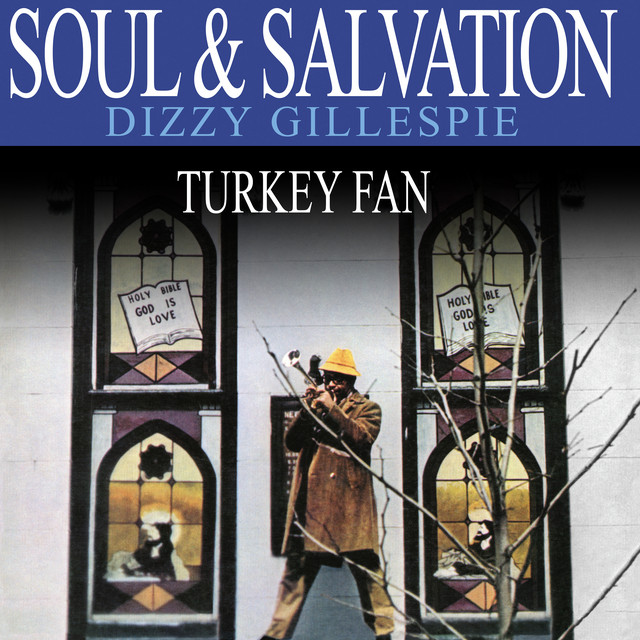
Turkey Fan
Dizzy Gillespie
Contemporary Post-Bop
1976
1
/5
Afro-Cuban Jazz Moods
Dizzy Gillespie & Machito
Afro-Cuban Jazz
Latin Jazz
Big Band
1975
1
/5
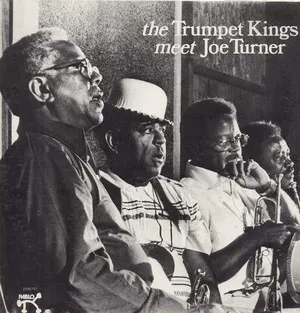
The Trumpet Kings Meet Joe Turner
The Trumpet Kings & Big Joe Turner
Jump Blues
1966
2
/5
The Melody Lingers On
Dizzy Gillespie
Contemporary Post-Bop
Hard Bop
Jazz Trumpet
1964
2
/5
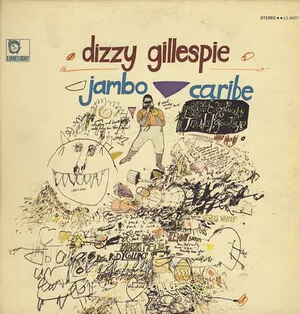
Jambo Caribe
Dizzy Gillespie
Afro-Cuban Jazz
1961
1
/5
Gillespiana
Dizzy Gillespie and His Orchestra
Bebop
Big Band
1958
1
/5
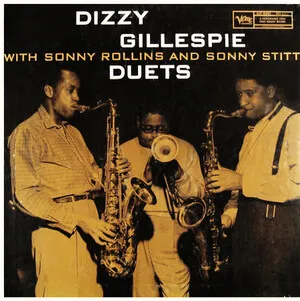
Duets
Dizzy Gillespie, Sonny Rollins & Sonny Stitt
Bebop
1958
2
/5
For Musicians Only
Stan Getz, Dizzy Gillespie & Sonny Stitt
Bebop
1957
1
/5
Sonny Side Up
Dizzy Gillespie, Sonny Stitt & Sonny Rollins
Bebop
Hard Bop
Jazz
1955
2
/5
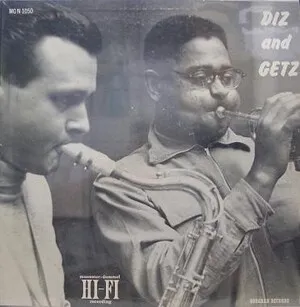
Diz and Getz
Dizzy Gillespie & Stan Getz
Bebop
1954
2
/5
Afro
Dizzy Gillespie and His Orchestra
Afro-Cuban Jazz
Latin Jazz
Big Band
Similar artists
2
/5
Clark Terry
Bebop
Jazz
Big Band
3
/5
Kenny Dorham
Jazz Trumpet
Latin Jazz
Bebop
3
/5
Charles Mingus
Jazz
Hard Bop
Post-Bop
4
/5
Stan Getz
Samba-Jazz
Bebop
Jazz
3
/5
Charlie Parker
Contemporary Post-Bop
Bebop
Cool Jazz
3
/5
Joe Henderson
Hard Bop
Jazz
Bebop
3
/5
Oliver Nelson
Hard Bop
Jazz
Bebop
3
/5
Buddy Rich
Bebop
Big Band
Hard Bop
3
/5
Gil Evans
Jazz
Big Band
Bebop
2
/5
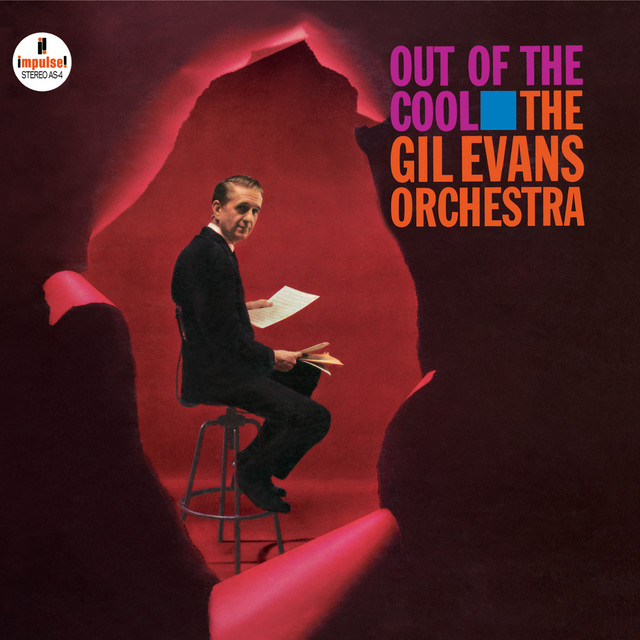
The Gil Evans Orchestra
Big Band
Cool Jazz
Bebop
Download our mobile app
Get the Melodigging app and start digging for new genres on the go
Download on the App Store
Get it on Google Play
© 2026 Melodigging
Give feedback
Legal
Melodding was created as a tribute to
Every Noise at Once
, which inspired us to help curious minds keep digging into music's ever-evolving genres.