Genres
Artists
Albums
Make Music
Sign in
Sign in
Artists
Sierreño
Artists
Sierreño
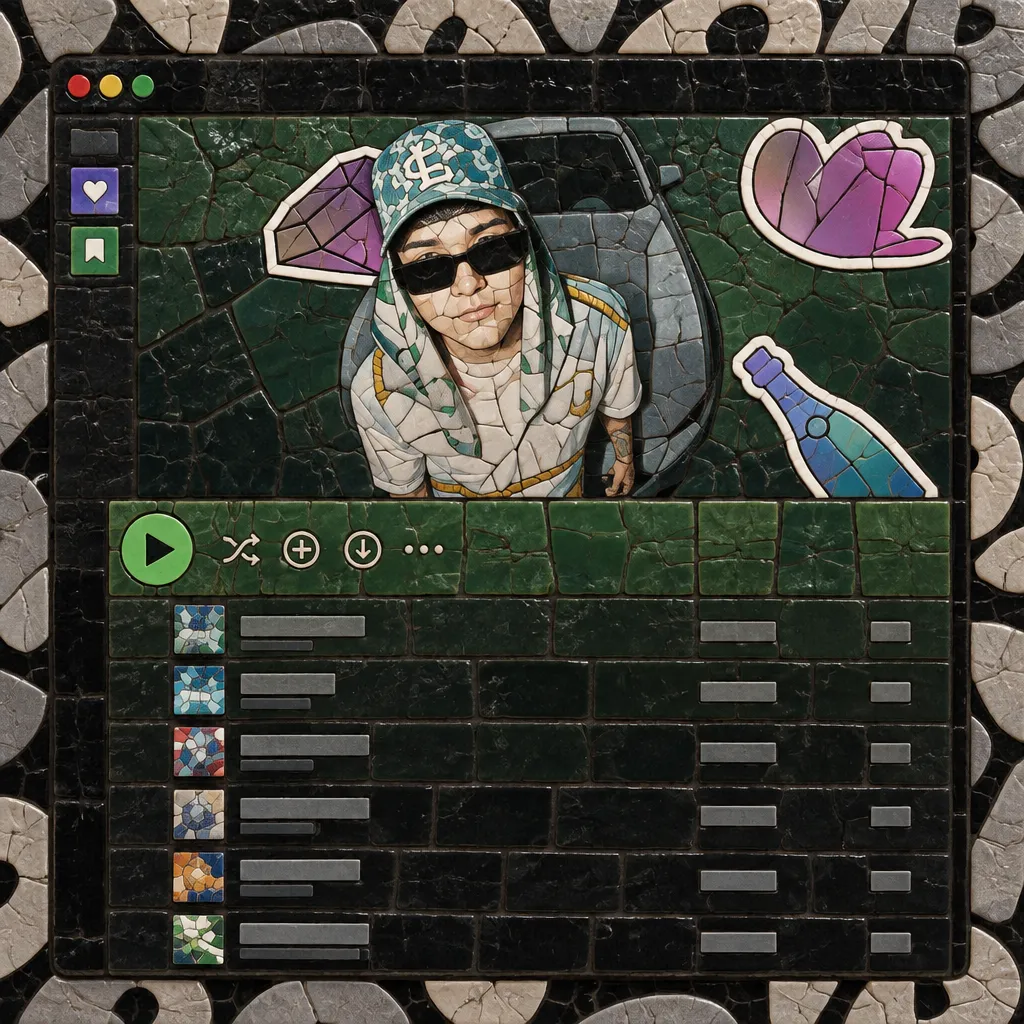
DannyLux
2021–2025
·
3 albums
Listen
4
/5
Genres
Sad Sierreno
Sad sierreño is a Gen-Z wave within Regional Mexicano that emphasizes intimate, melancholic guitar trios, confessional lyrics, and bedroom-pop aesthetics. It retains the core sierreño instrumentation—lead 12‑string requinto, rhythm guitar, and bass—while softening dynamics, slowing tempos, and foregrounding close‑miked vocals soaked in light reverb. Lyrically it fixates on heartbreak, loneliness, youthful yearning, and bittersweet nostalgia. Musically it often toggles between bolero/vals sierreño feels in minor keys and sparse 4/4 ballads, letting fingerpicked arpeggios and melodic requinto runs carry the emotional weight. The sound rose with U.S. Mexican-American youth, using social media virality to merge traditional sierreño with lo‑fi/indie sensibilities.
Discover
Listen
Dembow Belico
Dembow bélico is a recent crossover of the Dominican dembow rhythm with the lyrical aesthetics and sonic signifiers of Mexico’s corridos bélicos and broader regional mexicano. It keeps dembow’s relentless, syncopated, club-ready percussion, but injects “bélico” (warlike) storytelling, slang, and iconography drawn from the corridos world. Producers typically fuse fast dembow drums, sirens, and chopped vocal shots with Mexican regional elements like tuba stabs, sierreño/12‑string guitar riffs, and banda-style brass hits. The result is a high-energy, gritty, and party-oriented sound that also carries the bravado and conflict-laced narratives characteristic of corridos bélicos.
Discover
Listen
Electro Corridos
Electro corridos (often styled as electrocorridos, electro bélico, or house belicón) fuse the narrative songwriting, vocal delivery, and melodic motifs of Mexican corridos with modern electronic dance production. Hallmarks include four-on-the-floor or syncopated club drums, sidechained bass lines that mirror traditional tuba/tololoche figures, bright synth leads echoing requinto/accordion riffs, and drop-focused arrangements. While lyrics retain corridos’ storytelling—romance, street life, hustle, regional pride—the sound is engineered for clubs and festivals, sitting at the crossroads of Regional Mexicano and EDM/house culture.
Discover
Listen
Dungeon Rap
Dungeon rap is a dark, internet-born microgenre that fuses the gloomy, medieval-fantasy atmospheres of dungeon synth with the rhythms, vocal cadences, and low‑end of underground trap and Memphis-influenced rap. Its sound is defined by lo-fi, reverb-soaked synth pads, organ or choir timbres, modal or minor-key melodies reminiscent of dungeon synth, and skeletal 808-driven drum patterns. Vocals (when present) are typically pitched-down, whispered, or deadpan, often dealing with occult, fantasy, and horror imagery. Producers frequently sample retro RPG soundtracks, black metal-adjacent ambient passages, or cassette-era dungeon synth, then anchor them with trunk-rattling subs and crispy hi-hat rolls. The genre coalesced online at the turn of the 2020s through Bandcamp/YouTube scenes and boutique labels, crystallizing a distinct aesthetic that feels equal parts crypt-ambient and street-level rap.
Discover
Listen
Corrido Tumbado
Corrido tumbado (sometimes called trap corrido) is a contemporary fusion of the traditional Mexican corrido with trap and hip hop aesthetics. It preserves acoustic, sierreño-style instrumentation—lead requinto guitar, rhythm guitar (often 12‑string), and tololoche or tuba—while adopting modern rhythmic feels, flows, and production habits from trap: half‑time grooves, skittering hi‑hats, 808 sub‑bass layers, ad‑libs, and light Auto‑Tune. Lyrically, it updates the corrido’s narrative tradition with first‑person storytelling about hustle, street life, migration, romance, luxury brands, and cannabis culture, frequently delivered with contemporary Mexican slang and occasional Spanglish. The result is a laid‑back yet gritty sound that bridges Regional Mexicano and global urban music cultures.
Discover
Listen
Corridos Alternativos
Corridos alternativos is a contemporary wave of Mexican corridos that blends the narrative ballad tradition with Gen‑Z indie, pop, and hip‑hop sensibilities. Instead of the brisk polka/two‑step feel of classic corridos, it often slows the groove toward mid‑tempo, mixing sierreño trio guitars and tololoche/tuba with 808s, trap hi‑hats, light synth pads, and Auto‑Tune. Lyrically it keeps the corrido’s storytelling DNA, but shifts focus from outlaw exploits to intimate themes: heartbreak, friendships, coming‑of‑age, online life, and aspirational street style. The vocal delivery favors melodic hooks and confessional tone while preserving regional turns of phrase and corrido structures. The style is natively digital—born on YouTube, SoundCloud, and TikTok—where short, hook‑forward refrains and guitar motifs travel easily between Mexico and the Mexican‑American diaspora.
Discover
Listen
Indian Indie
Indian indie is the umbrella for independent, non-film music made in India across languages such as Hindi, English, and numerous regional tongues. It is defined more by its DIY production and artist-led release model than by a single sound. Musically, it spans indie pop and rock, folk-fusion, singer‑songwriter ballads, dream‑pop/shoegaze textures, and electronic‑leaning productions. Artists often blend Western harmony and song forms with raga‑tinged melodies, Indian rhythmic feels, and occasional use of traditional instruments like tabla, bansuri, or sitar. The scene grew rapidly with college festivals, small venues, and digital platforms (YouTube, streaming services, Bandcamp), plus boutique labels and festivals such as NH7 Weekender that created national visibility. Lyrically, it tends to be intimate and contemporary—touching on romance, urban life, identity, and nostalgia—while maintaining accessible hooks and warm, organic sonics.
Discover
Listen
Reggaeton Chileno
Reggaeton chileno is the Chilean iteration of urbano built on the classic dembow pulse, but colored by local slang, DIY internet aesthetics, and frequent crossover with Latin trap and pop. The style keeps reggaeton’s dance‑floor focus while alternating between glossy, melodic hooks and grittier street energy. Chilean artists often rap‑sing with heavy autotune over minimal, sub‑driven beats, blending romantic themes with barrio pride and club culture. From neoperreo’s avant‑club experiments to radio‑ready hits, the scene is both online‑native and chart‑minded, reflecting Chile’s vibrant, collaborative urbano ecosystem.
Discover
Listen
Shib
Shib is an internet-born microgenre that blends lo‑fi hip hop, cloud rap, and alt‑R&B sensibilities into short, emotionally direct songs. It favors intimate vocals (sung, whispered, or half‑rapped), warm and dusty textures, and compact forms optimized for streaming and social media discovery. Typical productions feature looped guitar or piano motifs, soft trap drums, vinyl crackle or room noise, and reverbs/delays that create a late‑night, confessional atmosphere. Lyrically, shib gravitates toward nostalgia, heartbreak, and private reflection—music made to sound like messages recorded in a bedroom at 2 a.m.
Discover
Listen
Urbano Mexicano
Urbano mexicano is the Mexican take on Latin urban music, blending reggaeton’s dembow pulse and trap’s 808 heaviness with Spanish lyrics, Mexican slang, and local storytelling. It favors sleek, dance‑ready productions, sing‑rap toplines, and catchy hooks designed for streaming and social platforms. Themes span party and romance to barrio life and digital‑age swagger, often flipping between melodic crooning and percussive rap cadences. While globally aligned with urbano latino, its sonic palette and cultural references anchor it distinctly in Mexico’s youth culture.
Discover
Listen
Classify
Classify is a streaming-era microgenre that blends light classical technique with contemporary pop repertoire, typically presented as unobtrusive instrumental covers. It prioritizes soft dynamics, gentle tempos, and intimate recording to create a calm, elegant backdrop suitable for studying, working, or events. Most arrangements are for solo piano, string quartet, cello/piano duos, or small chamber ensembles. Harmonies remain diatonic and consonant, melodies are clearly voiced, and textures favor arpeggios, ostinati, and sustained legato lines. The overall aesthetic borrows from modern classical and new age moods while retaining the familiarity of pop song forms.
Discover
Listen
Lo Star
Lo star is a streaming-era umbrella tag used to group under-the-radar, low-profile artists who sit on the fringes of indie, alternative, DIY pop, and related scenes. Rather than denoting a single, tightly defined musical vocabulary, it marks a discovery space of self-produced or small-label projects with modest audiences, genre-fluid aesthetics, and a distinctly DIY approach to recording and release. Expect intimate vocals, inexpensive or home-studio production, hybrid acoustic/electronic textures, and songwriting that favors personal storytelling and immediacy over polish. Because it functions as a curatorial category for emerging or niche acts, the sonic palette spans indie rock and folk-pop to bedroom pop and lo-fi electronic, unified by scale, ethos, and distribution more than by strict musical rules.
Discover
Listen
Movimiento Alterado
Movimiento alterado is a contemporary offshoot of the Mexican corrido tradition that foregrounds hyper-violent, adrenaline-charged storytelling and hard-hitting, brass- or guitar-led arrangements. It is closely tied to the "corridos alterados" wave, in which first‑person narratives, military jargon, and explicit depictions of cartel life are delivered with swaggering vocals and propulsive rhythms. Musically, the style draws on banda sinaloense and norteño/sierreño instrumentations: blasting tambora and tarola (snare), tuba bass lines, and tight trumpet/trombone/clarinet riffs on the banda side; or rapid 12‑string guitar (requinto), accordion, and bass/tuba on the sierreño/norteño side. Harmonies are typically bright and functional (I–IV–V), while the feel is often polka‑like two‑step. Production emphasizes loud, saturated brass and percussion, catchy unison riffs, and breakneck fills that amplify the lyrical bravado. Culturally, movimiento alterado was propelled by labels and promoters who packaged and marketed the sound and image—dark attire, tactical aesthetics, and viral videos—toward Mexican and Mexican‑American audiences, especially across Sinaloa, Sonora, and the Los Angeles diaspora.
Discover
Listen
Souldies
Souldies is a modern revival of classic lowrider “oldies” soul—slow, tender ballads rooted in 1960s and early-’70s sweet soul and doo‑wop aesthetics, reimagined by a new generation of largely Chicano/Latinx artists in Southern California. Characterized by warm, analog-leaning production, mellow backbeats, honeyed vocal harmonies, and heart‑on‑sleeve lyricism, the style favors mid‑slow tempos, tape‑like saturation, spring/plate reverb, and minimalist yet expressive arrangements. English and Spanish (or Spanglish) lyrics often explore love, longing, devotion, and cruising/lowrider culture. Souldies sits at the intersection of classic soul, rhythm & blues, northern soul selections, and Latin soul, offering a contemporary, community‑centered sound that feels both timeless and newly personal.
Discover
Listen
Sierreño
Sierreño (música sierreña) is an acoustic, guitar‑driven substyle of Regional Mexican music rooted in the mountainous "sierra" regions of northwestern Mexico. It typically features a trio format: a lead requinto guitar playing melodic lines and solos, a 6‑ or 12‑string rhythm guitar providing harmonic drive with vigorous rasgueado strumming, and a bass voice supplied by tololoche (acoustic upright), acoustic/electric bass, or, in modern variants, tuba. Vocals are often delivered in close two‑ or three‑part harmonies, carrying narratives (corridos) and romantic themes (boleros, rancheras). The sound is percussive yet intimate—largely drumless—with tempos ranging from lilting waltzes to polka‑like two‑steps. Contemporary waves ("sierreño con tuba" and urban/crossover forms) expand the palette while preserving the genre’s core string interplay.
Discover
Listen
Corrido
Corrido is a Mexican narrative ballad tradition that tells real or imagined stories about heroes, outlaws, battles, tragedies, and contemporary events. It is strophic, usually built from octosyllabic lines organized into quatrains with assonant rhyme, and features a declamatory vocal delivery designed to make the storyline clear. Musically, corridos are commonly set to dance-derived rhythms such as polka in 2/4 or waltz in 3/4, reflecting 19th‑century European influences absorbed in northern Mexico. They are performed by different ensembles—most famously norteño groups with accordion and bajo sexto, mariachi with violins and trumpets, or banda with brass and tuba—yet the poetic form and storytelling remain central. Typical corridos open with a saludo (greeting/announcement), present the narrative in chronological episodes rich with names, places, and dates, and close with a despedida (farewell or moral). Modern variants include narcocorridos and, more recently, corridos tumbados that fuse the narrative form with contemporary urban and trap aesthetics.
Discover
Listen
Show all 16 genres
Albums
2025
4
/5
LEYENDA
DannyLux
Corrido Tumbado
Sierreño
2023
4
/5
DLUX
DannyLux
Corrido Tumbado
Sierreño
2021
4
/5
Las dos caras del amor
DannyLux
Corrido Tumbado
Sierreño
Similar artists
5
/5
Fuerza Regida
Sierreño
Banda
Corrido
5
/5
Peso Pluma
Banda
Electro Corridos
Corridos Bélicos
5
/5
Oscar Maydon
Sierreño
Corrido Tumbado
Corrido
4
/5
Ovi
Sierreño
Corrido Tumbado
Corrido
5
/5
Junior H
Sierreño
Corrido Tumbado
Norteño
5
/5
Natanael Cano
Sierreño
Banda
Corrido Tumbado
4
/5
Eslabon Armado
Sierreño
Corrido Tumbado
Norteño
4
/5
Ivan Cornejo
Sierreño
Corrido
Corrido Tumbado
4
/5
Xavi
Sierreño
Banda
Corrido
5
/5
Grupo Firme
Grupera
Ranchera
Norteño
Download our mobile app
Get the Melodigging app and start digging for new genres on the go
Download on the App Store
Get it on Google Play
© 2026 Melodigging
Give feedback
Legal
Melodding was created as a tribute to
Every Noise at Once
, which inspired us to help curious minds keep digging into music's ever-evolving genres.