Genres
Artists
Albums
Make Music
Sign in
Sign in
Artists
Hauntology
Artists
Hauntology
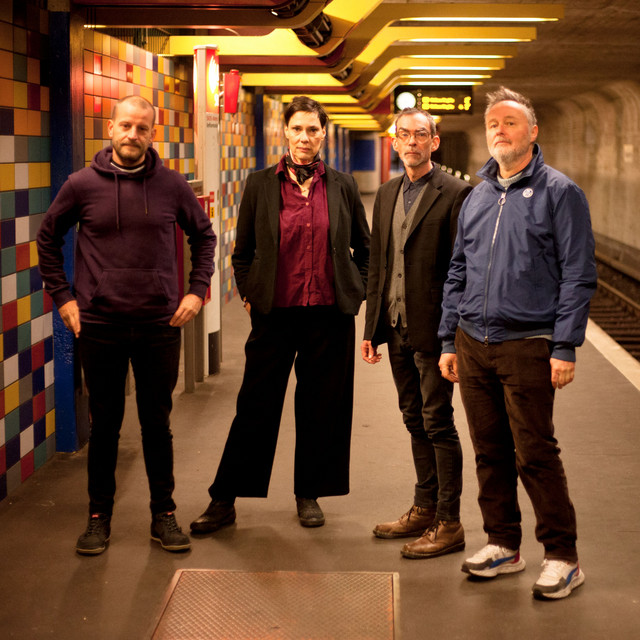
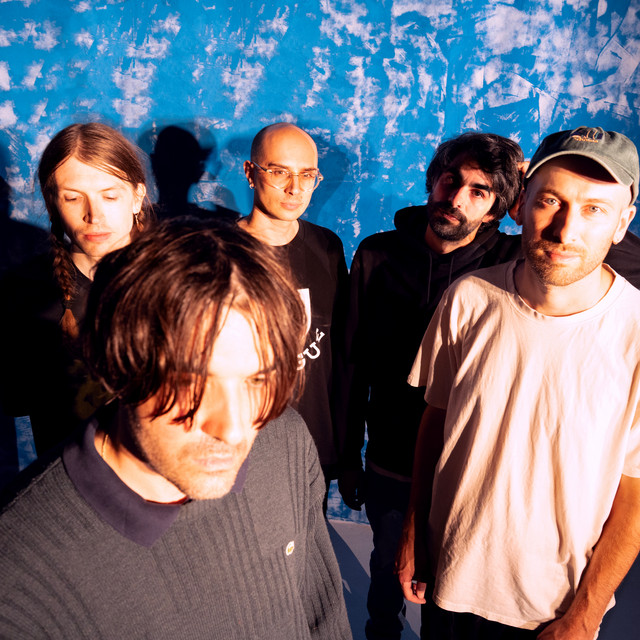
Cavern of Anti-Matter
Listen
1
/5
Genres
Hauntology
Hauntology is a retro-futurist strain of experimental electronic music that evokes the "ghosts" of lost cultural futures. Emerging in the United Kingdom in the mid‑2000s, it draws on half-remembered media—library music, public information films, children’s TV idents, and Radiophonic textures—to produce an atmosphere of eerie nostalgia and cultural memory. Sonically, the style favors degraded media and analogue patina: vinyl crackle, tape hiss, wow and flutter, and dusty archival samples. It often pairs subdued drones and detuned synths with looped fragments, sparse percussion, and unresolved harmonies to create a feeling that is at once comforting and unsettling. The term originates in Jacques Derrida’s philosophy and was popularized in a musical context by critics such as Mark Fisher and Simon Reynolds. In music, it names both a sound palette and a way of listening that foregrounds memory, media archaeology, and the uncanny persistence of the past within the present.
Discover
Listen
Alternative
Alternative is an umbrella term for non-mainstream popular music that grew out of independent and college-radio scenes. It emphasizes artistic autonomy, eclectic influences, and a willingness to subvert commercial formulas. Sonically, alternative often blends the raw immediacy of punk with the mood and texture of post-punk and new wave, adding elements from folk, noise, garage, and experimental rock. While guitars, bass, and drums are typical, production ranges from lo-fi to stadium-ready, and lyrics tend toward introspection, social critique, or surreal storytelling. Over time, “alternative” became both a cultural stance and a market category, spawning numerous substyles (alternative rock, alternative hip hop, alternative pop, etc.) and moving from underground circuits to mainstream prominence in the 1990s.
Discover
Listen
Indie Pop
Indie pop is a melodic, DIY-rooted branch of alternative music that blends the immediacy of pop songwriting with the independence and aesthetics of underground scenes. It typically features jangly, clean-toned guitars, tuneful bass lines, compact song structures, and intimate, literate lyrics that balance sweetness with subtle melancholy. The sound often leans toward bright chord progressions, earworm choruses, and understated production, favoring charm and personality over gloss. Culturally, indie pop is tied to small labels, fanzines, and community radio, with influential scenes and imprints such as Postcard, Sarah, and Creation laying the groundwork for its global diffusion.
Discover
Listen
Neo-Psychedelia
Neo-psychedelia is a late-20th-century revival and reinvention of 1960s psychedelic music aesthetics, filtered through post-punk, indie, and experimental sensibilities. It emphasizes hypnotic textures, droning guitars, heavy use of effects (reverb, delay, phasing), analogue organs/synths, and dreamlike or surreal lyricism. Rhythms may draw from motorik and other steady, trance-inducing grooves, while harmony often favors modal colors and repetitive vamps. The style ranges from jangly, melodic songs to dense, feedback-laden soundscapes, and has been highly influential on dream pop, shoegaze, Britpop-adjacent scenes, and modern psych rock.
Discover
Listen
Krautrock
Krautrock is an experimental form of rock that emerged in late-1960s West Germany, characterized by hypnotic repetition, long-form structures, and a forward-looking embrace of electronics and studio experimentation. It typically features a steady, driving 4/4 “motorik” beat, circular bass ostinatos, sparse harmonic movement, and textural layering that draws from minimalism, free improvisation, and avant-garde composition. Rather than virtuosic solos, the emphasis is on collective groove, trance-inducing momentum, and timbral exploration. The sound ranges from raw, percussive jams to spacious, cosmic electronics, often eschewing conventional Anglo-American blues forms in favor of a distinctly European modernist aesthetic.
Discover
Listen
Space Rock
Space rock is a psychedelic branch of rock characterized by long-form, hypnotic grooves, swirling guitars awash in delay and reverb, and prominent analog synthesizers that evoke cosmic or interstellar imagery. The music often emphasizes texture and atmosphere over conventional song structures, creating expansive soundscapes that feel weightless and otherworldly. Emerging in late-1960s Britain from the overlap of psychedelic rock, early progressive rock, and experimental electronics, space rock frequently employs motorik-leaning rhythms, modal or drone-based harmony, and science-fiction themes. Extended improvisations, phased and fuzz-drenched timbres, and tape or echo effects are common, encouraging a sense of forward drift and cosmic exploration.
Discover
Listen
Experimental
Experimental music is an umbrella term for practices that prioritize exploration, process, and discovery over adherence to established genre norms. It embraces new sound sources, nonstandard tuning systems, indeterminacy and chance operations, graphic and open-form scores, extended techniques, and technology-led sound design (tape, electronics, computers, and live processing). Rather than a single style, it is a methodology and ethos: testing hypotheses about sound, structure, and performance, often blurring boundaries between composition, improvisation, sound art, and performance art. Listeners can expect unfamiliar timbres, unusual forms, and an emphasis on how music is made as much as the resulting sound.
Discover
Listen
Rock
Rock is a broad family of popular music centered on amplified instruments, a strong backbeat, and song forms that foreground riffs, choruses, and anthemic hooks. Emerging from mid‑20th‑century American styles like rhythm & blues, country, and gospel-inflected rock and roll, rock quickly expanded in scope—absorbing folk, blues, and psychedelic ideas—while shaping global youth culture. Core sonic markers include electric guitar (often overdriven), electric bass, drum kit emphasizing beats 2 and 4, and emotive lead vocals. Rock songs commonly use verse–chorus structures, blues-derived harmony, and memorable melodic motifs, ranging from intimate ballads to high‑energy, stadium‑sized performances.
Discover
Listen
Electronic
Electronic is a broad umbrella genre defined by the primary use of electronically generated or electronically processed sound. It encompasses music made with synthesizers, drum machines, samplers, computers, and studio/tape techniques, as well as electroacoustic manipulation of recorded or synthetic sources. The genre ranges from academic and experimental traditions to popular and dance-oriented forms. While its sonic palette is rooted in electricity and circuitry, its aesthetics span minimal and textural explorations, structured song forms, and beat-driven club permutations. Electronic emphasizes sound design, timbre, and studio-as-instrument practices as much as melody and harmony.
Discover
Listen
Show all 9 genres
Similar artists
2
/5
Ozric Tentacles
Jam Band
Space Rock
Livetronica
2
/5
Steve Hillage
Space Rock
Canterbury Scene
Acid Rock
1
/5
The Oscillation
Deep Space Rock
Krautrock
Neo-Psychedelia
3
/5
Stereolab
Experimental Rock
No Wave
Post-Rock
1
/5
Various Artists
Afro-Funk
Alternative Rock
Ambient
3
/5
Thee Oh Sees
Garage Rock
Garage Psych
Rock
3
/5
Kikagaku Moyo
Krautrock
Psychedelic Rock
Rock
2
/5
Wooden Shjips
Indian Indie
Krautrock
Neo-Psychedelia
2
/5
Ulrika Spacek
Krautrock
Space Rock
Indie Dream Pop
2
/5
Moon Duo
Neo-Kraut
Krautrock
Neo-Psychedelia
Download our mobile app
Get the Melodigging app and start digging for new genres on the go
Download on the App Store
Get it on Google Play
© 2026 Melodigging
Give feedback
Legal
Melodding was created as a tribute to
Every Noise at Once
, which inspired us to help curious minds keep digging into music's ever-evolving genres.