Your digging level for this genre

0/8
🏆
Sign in, then listen to this genre to level up

Description

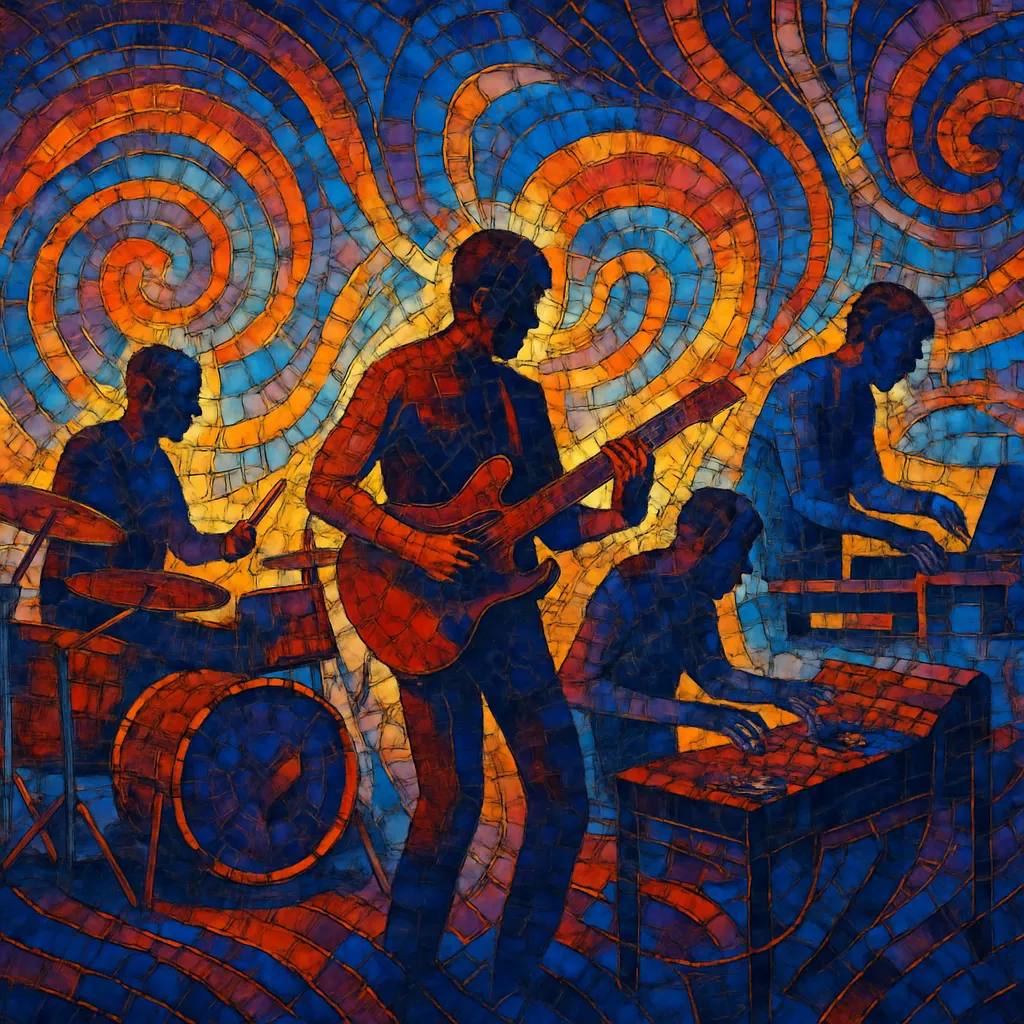
Livetronica (often called jamtronica) is a hybrid of jam-band improvisation and club-oriented electronic dance music. Bands perform dance styles such as house, trance, breakbeat, and drum and bass using live instruments, samplers, and sequencers, emphasizing continuous, beat-driven sets that flow like a DJ performance.

Instead of relying solely on pre-programmed tracks, livetronica groups build grooves in real time: drummers lock to steady club tempos, bassists and guitarists loop riffs, and keyboardists/synth players sculpt textures and leads. The result is long-form, danceable journeys with builds, drops, and improvisational detours, designed for festival stages and late-night club environments.

History

Origins (late 1990s)

Livetronica emerged in the United States during the late 1990s, when jam-band musicians began adopting electronic dance music rhythms and technologies. The Disco Biscuits (Philadelphia) coined their “trance-fusion” approach; STS9 (Sound Tribe Sector 9) and The New Deal (Toronto, frequently touring the U.S.) developed fully live house/breakbeat sets without backing tracks. These groups fused improvisation with club tempos, using early laptops, samplers, and hardware synths to keep dance floors moving while remaining spontaneous.

2000s Expansion and Festival Culture

Through the 2000s, livetronica became a fixture on North American festival lineups (e.g., Bonnaroo, Camp Bisco, All Good). Acts like Lotus and The Egg joined the wave, while side projects (e.g., Conspirator) pushed the sound toward harder club sonics. Production values—intelligent lighting, synced visuals, and front-of-house mixing—grew more sophisticated, helping bands perform DJ-like continuous sets while maintaining the energy of a rock concert.

2010s Cross‑Pollination

As the EDM boom took hold, crossovers multiplied. Groups such as EOTO, Pnuma Trio, Papadosio, and Big Gigantic emphasized live looping, on-the-fly sound design, and bass-driven dynamics that resonated with electronic festival audiences. The scene blurred boundaries between jam, electronica, and bass music, with bands adopting DAWs like Ableton Live for clip launching and synchronization, while still privileging improvisation and extended jams.

Present Day

Livetronica remains a performance-first approach: electronic subgenre flavors change with the times, but the core ethos of improvising dance music with real musicians endures. The style continues to influence live electronic acts and jam scenes, especially in festival circuits where extended, danceable sets and hybrid acoustic–electronic rigs are prized.

How to make a track in this genre

Core instrumentation
•   Drum kit playing steady club grooves, optionally with electronic pads. •   Electric bass (often with synth pedals) or dedicated synth-bass. •   Keyboards/synths for chords, arps, and leads; samplers for one-shots and textures. •   Guitar for rhythmic comping, delay-driven motifs, and effects. •   A DAW (commonly Ableton Live) for live looping, clip launching, and clock sync.
Rhythm and tempo
•   Favor four‑on‑the‑floor house/trance (120–130 BPM), breakbeat (125–135 BPM), or drum and bass (170–175 BPM) sections. •   Keep the kick consistent for long stretches; let the drummer and percussion add micro-variation and fills. •   Use drum machines or sample layers to reinforce the acoustic kit for club-weight low end.
Harmony and form
•   Build around modal vamps and short progressions that invite improvisation (e.g., D Dorian or A Mixolydian jams). •   Structure sets as continuous suites: long builds, tension-and-release drops, and seamless segues between keys and tempos. •   Employ pedal tones and ostinatos to glue transitions while soloists develop motifs.
Sound design and production
•   Prioritize a powerful, sidechain-friendly low end (kick + synth bass) and wide stereo pads. •   Use arpeggiators, synced delays, and filter sweeps to create movement; automate or perform filters in real time. •   Map controllers (knobs/faders) for live FX: dub-style delays, reverbs, bit-crushers, and risers.
Improvisation and interaction
•   Pre-plan anchor grooves and cue points, but leave space for spontaneous solos and dynamic changes. •   Communicate with visual cues; designate a music director or count-ins for modulations and drops. •   Record rehearsals to refine transitions, codify successful jams, and expand the band’s motif vocabulary.
Performance tips
•   Keep a steady master clock (MIDI or Ableton Link) for tight synchronization across devices. •   Arrange the set like a DJ: openers to lock the floor, mid-set peaks, late-set exploration, and a strong closer. •   Balance live energy with dance clarity: avoid overcrowding the midrange and protect headroom for the kick and bass.

Top tracks

Locked
Share your favorite track to unlock other users’ top tracks
Influenced by
Has influenced
Challenges
Digger Battle
Let's see who can find the best track in this genre
© 2025 Melodigging
Melodding was created as a tribute to Every Noise at Once, which inspired us to help curious minds keep digging into music's ever-evolving genres.
Buy me a coffee for Melodigging