Genres
Artists
Albums
Make Music
Sign in
Sign in
Artists
Neoclassicism
Artists
Neoclassicism
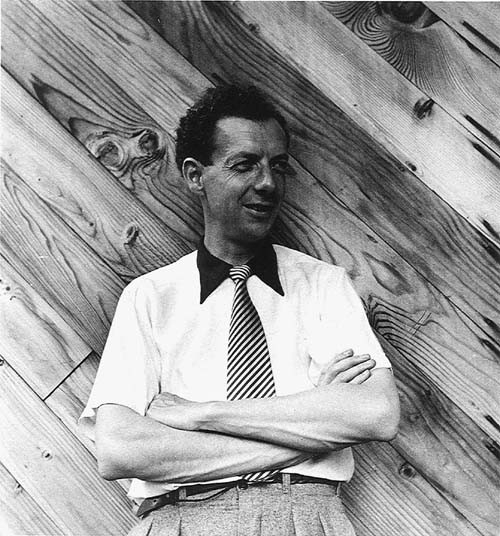
Benjamin Britten
1963–2024
·
9 albums
Listen
3
/5
Genres
Holy Minimalism
Holy minimalism (also called mystic or sacred minimalism) is a strand of late-20th-century classical music that blends the austerity and repetition of minimalism with the devotional focus and modal vocabulary of sacred chant and liturgy. Its soundworld favors slow tempi, diatonic or modal harmony, bell-like triads, long drones and pedal points, and chant-like melodies that unfold with great patience. Silence and resonance are treated as structural materials, and works often center on spiritual texts or wordless vocalise that evoke Orthodox or Catholic rituals. While sharing process-based clarity with American minimalism, holy minimalism is distinct in its overt spiritual intent, its choral emphasis, and its preference for transparent textures, luminous consonance, and contemplative stillness.
Discover
Listen
Neoclassicism
Neoclassicism in music is a 20th‑century movement that revived forms, genres, and aesthetics from the Baroque and Classical eras, but reframed them with modern harmony, rhythm, and orchestration. It emphasizes clarity, balance, objectivity, and contrapuntal craft, often rejecting late‑Romantic excess while retaining a tonal or modal center enriched by dissonance, bitonality, and crisp rhythmic drive. Typical hallmarks include neobaroque dance suites, neoclassical sonatas and concerti, chamber‑oriented scoring, clean textures, and a dry, anti‑rhetorical performance style.
Discover
Listen
Mélodie
Mélodie is the French tradition of art song, typically for solo voice and piano, that blossomed in the mid-to-late 19th century. It places exceptional emphasis on the natural inflection and clarity of the French language, marrying refined poetry to nuanced melodic lines and sensitive accompaniments. Compared to the German Lied, mélodie is often more restrained and speech-like in phrasing, prioritizing text intelligibility, elegance of line, and subtle harmonic shading. Composers frequently set poems by major French writers—particularly from the Parnassian and Symbolist movements—resulting in music that is intimate, evocative, and rich in coloristic detail. The piano part in mélodie is not merely supportive; it participates actively in the narrative and atmosphere, with delicate figurations, harmonic ambiguity, and timbral nuance that paint the poem’s imagery. While most mélodies are for voice and piano, notable cycles were later orchestrated, expanding the genre’s palette without sacrificing its core intimacy.
Discover
Listen
Art Song
Art song is an intimate, concert-music genre in which a poetic text is set for solo voice with an equally integral piano accompaniment. Unlike popular song, it is composed for attentive listening in the recital hall or salon, and unlike opera, it does not require staging or multiple characters. The genre privileges prosody, word-painting, and subtle harmonic color to illuminate imagery and emotion in the poem. Forms range from strophic and modified strophic to fully through-composed designs, and the piano often supplies prelude, interludes, and a telling postlude that extends or reframes the text’s sentiment. German Lieder, French mélodie, and English-language art song are the best-known national currents within this tradition.
Discover
Listen
Lied
Lied (plural: Lieder) is the German art song: a finely crafted setting of German-language poetry for solo voice and piano. It is characterized by an intimate, chamber-scale dialogue between singer and pianist in which the accompaniment is an equal partner rather than mere support. Texts are drawn from canonical poets such as Goethe, Heine, Rückert, and Eichendorff, and the music often employs vivid text painting, flexible prosody, and nuanced harmonic color to illuminate poetic imagery. Formal designs include strophic, modified strophic, and through-composed forms, allowing composers to mirror a poem’s narrative or emotional arc. The Lied flourished in the Romantic era, crystallizing ideals of interiority, nature, folklore, and the unity of poetry and music. It remains central to recital repertoire and a cornerstone of German vocal culture.
Discover
Listen
Sinfonia Concertante
Sinfonia concertante is a Classical-era hybrid that blends the symphony’s multi-movement, orchestral scale with the concerto’s virtuosic spotlighting of soloists—typically two to four players. It favors elegant, balanced phrasing, clear textures, and lively dialogue between multiple solo instruments and the orchestra, often in a fast–slow–fast three-movement plan. Popularized in Paris and associated with the galant style, it became a showcase for wind instruments as well as string pairings (famously violin and viola).
Discover
Listen
Concerto Grosso
A concerto grosso is a Baroque-era orchestral form built on contrasts between a small group of soloists (the concertino) and the full ensemble (the ripieno or tutti). It typically features strings with basso continuo, terraced dynamics, antiphonal dialogue, and clear tonal harmony. Two principal subtypes emerged: the church-oriented sonata da chiesa (often in a four-movement slow–fast–slow–fast plan) and the dance-inflected sonata da camera (suite-like movements). The genre highlights thematic exchange, sequences, and imitation, with the concertino—often two violins and cello—embroidered against broader tutti refrains. Corelli’s models codified its syntax, and Handel’s sets represent its late-Baroque culmination.
Discover
Listen
Opera
Opera is a large-scale theatrical genre that combines music, drama, and visual spectacle, in which the story is primarily conveyed through singing accompanied by an orchestra. It unites solo voices, ensembles, and chorus with staging, costumes, and often dance to create a total artwork. Emerging in late Renaissance Italy and flourishing in the Baroque era, opera developed signature forms such as recitative (speech-like singing that advances the plot) and aria (lyrical numbers that explore character and emotion). Over the centuries it evolved diverse national styles—Italian bel canto, French grand opéra, German music drama—while continually experimenting with orchestration, harmony, narrative structure, and stagecraft.
Discover
Listen
Theme And Variations
Theme and variations is a classical musical form in which a clearly stated theme is followed by a sequence of self-contained variations that transform the theme’s melody, harmony, rhythm, texture, register, mode, meter, or orchestration. Although used across many eras, the form crystallized during the late Renaissance and Baroque periods through keyboard and lute traditions, then became a structural mainstay in the Classical and Romantic eras. In performance, the listener recognizes the original idea through its continuities—often the harmonic plan or characteristic contour—while enjoying the inventive contrasts that each variation brings.
Discover
Listen
Requiem
A requiem is a musical setting of the Roman Catholic Mass for the Dead (Missa pro defunctis). Historically rooted in Latin liturgy, it sets movements such as the Introit, Kyrie, (historically) the Sequence Dies irae, Offertory, Sanctus, Agnus Dei, and Communion, and often includes additional responsories like Libera me and In paradisum. While the earliest requiems were monophonic chants, the genre became a showcase for polyphonic and later symphonic choral writing. Renaissance composers wrote austere, modal settings; Classical and Romantic composers expanded the forces and dramatic scope; and 20th–21st century composers reimagined the form with new languages, from neo-modal and impressionistic harmonies to avant‑garde sonorities. Today, requiems appear both in liturgy and as concert works, symbolizing collective mourning, remembrance, and spiritual reflection.
Discover
Listen
Mass
Mass is a large-scale vocal genre that sets the Ordinary of the Roman Catholic liturgy—Kyrie, Gloria, Credo, Sanctus (and Benedictus), and Agnus Dei—most often in Latin. It began as monophonic chant but developed into sophisticated polyphony and later into concert works for choir, soloists, and instruments or full orchestra. Across history, composers have used techniques such as cantus firmus, imitation, paraphrase, and parody to unify movements. The genre spans from austere a cappella writing to monumental symphonic-choral statements, and today is performed both liturgically and in the concert hall. Common subtypes include Missa brevis (short Mass, often omitting the Credo or compact in scale) and Missa solemnis (festal, expansive forces and duration).
Discover
Listen
Classical
Classical music is the notated art-music tradition of Europe and its global descendants, characterized by durable forms, carefully codified harmony and counterpoint, and a literate score-based practice. The term “classical” can refer broadly to the entire Western art-music lineage from the Medieval era to today, not just the Classical period (c. 1750s–1820s). It privileges long-form structures (such as symphonies, sonatas, concertos, masses, and operas), functional or modal harmony, thematic development, and timbral nuance across ensembles ranging from solo instruments to full orchestras and choirs. Across centuries, the style evolved from chant and modal polyphony to tonal harmony, and later to post-tonal idioms, while maintaining a shared emphasis on written notation, performance practice, and craft.
Discover
Listen
Choral
Choral refers to music written for and performed by a choir—an ensemble of voices organized into sections such as soprano, alto, tenor, and bass (SATB), or same-voice groupings (SSA, TTBB). It encompasses both sacred and secular repertoire and may be sung a cappella or with accompaniment by organ, piano, or full orchestra. Stylistically, choral music ranges from chant-like monophony to intricate polyphony and rich homophonic textures. Texts are drawn from liturgy, scripture, poetry, and vernacular sources, and are set in many languages. Performance contexts include church services, concert halls, and community events, making choral one of the most socially embedded and widely practiced forms of ensemble music. Across history, choral music has served as a laboratory for vocal counterpoint, word painting, and text-driven form, while functioning as a cultural bridge among religious rites, national traditions, and contemporary concert practice.
Discover
Listen
Show all 13 genres
Albums
2024
1
/5
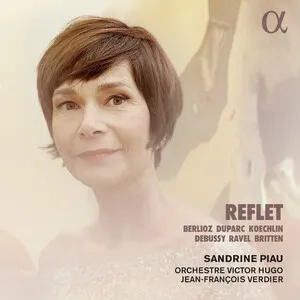
Reflet
Hector Berlioz
Mélodie
1995
3
/5
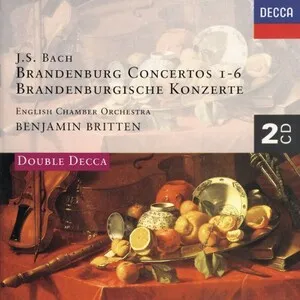
Brandenburg Concertos 1-6
Johann Sebastian Bach / English Chamber Orchestra / Benjamin Britten
Concerto Grosso
1992
2
/5
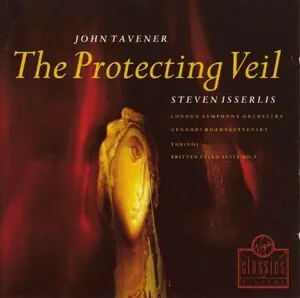
The Protecting Veil; Thrinos / Cello Suite No. 3
John Tavener / Benjamin Britten
Holy Minimalism
1971
1
/5
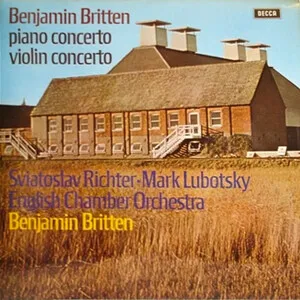
Piano Concerto; Violin Concerto
Benjamin Britten
Neoclassicism
1965
1
/5
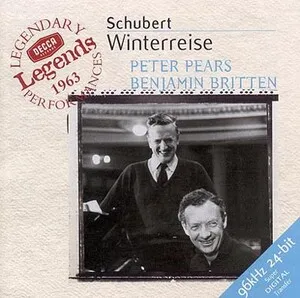
Winterreise
Franz Schubert / Peter Pears / Benjamin Britten
Lied
Art Song
1963
2
/5
War Requiem
Benjamin Britten
Requiem
Mass
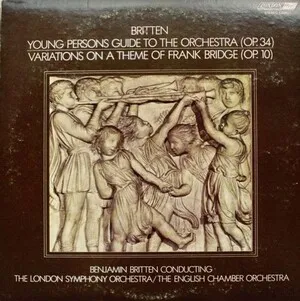
Young Persons Guide to the Orchestra (Op.34); Variations on a Theme of Frank Bridge (Op.10)
Benjamin Britten
Neoclassicism
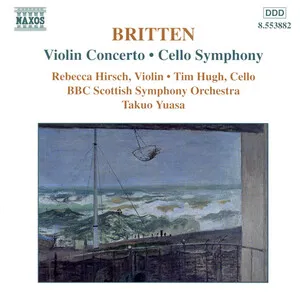
Violin Concerto; Cello Symphony
Benjamin Britten
Sinfonia Concertante
Young Persons Guide to the Orchestra (Op.34); Variations on a Theme of Frank Bridge (Op.10)
Benjamin Britten
Theme And Variations
Similar artists
4
/5
Berliner Philharmoniker
Classical
Romantic Classical
Romanticism
4
/5
Herbert von Karajan
Classical
Symphonic Poem
Symphony
1
/5
Various Artists
Afro-Funk
Alternative Rock
Ambient
4
/5
Wolfgang Amadeus Mozart
Classical
Requiem
Classical Period
4
/5
Wiener Philharmoniker
Classical
Romantic Classical
Romanticism
3
/5
John Eliot Gardiner
Classical
Choral
Requiem
3
/5
Academy of Ancient Music
Classical
Choral
Requiem
3
/5
English Baroque Soloists
Classical
Choral
Requiem
3
/5
London Symphony Chorus
Requiem
Choral
Classical
2
/5
Barbara Bonney
Requiem
Choral
Classical
Download our mobile app
Get the Melodigging app and start digging for new genres on the go
Download on the App Store
Get it on Google Play
© 2026 Melodigging
Give feedback
Legal
Melodding was created as a tribute to
Every Noise at Once
, which inspired us to help curious minds keep digging into music's ever-evolving genres.