Genres
Artists
Albums
Make Music
Sign in
Sign in
Artists
Drone
Artists
Drone
Basic House
Listen
1
/5
Genres
Mandible
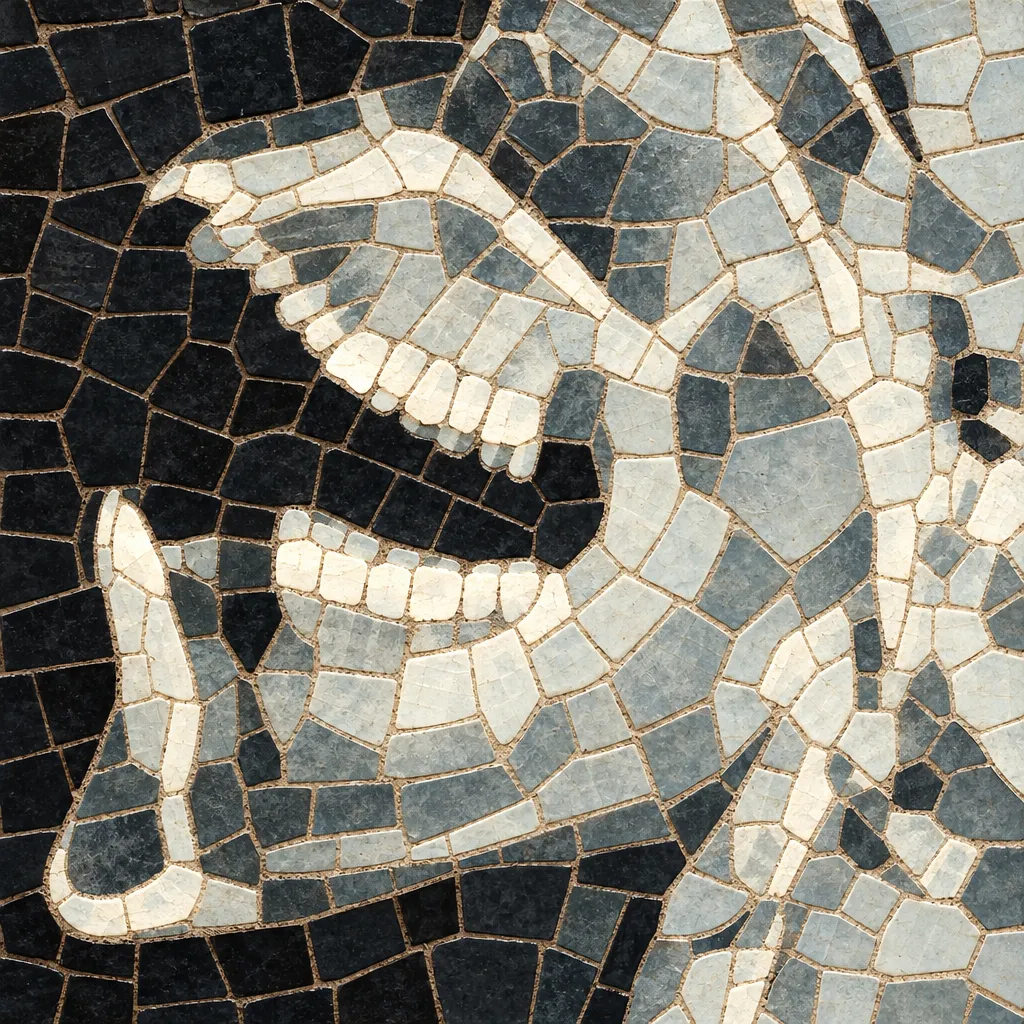
Mandible is an internet-born, experimental microgenre whose name evokes the jawbone: brittle, gnashing, and percussive. Producers lean into harsh, dental-adjacent foley (tooth clicks, jaw pops, bone-like clacks) and metallic scrapes, arranging them over lurching trap-derived beats and sub-heavy sound design. Aesthetically, it sits at the intersection of industrial noise, deconstructed club, and dark trap: distorted transients, granular glitches, sudden drop-outs, and unsettling ASMR-adjacent close‑mic textures. Harmony tends to be sparse or atonal, with drones and dissonant clusters used more for atmosphere than for functional progression. The result is club-adjacent music that feels physical and tactile—like rhythm sculpted from mouth and bone.
Discover
Listen
Lo-Fi House
Lo-fi house is a strain of house music that embraces imperfections—tape hiss, vinyl crackle, overdriven drums, and slightly detuned synths—to evoke warmth and nostalgia. It retains a classic 4/4 house pulse but softens the edges with hazy pads, subdued vocals, and wistful melodies. Emerging as an internet-driven micro–scene, the style often uses inexpensive or deliberately degraded production chains (cassette saturation, bit reduction, SP-404–style resampling) to achieve its character. The result is dance music that feels intimate and bedroom-made, equally suited to small dancefloors and solitary late-night listening.
Discover
Listen
New Isolationism
New isolationism is a contemporary strain of isolationist ambient and post-industrial minimalism that emerged in the 2010s, particularly around Scandinavian experimental labels and studios. It foregrounds intimate, close-mic’d sound, negative space, and a quiet-but-present noise floor; its pieces feel both internal and architectural, like rooms built from reverb tails, tape hiss, and soft electronics. Sonically, the style blends glacial drones, fragile chamber timbres (strings, organ, piano), lo‑fi electronics, and field recordings into stark, slow-evolving tableaux. Melodic information is sparse—often only a few tones or gestures—while rhythm is either absent or reduced to distant pulses, heartbeats, or mechanical cycles. Vocals, when they appear, are murmured, diaristic, or abstracted by pitch and time manipulation. Aesthetically, new isolationism is post‑internet and diaristic: it captures solitude, memory, and dislocation with a palette that feels personal yet estranged, drawing as much from contemporary gallery sound practice as from classic dark ambient.
Discover
Listen
Witch House
Witch house is an occult‑themed, nocturnal strain of dark electronic music that emerged in the late 2000s and early 2010s. It blends slow, hip hop–derived drum programming with droning, dense synthesizers, layered bass, and high‑pitched or detuned keyboard motifs. The style is defined by heavily processed, often indiscernible vocals, obscure or horror‑leaning samples, and a hazy, lo‑fi atmosphere. Aesthetically it draws on goth and horror iconography—triangles, Unicode symbols, VHS decay—and favors a murky, ritualistic mood over club‑ready shine.
Discover
Listen
Drone
Drone is a minimalist music genre defined by sustained tones, long durations, and extremely gradual change. Harmony is often static or centered on a single fundamental with subtle overtone shifts, while rhythm tends toward stasis or very slow pulses. Sound sources range from acoustic instruments (e.g., strings, organ, bagpipes, shruti box, tambura) to electronics (sine waves, oscillators, feedback, tape loops, and later digital synthesis and processing). Many composers favor just intonation or other alternative tuning systems to emphasize beating patterns, psychoacoustic effects, and the internal life of sound. Although drone as a sonic principle is ancient and global, the modern experimental genre cohered in the 1960s through the New York minimalists and related avant‑garde circles, then spread into ambient, experimental, and heavy music scenes. The focus is less on melody and more on timbre, resonance, and the phenomenology of listening.
Discover
Listen
Experimental
Experimental music is an umbrella term for practices that prioritize exploration, process, and discovery over adherence to established genre norms. It embraces new sound sources, nonstandard tuning systems, indeterminacy and chance operations, graphic and open-form scores, extended techniques, and technology-led sound design (tape, electronics, computers, and live processing). Rather than a single style, it is a methodology and ethos: testing hypotheses about sound, structure, and performance, often blurring boundaries between composition, improvisation, sound art, and performance art. Listeners can expect unfamiliar timbres, unusual forms, and an emphasis on how music is made as much as the resulting sound.
Discover
Listen
Similar artists
1
/5
Burial Hex
Dark Ambient
Death Industrial
Drone
4
/5
Sidewalks and Skeletons
Witch House
Wave
Electronic
4
/5
Brian Eno
Ambient
Krautrock
Experimental
3
/5
Swans
Experimental Rock
Post-Rock
No Wave
3
/5
Oneohtrix Point Never
Hauntology
Plunderphonics
Ambient
3
/5
Hiroshi Yoshimura
Ambient
Fourth World
Drone
3
/5
Stars Of The Lid
Ambient
Drone
Experimental
3
/5
Boris
Gaian Doom
Drone
Drone Metal
3
/5
Alva Noto
Experimental
Glitch
Ambient
3
/5
Tim Hecker
Ambient
Drone
Experimental
Download our mobile app
Get the Melodigging app and start digging for new genres on the go
Download on the App Store
Get it on Google Play
© 2026 Melodigging
Give feedback
Legal
Melodding was created as a tribute to
Every Noise at Once
, which inspired us to help curious minds keep digging into music's ever-evolving genres.