Your digging level
Description
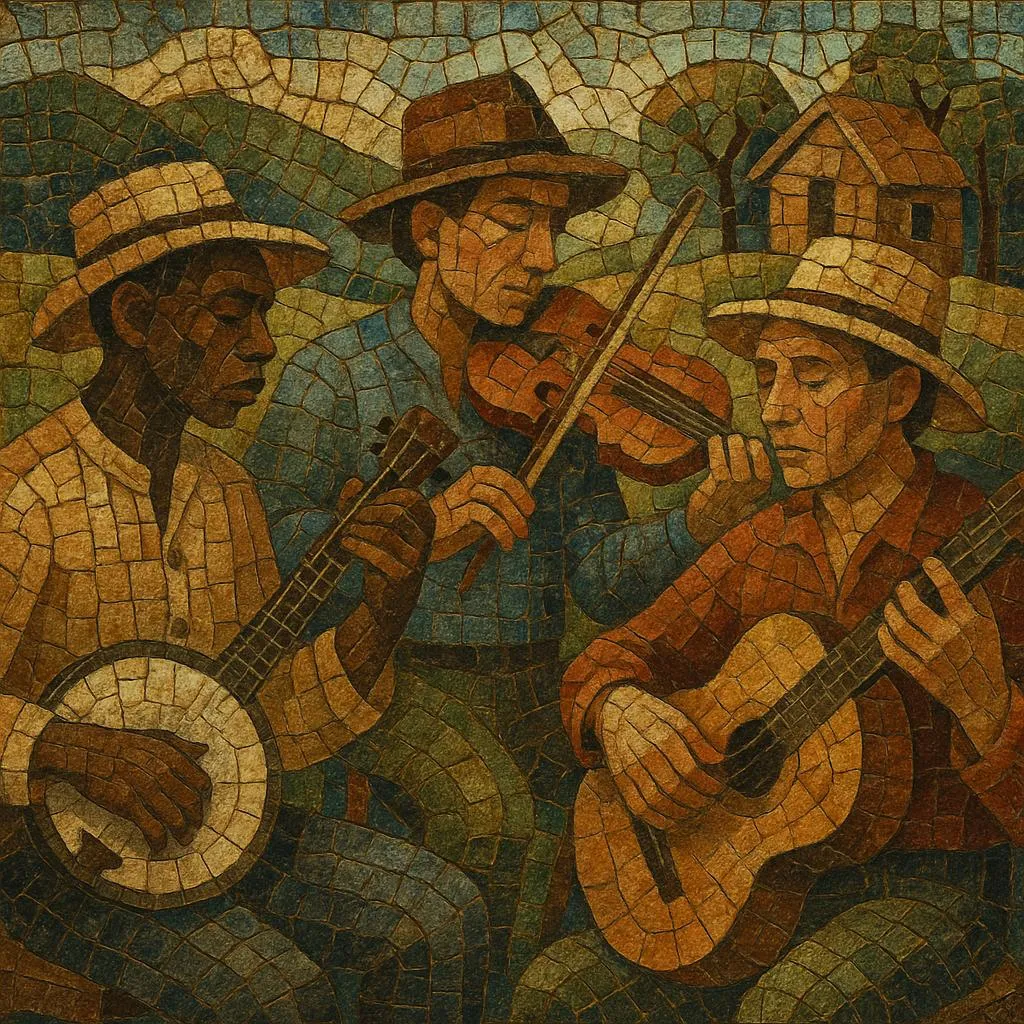
Traditional Southern folk is the vernacular music of the American South, shaped by the encounter of Anglo‑Celtic balladry and dance tunes with African and African American musical practices. It encompasses unaccompanied ballads, fiddle and banjo dance tunes, work songs and field hollers, spirituals and shape‑note hymnody, as well as porch songs accompanied by guitar, dulcimer, harmonica, or fife and drum.
Musically, it favors modal melodies (often Dorian or Mixolydian), pentatonic figures, drones, and open fifths, with strong rhythmic lift for dancing (reels, breakdowns, play‑party songs) alongside deeply expressive free‑rhythm singing in hollers and lined‑out hymnody. Performances are typically intimate and communal—front‑porch picking, church singings, barn dances, and community gatherings—where repertoires are transmitted orally across generations.
Lyrically, it centers on narrative and memory: Child‑ballad storylines transplanted to Southern settings; "floating verses" that migrate across songs; occupational and prison songs; spiritual longing and testifying; love, loss, and local history. Its soundworld—high lonesome timbres, clawhammer banjo, cross‑tuned fiddles, call‑and‑response—became foundational to American roots styles that followed.
History
Traditional Southern folk took shape in the 1800s as settlers of Scottish, Irish, and English descent carried ballads, fiddle tunes, and hymn traditions into the Southern Appalachians, the Piedmont, and the Deep South. Enslaved Africans and their descendants contributed polyrhythms, drone aesthetics, call‑and‑response, and expressive vocality—heard in spirituals, ring shouts, work songs, and field hollers—while early banjo playing (with West African roots) met the European fiddle at dances and socials.
By the late 19th and early 20th centuries, distinct regional idioms thrived: Appalachian balladry and fiddle‑banjo breakdowns; Piedmont string‑band picking; sacred music traditions like shape‑note (Sacred Harp) and lined‑out hymnody across rural churches; fife‑and‑drum picnics in Mississippi; and porch‑song guitar styles that shaded into country blues. The repertoire mixed imported Child ballads, localized murder and outlaw narratives, play‑party songs, and spirituals.
The advent of recording in the 1920s ("hillbilly" and "race" records) captured local performers for the first time. During the 1930s–50s, folklorists and field recordists documented prison worksongs, Sacred Harp conventions, ballad singers, and string bands, preserving repertoires otherwise held in oral tradition. The 1950s–60s folk revival carried Southern songs and styles onto national stages, influencing singer‑songwriters and expanding the reach of old‑time jam culture and shape‑note singings.
Traditional Southern folk remains a living practice: courthouse‑square jams, family bands, Sacred Harp singings, and community festivals sustain repertories and performance customs. Its aesthetics underpin bluegrass, country, Americana, southern gospel, and early rock and roll, and continue to inform contemporary roots and indie‑folk scenes.