Your digging level
Description
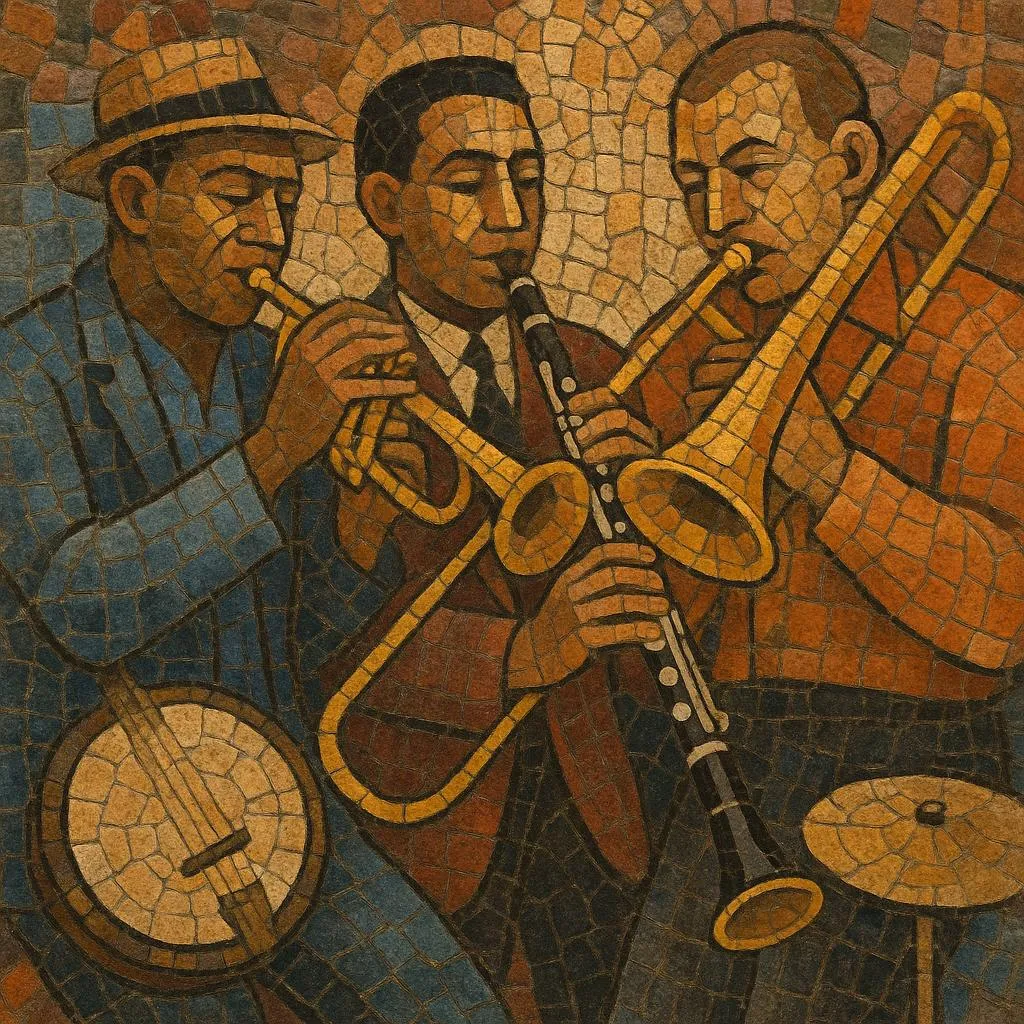
Trad jazz (short for “traditional jazz”) is a revival-oriented style rooted in the early New Orleans/Dixieland approach, emphasizing ensemble polyphony, a two-beat feel, and a frontline of cornet/trumpet, clarinet, and trombone over a banjo/piano, tuba or string bass, and drums rhythm section.
It flourished in the United States and Britain from the 1930s to the 1960s, re-popularizing repertory associated with early jazz: marches, blues, rags, spirituals, and popular songs of the 1910s–1920s. In Britain especially, trad jazz bands popularized the style with a populist repertoire that could include jazz versions of pop songs and nursery rhymes, bringing the sound into mainstream charts and television. While devoted to historical idioms, trad jazz values living, collective improvisation and high-spirited danceability.
History
Trad jazz grew out of renewed interest in the New Orleans/Dixieland style during the 1930s. In the United States, West Coast revivalists such as Lu Watters and Turk Murphy began recreating early jazz orchestrations with a stronger emphasis on ensemble polyphony, rags, marches, and blues—counter-programming the contemporary swing and (later) bebop trends. In New Orleans, figures like George Lewis helped sustain a local revival.
The term “trad jazz” became particularly associated with Britain. Bands led by Chris Barber, Acker Bilk, Kenny Ball, Ken Colyer, Humphrey Lyttelton, Monty Sunshine, Terry Lightfoot, Freddy Randall and others found large audiences. Their populist repertoire sometimes included jazz treatments of contemporary pop tunes and even nursery rhymes, which helped the style cross over to television and the singles charts. The UK scene also fostered skiffle via Barber’s band (with Lonnie Donegan), influencing British popular music more broadly.
By the early 1960s, trad jazz was an international phenomenon, with UK bands touring widely and US revivalists (from San Francisco to New Orleans) maintaining vibrant club circuits and recordings. The music’s danceable energy and singable melodies kept it popular in social venues and festivals.
As rock and pop rose in the mid-1960s, trad jazz’s chart presence waned, but the style persisted in clubs, festivals, and dedicated societies. Its legacy includes a durable global circuit of traditional jazz festivals and bands, the Preservation Hall tradition in New Orleans, and a lasting influence on British skiffle and, through it, later British popular music. Today, trad jazz remains a living, performance-first tradition that celebrates collective improvisation and the roots of jazz.