Your digging level
Description
Stubenmusik (literally “parlor music”) is an intimate, small‑ensemble tradition from the Alpine regions, especially Tyrol and Bavaria, performed in the household “Stube” (parlor) rather than on large stages. It favors soft, unamplified timbres and close‑knit counterpoint and harmonization, designed for listening at close quarters.
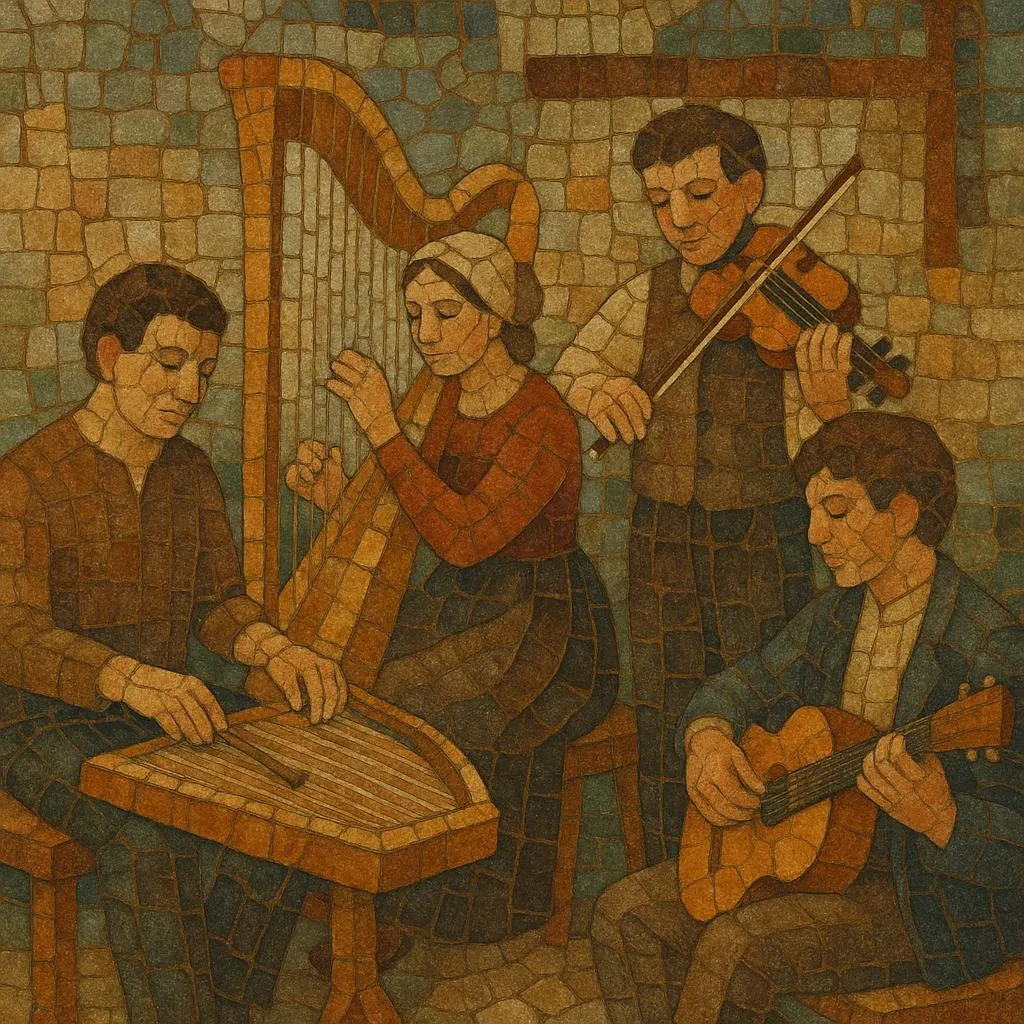
Typical instruments include zither, harp, guitar, Hackbrett (hammered dulcimer), violin, and sometimes clarinet or diatonic accordion (Steirische Harmonika, used sparingly). The repertoire consists of local dance and song forms—Ländler, Boarischer, Polka, Menuett, Walzer, and Zwiefacher—often arranged as lyrical, gently paced instrumental pieces. In some regions, three‑part “Dreigesang” vocal textures may be interwoven with the instrumental ensemble.
Today the term also evokes Advent and Christmas house concerts in the Alps, where Stubenmusik groups offer reflective, pastoral arrangements that highlight the style’s warm, modest, and homely character.
History
Stubenmusik grew out of domestic music‑making in rural Alpine households during the 19th century. As families and neighbors gathered in the warm “Stube,” they played local dance tunes and simple songs on portable string and plucked instruments. The quiet setting favored instruments such as zither, guitar, harp, and hammered dulcimer, which allowed nuanced interplay without the volume needed for dance halls.
By the late 1800s and early 1900s, distinctive arranging habits emerged: flowing arpeggiated accompaniments on guitar or harp; melody sharing between zither, violin, and Hackbrett; and gentle, chamber‑like counter‑melodies. Though sharing common roots with outdoor Tanzlmusi ensembles, Stubenmusik remained explicitly “house music,” prioritizing lyrical expression over driving dance energy.
After World War II, broadcasters, collectors, and regional cultural institutions began documenting Alpine folk practices. Stubenmusik benefited from this renewed interest, appearing in radio programs and regional festivals. Family ensembles and regional “Saitenmusik” (string‑music) groups codified repertoires of Ländler, Boarischer, Menuett, and Walzer, while safeguarding local variants.
From the later 20th century onward, Stubenmusik became closely associated with Advent and Christmas concerts in Austria, Bavaria, and South Tyrol. These events emphasized the style’s introspective, pastoral qualities—slow waltzes, gentle pastorales, and old carol arrangements—distinguishing Stubenmusik from more extroverted Volksmusik and Schlager‑inflected offshoots.
Modern Stubenmusik remains a living practice across the Alps. Ensembles balance historical fidelity with subtle new arrangements, keeping to the core values: small forces, unamplified sound, carefully voiced parts, and a homely, intimate atmosphere.