Your digging level

For this genre
0/8
🏆
Sign in, then listen to this genre to level up

Description

Ritmo Kombina (literally “combined rhythm” in Papiamentu) is a modern party music from the ABC Islands—especially Curaçao and Aruba—that blends several pan‑Caribbean dance styles into one hook‑forward, radio‑ready sound.

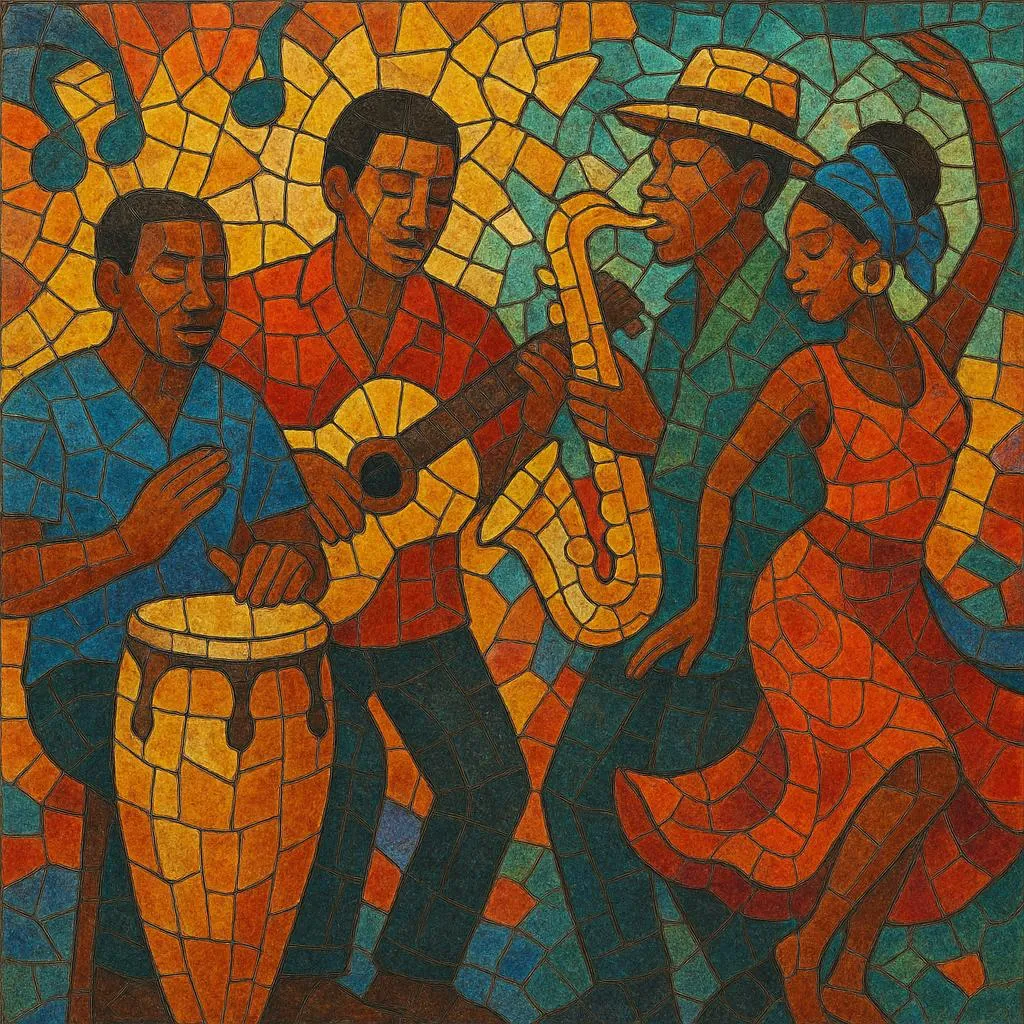
Its core palette mixes merengue’s brisk two‑step drive and bright synth‑brass with soca/calypso carnival energy, zouk/kompa grooves, and salsa’s call‑and‑response hooks. Contemporary productions often add dancehall/reggaeton drum programming, electric bass, congas/guïro, and glossy keyboards, while vocals—frequently in Papiamentu—center on love, friendship, and carefree island life.

The result is upbeat, melodic, and eminently danceable music that functions equally well at Carnival, club nights, and family festivities, and that serves as a cultural bridge for Dutch‑Caribbean communities at home and in the diaspora.

Sources: Spotify, Wikipedia, Discogs, RYM, MB, user feedback and other online sources

History

Early roots (pre‑1990s)

Ritmo Kombina’s DNA was laid by earlier Afro‑Curaçaoan and Aruban traditions such as tambú and seú, and by the island dance‑band culture that routinely performed calypso, merengue, and salsa for social events. Cross‑Caribbean exchange via radio, records, and Carnival circuits kept rhythms circulating across the region.

Formation and naming (1990s)

In the 1990s, local bands and producers on Curaçao and Aruba began branding their hybrid party repertoire as “Ritmo Kombina,” signaling an intentional, modern fusion. The name captured the practice of combining merengue’s fast meter, soca/calypso’s celebratory feel, and zouk/kompa’s sway with salsa’s chorus structures—delivered with contemporary, keyboard‑driven arrangements and Papiamentu lyrics.

Consolidation and regional popularity (2000s)

Throughout the 2000s the style flourished on island radio and at Carnival, weddings, and club nights. Advances in affordable digital production (workstations, rompler brass, and drum machines) standardized the crisp, high‑energy aesthetic, while diaspora audiences in the Netherlands amplified demand and visibility through festivals and community media.

Digital era and stylistic updates (2010s–present)

Streaming platforms and social media broadened Ritmo Kombina’s reach beyond the ABC Islands. Producers increasingly incorporated reggaeton and dancehall patterns, side‑chain pumping, and brighter pop toplines, yet retained the genre’s signature dance‑band feel, bilingual hooks, and island identity. Today it remains a living, flexible party idiom that anchors Dutch‑Caribbean popular culture at home and abroad.

How to make a track in this genre

Tempo, groove, and rhythm
•   Aim for 120–140 BPM. A brisk merengue‑like two‑step or soca four‑on‑the‑floor provides the core engine. •   Layer Latin/Caribbean percussion: guïro for constant scrape, congas/tumbadora for syncopated slaps, shakers, and occasional timbales fills. •   Use off‑beat guitar or keyboard stabs to reinforce the island swing; add reggaeton/dancehall‑style kicks and snares sparingly for modern punch.
Harmony and melody
•   Keep harmony bright and accessible: I–V–vi–IV or I–IV–V progressions in major keys are common; sprinkle ii–V–I or quick dominant turns for salsa flavor. •   Write strong, sing‑back choruses with call‑and‑response. Brass‑lead motifs (synth brass or real horns) and simple pentatonic/major scale hooks work well.
Instrumentation and sound design
•   Core band: drum kit + Latin percussion, electric bass with a tight, syncopated merengue/soca line, rhythm guitar (clean or light chorus), and keyboards (piano, organ, bright comping, and synth‑brass hits). •   Production: tight side‑chaining for modern sheen, layered claps, and stereo percussion. Brass stabs, risers, and short tom fills accent transitions.
Lyrics and structure
•   Use Papiamentu (often mixed with Spanish/Dutch/English) and focus on love, friendship, celebration, and everyday island life. •   Form: intro (riff or brass hook), verse, pre‑chorus, big chorus, a dance break/“montuno”‑style call‑and‑response, then a final chorus with added ad‑libs.
Performance tips
•   Keep energy high and interactive—encourage crowd responses on choruses. •   Prioritize groove clarity: lock percussion, bass, and rhythm keys/guitar so dancers feel a steady, forward push with plenty of syncopated sparkle.

Top tracks

Locked
Share your favorite track to unlock other users’ top tracks

Upcoming concerts

in this genre
Influenced by
Has influenced
No genres found

Download our mobile app

Get the Melodigging app and start digging for new genres on the go
© 2026 Melodigging
Melodding was created as a tribute to Every Noise at Once, which inspired us to help curious minds keep digging into music's ever-evolving genres.
Buy me a coffee for Melodigging