

Your digging level
Description
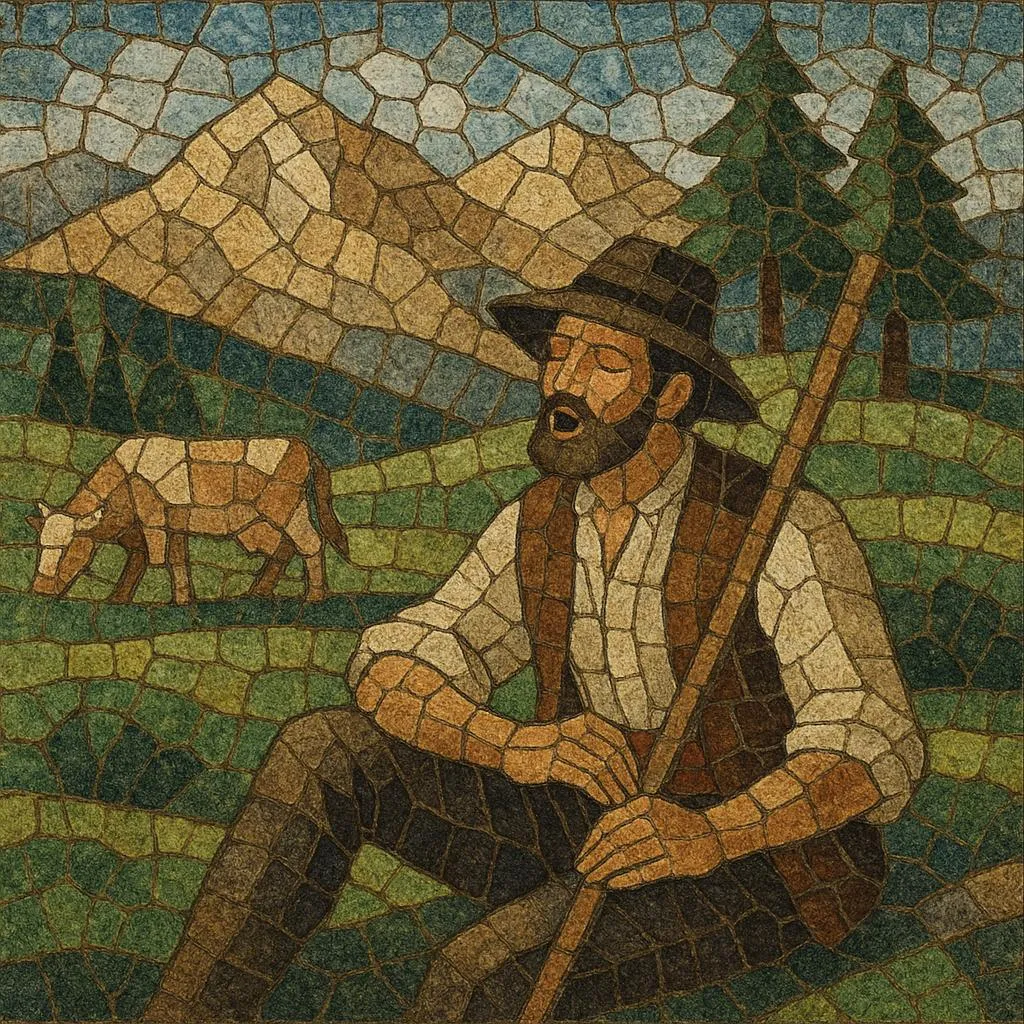
Almlied (literally “alpine pasture song”) is a traditional vocal song type from the Alpine regions, especially Tyrol and the Bavarian Alps. It is closely tied to herding and seasonal life on the high pastures, where songs served both expressive and practical roles (calling across distances, coordinating work, and passing time).
Musically, Almlieder are strophic, diatonic, and often sung a cappella or with very light accompaniment (zither, guitar, accordion). They favor clear, open-throated timbre, a comfortable mid-range, and simple, memorable melodies that project well in outdoor settings. Yodel interjections (nonsense syllables like “jo-hol-di-o”) frequently punctuate or conclude verses, exploiting the natural echoes of mountain valleys.
Texts are commonly in Bavarian–Austrian dialects and celebrate nature, seasonal rhythms, pastoral work, homesickness, courtship, and devotion. The intimate, reflective character and the use of call-and-response or solo–chorus formats reflect both the music’s social function and the acoustics of the alpine environment.
History
Almlied emerged as a distinct strand of Alpine folk singing among herders and dairy workers living seasonally on high pastures. Although shepherd calls and pastoral songs are centuries old, written descriptions and notated examples proliferate in the 19th century, when collectors and touring family ensembles began to popularize Tyrolean song outside the region.
Tyrolean singing families such as the Rainer Family and the Strasser Family toured central Europe, Britain, and North America, presenting “Alpine songs” and yodels on concert stages. Their success helped codify the sound of the Almlied—strophic verses with yodel refrains—and inspired European salon pieces like the “Tyrolienne,” as well as transatlantic interest in yodeling.
Field collectors (e.g., Kiem Pauli, Tobi Reiser) preserved local repertoires, while regional radio and festivals brought Almlieder from huts and farmsteads to public performance. The style intersected with Volkstümliche Musik and Schlager aesthetics, sometimes with fuller accompaniment, yet many singers and small vocal trios maintained unaccompanied traditions (e.g., Dreigesang) and dialect texts.
Today, Almlied thrives in community singing, mountain festivals, and heritage ensembles across Austria and southern Germany. Workshops, archives, and recordings sustain both historically informed practice (a cappella, outdoor projection, dialect poetry) and lighter, stage-ready variants. The style remains a touchstone for Alpine identity and a key link between functional herding calls, yodeling technique, and modern folk performance.

