Your digging level

For this genre
0/8
🏆
Sign in, then listen to this genre to level up

Description

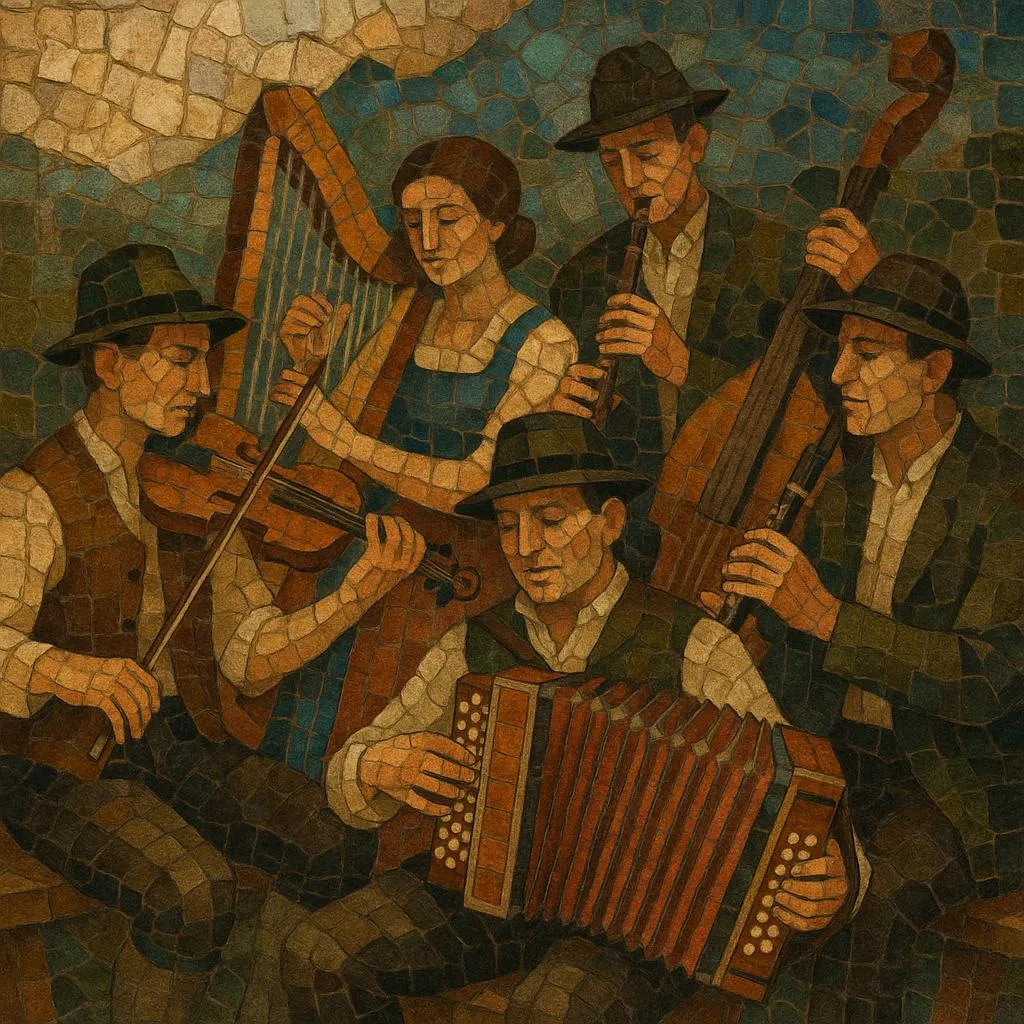
Tanzlmusi (dialect for "Tanzlmusik") is a small‑ensemble Alpine folk dance music from the Bavarian–Austrian region. It is played acoustically for social dancing at village inns, fairs, and community gatherings, and centers on traditional dance forms such as the Ländler, Boarischer, Polka, Waltz, Schottische, Mazurka, and the meter‑shifting Zwiefacher.

Typical ensembles blend strings and plucked instruments (fiddle, zither, harp, guitar, double bass) with the Steirische Harmonika (diatonic button accordion), clarinet, and sometimes brass or a hammered dulcimer (Hackbrett). The style favors clear melodies, buoyant rhythms, uncomplicated diatonic harmonies, and a lively, earthy sound designed to keep dancers moving. While closely related to "Stubenmusi" (intimate parlor folk for listening), Tanzlmusi remains first and foremost dance music—social, local, and highly groove‑conscious.


Sources: Spotify, Wikipedia, Discogs, RYM, MB, user feedback and other online sources

History

Origins (19th century)

Tanzlmusi grew out of rural Alpine "Volksmusik" traditions in Bavaria and western Austria during the 1800s. As village dances flourished, small local bands coalesced around the practical needs of social dancing: portable instruments, clear melodies, and a rhythm section that could be heard in a crowded inn. Dances such as the Ländler (3/4), Polka (2/4), Schottische (4/4), and later the Zwiefacher (alternating meters) formed the core repertoire. The spread of the Steirische Harmonika in the late 19th century helped define the idiomatic sound.

Consolidation and regional styles (early–mid 20th century)

Through the early 1900s, regional variants took shape—Tyrolean and Salzburg ensembles might emphasize zither and harmonika; Upper Bavarian groups sometimes leaned more on strings and clarinet. While brass bands (Blasmusik) also became popular for outdoor and ceremonial events, Tanzlmusi stayed focused on the indoor dance floor and small‑room acoustics. Field recordings and folk collectors in the mid‑20th century documented local tunes, helping stabilize a shared, but regionally inflected, canon.

Revivals and continuity (late 20th century to today)

Folk revivals from the 1970s onward, along with folk festivals and dance clubs, sparked renewed interest among younger musicians. Ensembles balanced historical repertoire with newly composed tunes in traditional idioms, and careful dance pedagogy kept steps alive. Today, Tanzlmusi thrives in Bavaria, Tyrol, and Salzburg, coexisting with Neue Volksmusik crossovers while maintaining its core social function: live music for communal dancing.

How to make a track in this genre

Ensemble and instrumentation
•   Core: Steirische Harmonika (diatonic button accordion), fiddle, zither or harp, guitar, and double bass. •   Optional colors: clarinet, hammered dulcimer (Hackbrett), flugelhorn or small brass voices for reinforcement. •   Keep it acoustic, with a natural room balance aimed at dancers, not stage volume.
Forms, meters, and tempos
•   Repertoire pillars: Ländler (3/4, moderate and lilting), Polka and Boarischer (2/4, springy), Waltz (3/4, flowing), Schottische (4/4 with dotted swing), Mazurka (3/4 with accent on beat 2), Zwiefacher (alternating 3/4 and 2/4 patterns). •   Choose danceable, steady tempos: Polka ~110–130 BPM; Ländler often slower and more elastic; Waltz moderate with clear 1‑2‑3 pulse.
Harmony and melody
•   Diatonic keys (often folk‑friendly major modes) with simple progressions (I–V, I–IV–V, I–V–vi–IV variants) and occasional modal color. •   Melodies are singable and phrase‑regular (often 8+8 bars), tailored to dance figures. •   Use parallel thirds/sixths between lead voices; let the harmonika outline chords and bass buttons while the guitar/bass anchor the groove.
Rhythm, articulation, and groove
•   Prioritize a buoyant, lightly accented downbeat that supports stepping patterns. •   Guitar uses crisp, short strokes; bass plays clear root–fifth patterns. •   Fiddle and clarinet articulate with dance‑friendly lift (slurs into accented beats, light staccato endings).
Ornamentation and style cues
•   Tasteful trills, mordents, grace‑notes, and slides on fiddle/clarinet; bellows shakes and bass‑chord punctuations on harmonika. •   Occasional yodel‑style cadential figures or vocal interludes (Gstanzl/Jodler) can bridge sets, but keep the dance flow.
Arranging and set building
•   Alternate tune types (e.g., Ländler → Polka → Waltz) to match a dance program. •   Use 2–3 repeats per strain; modulate or vary instrumentation on final repeat for lift. •   Close with a tagged cadence or short ritard only if the dance figure requires it.

Top tracks

Locked
Share your favorite track to unlock other users’ top tracks

Upcoming concerts

in this genre
Influenced by
Has influenced

Download our mobile app

Get the Melodigging app and start digging for new genres on the go
© 2026 Melodigging
Melodding was created as a tribute to Every Noise at Once, which inspired us to help curious minds keep digging into music's ever-evolving genres.
Buy me a coffee for Melodigging