Your digging level for this genre

0/8
🏆
Sign in, then listen to this genre to level up

Description

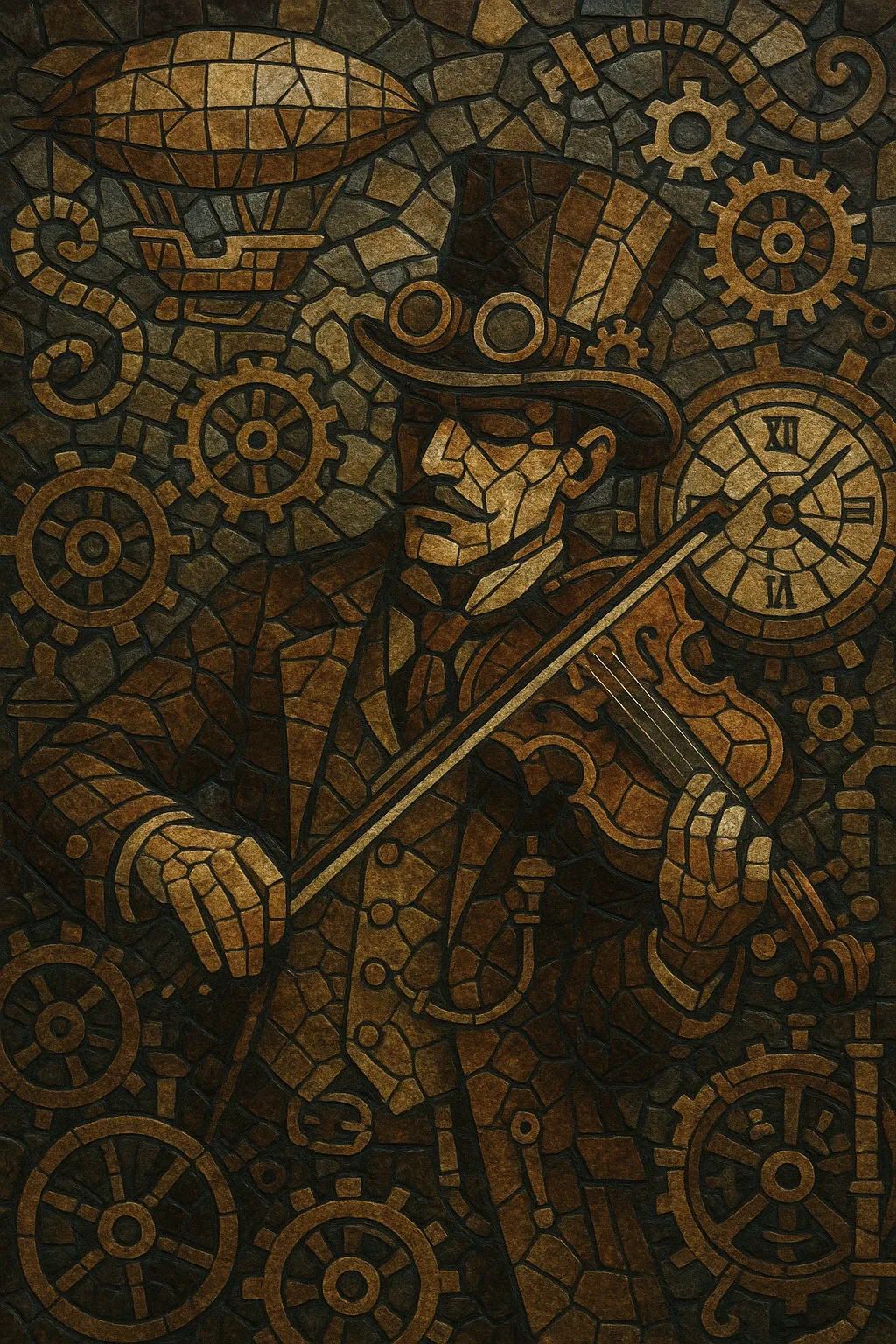
Steampunk music is a retrofuturist fusion that marries Victorian- and Edwardian-era performance traditions with modern rock, industrial, and cabaret sounds.

It typically blends theatrical vocals and narrative songwriting with a palette that can include accordions, violins/cellos, brass, banjos, ukuleles, hand percussion, piano, and music‑box or typewriter noises alongside guitars, bass, drums, synthesizers, and industrial textures. The lyrical focus often explores airships, clockwork, automata, explorers, inventors, and speculative histories, frequently critiquing empire and class while celebrating adventure and maker culture.

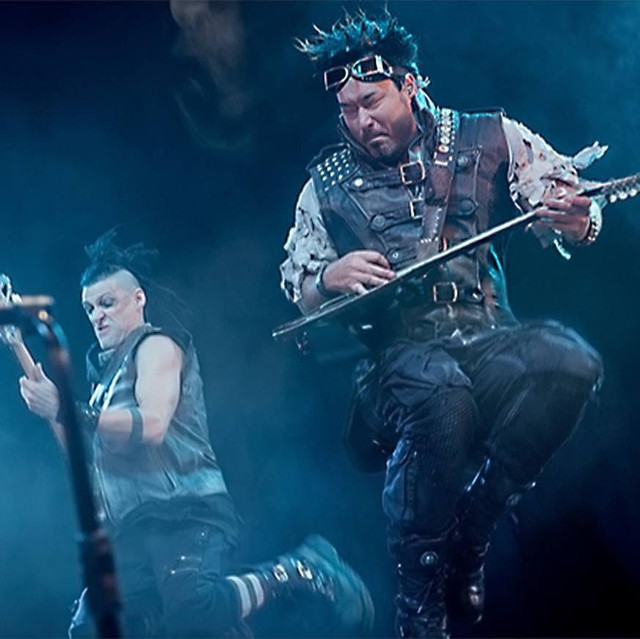
Live shows are highly performative, with neo‑Victorian attire, goggles, and anachronistic props integrated into staging, choreography, and audience participation.

History

Origins in Aesthetics and Subculture

Steampunk began as a literary and visual-art movement in the late 20th century, imagining Victorian science fiction built from brass, steam, and clockwork. Musicians inspired by this retrofuturism started to fold its imagery into sound and stagecraft, drawing on cabaret, music hall, vaudeville, gothic and alternative rock, and industrial textures.

2000s: Emergence of a Self-Identified Sound

In the mid-to-late 2000s, several bands explicitly branded their music as steampunk. Abney Park pivoted from industrial/goth toward a fully realized steampunk world with concept albums and costumed performances. Around the same time, projects like Vernian Process, Steam Powered Giraffe, The Cog Is Dead, and The Men That Will Not Be Blamed for Nothing developed distinct approaches—ranging from harmony‑rich, automaton‑themed vocal acts to gritty Victorian punk and orchestral dark cabaret.

Community infrastructure grew through festivals (e.g., The Steampunk World’s Fair in the U.S. and The Asylum Steampunk Festival in the U.K.), themed club nights, and online hubs. Radio shows and podcasts helped codify the aesthetics, while DIY maker culture influenced instrument modification, props, and stage design.

2010s–Present: Diversification and Crossovers

Through the 2010s, steampunk diversified stylistically: some acts leaned into industrial rock and dark cabaret; others flirted with folk, chamber pop, or maritime/pirate flavors; still others incorporated electro‑swing or theatrical musical‑theatre elements. The scene remained strongly multimedia—costume, narrative, and stagecraft are as central as the songs. While never a mainstream chart sound, steampunk music persists through festivals, cosplay conventions, curated playlists, and a dedicated global community.

Defining Characteristics

Steampunk’s cohesion is less about a single rhythm or harmony language and more about a shared narrative world: retrofuturist storytelling, neo‑Victorian timbres and forms (waltzes, marches, parlour songs), and a blend of acoustic and industrial sonics, presented with theatrical flair.


How to make a track in this genre

Instrumentation and Timbre
•   Combine acoustic/period-evoking instruments (accordion, violin/cello, clarinet/brass, banjo/ukulele, upright piano, harmonium, music box) with modern rock/industrial tools (electric guitar/bass, drum kit, synths, sampled machinery, typewriter or clockwork percussion). •   Design sound effects (steam hisses, gear clicks, piston thumps) as rhythmic or textural layers. Subtle tape/wireless/transistor/gramophone filters can sell the retrofuturist illusion.
Rhythm and Form
•   Alternate between rock backbeats (4/4) and period stylizations: waltzes (3/4), polkas or two‑steps (2/4), and marches. Swing feels and cabaret grooves work well for theatrical numbers. •   Use intros/outros that sound like an engine starting/stopping, a radio tuning, or a clock winding to frame the narrative.
Harmony and Melody
•   Favor minor keys, modal mixture, and occasional chromatic color (e.g., borrowed chords, secondary dominants). Simple, memorable melodies support storytelling, while violin/accordion countermelodies add parlour‑song charm. •   For dramatic effect, try cinematic modulations (up a minor third or half‑step) and pedal points under orchestral hits.
Lyrics and Narrative
•   Center retrofuturist tales: airships, automatons, inventors, lost expeditions, time travel. Balance whimsy and social commentary—critiques of empire, class, and colonialism can sit alongside swashbuckling adventure. •   Write in character; use first‑person diaries, ship logs, patent notes, or newspaper broadsides as lyrical frames. Clever wordplay and period turns of phrase help.
Arrangement and Performance
•   Orchestrate like chamber pop meets rock: strings/accordion handle pads and countermelodies, guitars provide grit, brass punctuates, and percussion mixes kit with found objects. •   Stagecraft matters: integrate narrative interludes, scripted banter, and prop sounds (typewriters, telegraph keys). Costume and lighting reinforce world‑building.
Production Tips
•   Blend warm, vintage coloration (tube/tape saturation, spring/plate reverb) with modern clarity. Layer Foley (steam valves, gears) in tempo to glue the aesthetic to the groove. •   If using electronics, keep synth patches tactile—reed/organ emulations, clockwork arps, and mechanical LFO rhythms align with the theme.

Top tracks

Locked
Share your favorite track to unlock other users’ top tracks
Influenced by
Has influenced
Challenges
Digger Battle
Let's see who can find the best track in this genre
© 2025 Melodigging
Melodding was created as a tribute to Every Noise at Once, which inspired us to help curious minds keep digging into music's ever-evolving genres.
Buy me a coffee for Melodigging