Your digging level

For this genre
0/8
🏆
Sign in, then listen to this genre to level up

Description

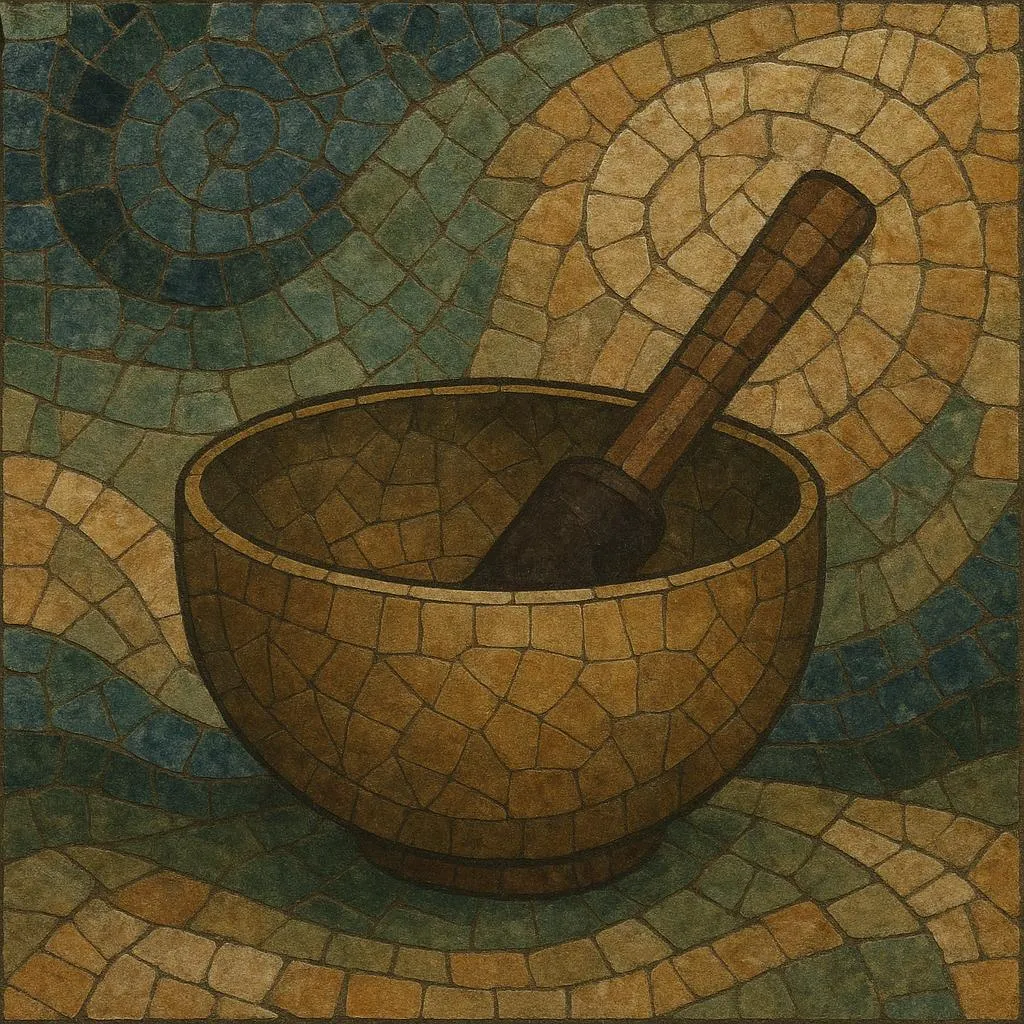
Singing bowl music centers on the sustained, shimmering tones of Himalayan metal bowls and modern crystal quartz bowls, performed by striking or friction-rubbing their rims with mallets. The result is a rich spectrum of fundamentals, upper partials, and beating patterns that naturally invite slow breathing and inward focus.

As a recorded and concertized style, it emerged within the New Age and ambient movements, where bowls are featured solo or with sparse drones, subtle electronics, or meditative vocals. While the instruments are associated with Himalayan cultures, the genre as a marketed listening practice grew largely out of Western ambient, wellness, and "sound bath" scenes.


Sources: Spotify, Wikipedia, Discogs, RYM, MB, user feedback and other online sources

History

Origins

Metal "singing" bowls—often alloy bowls found across Himalayan regions—have long produced sustained tones when rubbed or struck, serving practical, ritual, and musical purposes. Their timbre-rich resonance naturally supports contemplative listening.

1970s: From ritual sound to recorded genre

In the 1970s, Western New Age and ambient circles began featuring bowls in studio recordings and performances, highlighting their long decay and overtone bloom. These early releases helped listeners encounter bowls as primary instruments rather than incidental ritual objects.

1980s–1990s: New Age consolidation

As the New Age market expanded, singing bowls appeared alongside synthesizers, drones, and nature sounds in albums for relaxation, healing arts, and yoga. Producers explored close‑miking, long reverbs, and slow, free‑time pacing to emphasize the bowls’ complex partials.

2000s–2010s: Crystal bowls and “sound baths”

Crystal (quartz) singing bowls—with more pronounced, pitch‑focused tones—became common in studios and group “sound baths.” Streaming and wellness venues amplified the genre’s reach, spawning playlists for sleep, meditation, and mindfulness.

2020s: Global diffusion and reflection

Today the style is global, spanning purely acoustic, electro‑acoustic, and drone‑ambient approaches. There is also growing discussion about cultural context and respectful attribution to Himalayan traditions while acknowledging the genre’s modern development within Western ambient and wellness cultures.

How to make a track in this genre

Sound sources and set-up
•   Instruments: Himalayan alloy bowls in varied sizes (for layered fundamentals/partials) and/or crystal quartz bowls (for clear, strong pitches). Add tingsha, temple bells, gentle chimes, or a low electronic drone if desired. •   Mallets: Use suede‑, felt‑, or rubber‑tipped strikers; employ both striking and rim‑rubbing. Lighter mallets bring out higher partials; heavier mallets emphasize the fundamental. •   Tunings: Metal bowls are often inexact; embrace their natural inharmonicity. Crystal bowls can be chosen to approximate scales (pentatonic, modal, or drone‑tonic collections).
Rhythm, pacing, and form
•   Meter: Often free‑time or very slow pulse. Let sustain trails decay fully before the next gesture. •   Form: Common arc for a 30–60 minute session—Opening (soft, single tones), Expansion (layering drones, gentle swells), Peak (densest overtone field), Dissolution (thinning texture), and Rest (near‑silence).
Harmony and layering
•   Center on a tonic drone (e.g., a large bowl) and color with mid/high bowls. Aim for slow voice‑leading: shift one bowl at a time to create subtle spectral changes. •   With crystal bowls, choose a limited mode (e.g., D Dorian or an anhemitonic pentatonic) and rotate tones slowly to avoid melodic busyness.
Recording and acoustics
•   Mic choice: Pair a close condenser (to capture transient and shimmer) with a room/AB pair (to capture bloom and reflections). High‑headroom preamps prevent overload on loud strikes. •   Space and processing: Favor resonant rooms. Add long reverb and gentle stereo widening; avoid heavy EQ—most of the beauty lies in the partials.
Electro‑acoustic options
•   Subtle sine/organ drones under bowls reinforce pitch centers. Gentle granular or time‑stretching can lengthen swells without obscuring the acoustic core. •   Keep dynamics conservative; the aim is immersive presence, not intensity.
Performance practice and care
•   Dynamics: Begin softly; build density and amplitude gradually. Always leave space for decays. •   Health & safety: Sustained high SPLs and bright partials can cause fatigue—keep volumes moderate, especially in group settings. •   Context: When referencing Himalayan traditions, acknowledge cultural origins respectfully and avoid making unsupported therapeutic claims.

Top tracks

Locked
Share your favorite track to unlock other users’ top tracks

Upcoming concerts

in this genre
Influenced by
Has influenced

Download our mobile app

Get the Melodigging app and start digging for new genres on the go
Š 2026 Melodigging
Melodding was created as a tribute to Every Noise at Once, which inspired us to help curious minds keep digging into music's ever-evolving genres.
Buy me a coffee for Melodigging