Your digging level
Description
Tibetan mantra is a sacred vocal tradition rooted in Vajrayana (Tantric) Buddhism, in which mantras—short, potent strings of syllables in Tibetan or liturgical Sanskrit—are chanted repetitively to focus the mind, cultivate compassion, and enact ritual power.
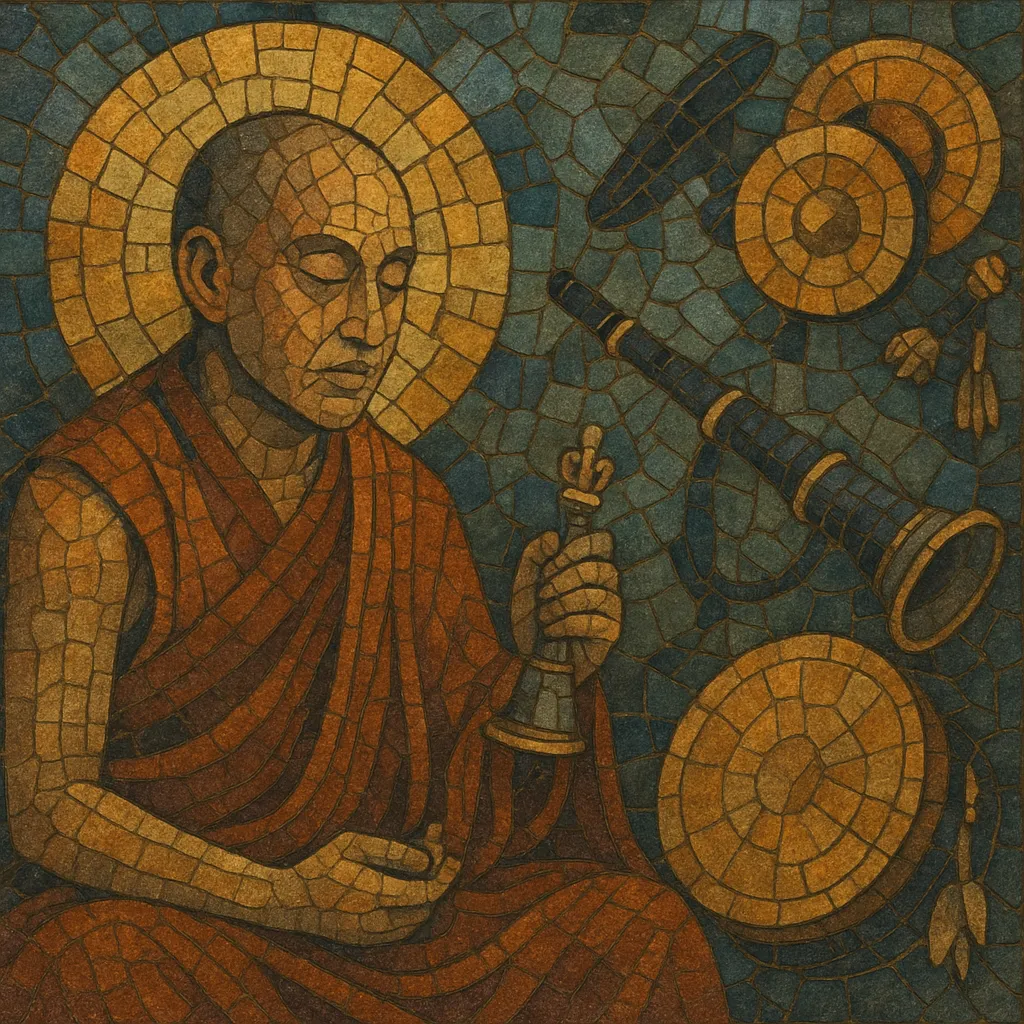
Musically, it features sustained drones, low-register overtone/undertone chanting by male monastic choirs (famously the Gyuto and Gyume traditions), and responsorial patterns. Ritual instruments such as the drilbu (handbell), damaru (hourglass drum), dungchen (long horn), gyaling (reed oboe), kangling (horn), large frame drums, gongs, and cymbals punctuate or underpin the vocal texture.
The melodic motion is narrow and modal, often hovering around recitation tones rather than harmonically driven progressions. Tempi are generally slow to moderate, emphasizing breath, resonance, and textual clarity. The repertoire centers on mantras like Om Mani Padme Hum (Avalokiteśvara), Om Tare Tuttare Ture Soha (Tārā), and Om Ah Hum Vajra Guru Padma Siddhi Hum (Padmasambhava), performed in liturgy, meditation, and public ceremonies.
History
Tibetan mantra practice emerged as part of the transmission of Vajrayana Buddhism into Tibet during the 7th–9th centuries, associated with figures like Śāntarakṣita and Padmasambhava. Mantra recitation, already central in Indian Buddhist and Hindu practice, was integrated into Tibetan monastic liturgy, where it took on distinct vocal timbres and ceremonial formats.
By the medieval period, major monastic institutions (e.g., Gyuto and Gyume Tantric Colleges) cultivated specialized low-register, subharmonic chanting techniques that produce rich overtone spectra. These choirs standardized ritual cycles in which mantras align with mudrā (gestures) and vajra-bell instrumentation, codifying a sonic aesthetic of sustained drones, antiphony, and punctuating percussion.
In the 20th century, ethnographers and labels (notably the Nonesuch Explorer series) issued seminal field recordings of Tibetan ritual music. Following the Tibetan diaspora after 1959, monasteries reestablished in India and Nepal, facilitating worldwide exposure through tours and recordings. The Gyuto Monks’ undertone chant fascinated Western listeners; collaborations (e.g., Mickey Hart’s early 1990s projects) amplified its reach.
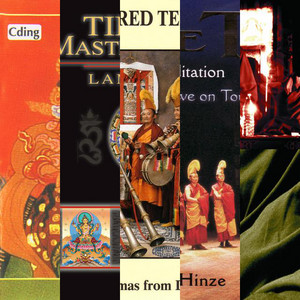
From the 1990s onward, Tibetan mantra appeared alongside global "new age" and wellness contexts, while remaining central to Buddhist ritual. Artists like Ani Choying Drolma, Yungchen Lhamo, Lama Gyurme, and Nawang Khechog presented mantra within contemplative concert formats. In 2004, the Monks of Sherab Ling Monastery won a Grammy for Sacred Tibetan Chant, underscoring the tradition’s global resonance. Recent projects (e.g., the Dalai Lama’s 2020 album "Inner World") continue to bridge liturgical authenticity with modern production, influencing ambient, drone, and ritual-ambient scenes.
Select a canonical mantra (e.g., Om Mani Padme Hum, Om Tare Tuttare Ture Soha, or Om Ah Hum Vajra Guru Padma Siddhi Hum). Clarify the ritual or meditative purpose—compassion, protection, or purification—and let this intention shape pacing, dynamics, and duration.
Use slow, steady recitation with clear diction; monastic styles often employ low-register, subharmonic chanting that creates a drone-like undertone. A choir can alternate between unison sections and responsorial phrases (leader–chorus). Sustain notes to emphasize resonance; avoid elaborate melisma to preserve textual clarity.
Anchor the chant around a stable recitation tone or a very narrow modal frame (drone-centric rather than chordal). Keep tempo slow to moderate; align repetitions with breath cycles or mala counts (e.g., 108 repetitions). Structure the performance in cycles: opening invocation, main mantra rounds, crescendos with percussion, and a quiet dedication.
Support voices with traditional ritual instruments: drilbu (handbell) for bright punctuations, damaru for rolling rhythms, cymbals and gongs for accents, and long horns (dungchen) or oboe-like gyaling for ceremonial calls. In contemporary settings, add subtle drones from Tibetan singing bowls, shruti box, or low synths—but keep texture sparse.
Record in a resonant space (temple, hall, or simulated reverb) to enhance overtones. Keep mixes uncluttered; prioritize vocal presence and the bell–drum interplay. Use gradual dynamic swells at ceremonial peaks, then return to soft, steady recitation for closure. Maintain cultural respect by using correct pronunciation and appropriate contexts for specific mantras.