Your digging level

For this genre
0/8
🏆
Sign in, then listen to this genre to level up

Description

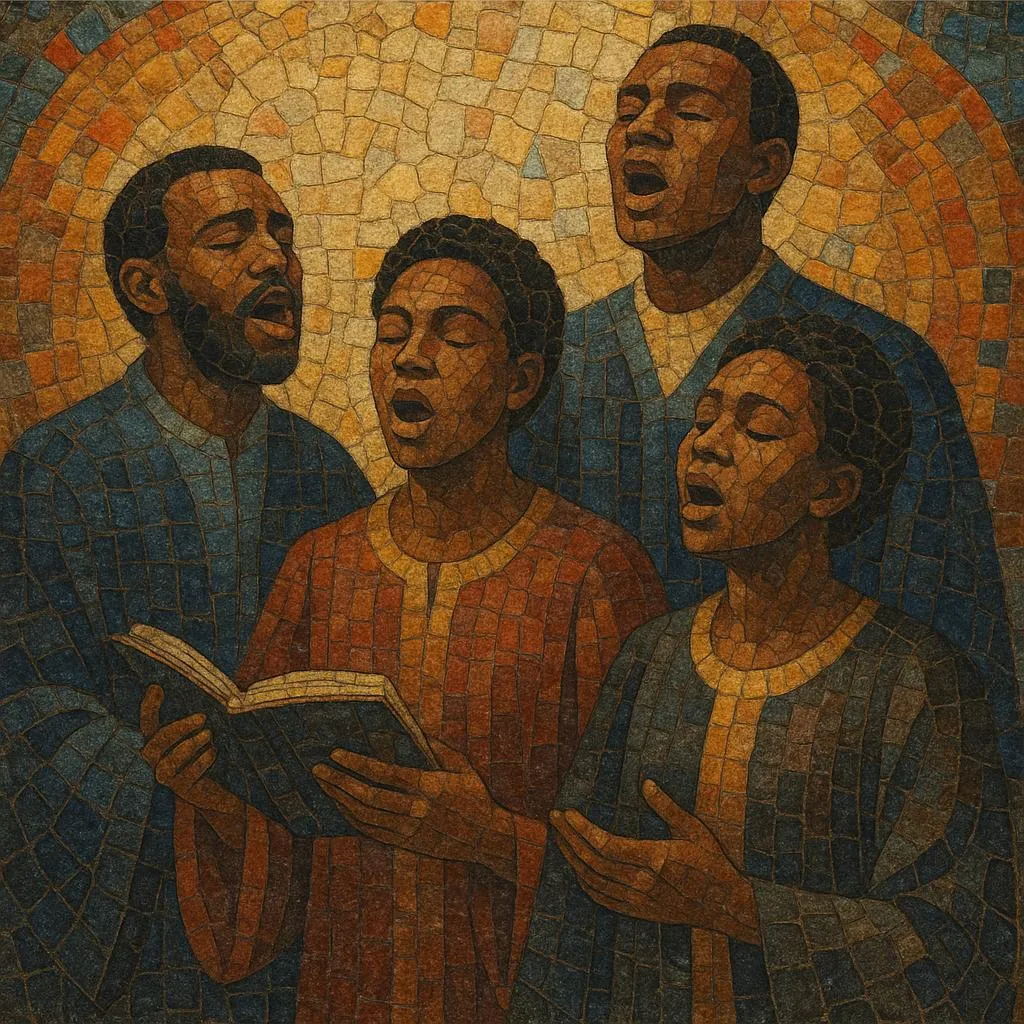
SDA a cappella is the unaccompanied vocal-harmony tradition within the Seventh-day Adventist (SDA) church. It blends hymnody, spirituals, and Black gospel quartet practice with choral blend and, in some scenes, jazz-influenced harmonies.

Typical ensembles range from male TTBB quartets to mixed SATB groups and large choirs. Repertoires emphasize Scripture songs, traditional hymns, spirituals, and contemporary worship pieces, often arranged for close harmony, precise tuning, and text-forward delivery. Outside the United States, especially in parts of Africa and the Philippines, the style incorporates local languages, call-and-response patterns, and regional vocal timbres while preserving the core a cappella ethos.


Sources: Spotify, Wikipedia, Discogs, RYM, MB, user feedback and other online sources

History

Origins (1930s–1950s)

The roots of SDA a cappella lie in the Adventist church’s emphasis on congregational singing and evangelistic music. Male gospel quartets connected to Adventist media ministries—most famously radio and camp-meeting programs—codified a dignified, text-centered, unaccompanied sound. Repertoires drew from hymns, spirituals, and scripture songs delivered with tight blend and clear diction.

Institutionalization and Excellence (1960s–1980s)

Adventist colleges and universities nurtured choirs and quartets, strengthening a cappella pedagogy (blend, intonation, part independence) and touring traditions. This period cemented the model of the Adventist quartet/choir as a portable, mission-oriented ensemble, performing in churches, schools, and large evangelistic series.

Innovation and Global Spread (late 1980s–2000s)

While the classical quartet sound remained central, some Adventist groups expanded vocabulary with jazz harmonies, syncopation, and contemporary voicings, inspiring arrangers and student ensembles. Simultaneously, the style flourished globally—especially in Southern and Eastern Africa and the Philippines—where local languages, call-and-response, and regional melodic contours were woven into the Adventist a cappella fabric.

Digital Era (2010s–present)

Online video, streaming, and affordable multitrack recording accelerated cross-pollination. Choirs and quartets share arrangements, rehearse remotely, and collaborate across continents. The core values—unaccompanied harmony, scriptural text, and devotional clarity—remain, while repertoire and vocal color continue to broaden.


How to make a track in this genre

Ensemble & Voicing
•   Typical formats: TTBB male quartet, SATB mixed quartet/quintet, or larger SATB choir. •   Prioritize blend: matched vowels, unified vibrato (often minimal), and balanced section-to-section dynamics.
Harmony & Voice-Leading
•   Start with hymn or spiritual melodies; keep the tune prominent (often in Soprano or Lead/Tenor for quartet styles). •   Use close, functional harmony (I–IV–V, ii–V–I), adding tasteful 7ths/9ths/11ths for warmth. Jazz-influenced voicings are common but should never obscure text. •   Write singable inner lines with contrary motion into cadences; approach suspensions and appoggiaturas with care to maintain tuning.
Rhythm & Feel
•   Maintain clear, prayerful pulse; rubato and dynamic swells support text meaning. •   For African or diaspora contexts, incorporate gentle call-and-response, handclap ostinati, and off-beat phrasing—always a cappella.
Text & Language
•   Favor scripture-based lyrics, hymns, and devotional poetry. Diction and textual clarity are paramount. •   Multilingual practice is welcome: English plus local languages; ensure prosody fits natural speech stress.
Arrangement Structure
•   Common forms: Verse–Verse–Modulation–Final Verse; or Verse–Chorus with a soft bridge. •   Use modulations (often up a semitone or whole tone) to build spiritual intensity. •   Feature moments of homophony for congregational clarity and brief polyphony for color.
Rehearsal & Recording Practices
•   Drill unisons for vowel shape, then expand to chords; tune by listening for “lock and ring.” •   Record in natural spaces (churches) to capture supportive reverberation; keep processing transparent so words remain intelligible.
Performance Ethics
•   Center the message over virtuosity. Dynamics, phrasing, and pacing should serve devotion, not display.

Top tracks

Locked
Share your favorite track to unlock other users’ top tracks

Upcoming concerts

in this genre
Influenced by
Has influenced
No genres found

Download our mobile app

Get the Melodigging app and start digging for new genres on the go
© 2026 Melodigging
Melodding was created as a tribute to Every Noise at Once, which inspired us to help curious minds keep digging into music's ever-evolving genres.
Buy me a coffee for Melodigging