

Your digging level
Description
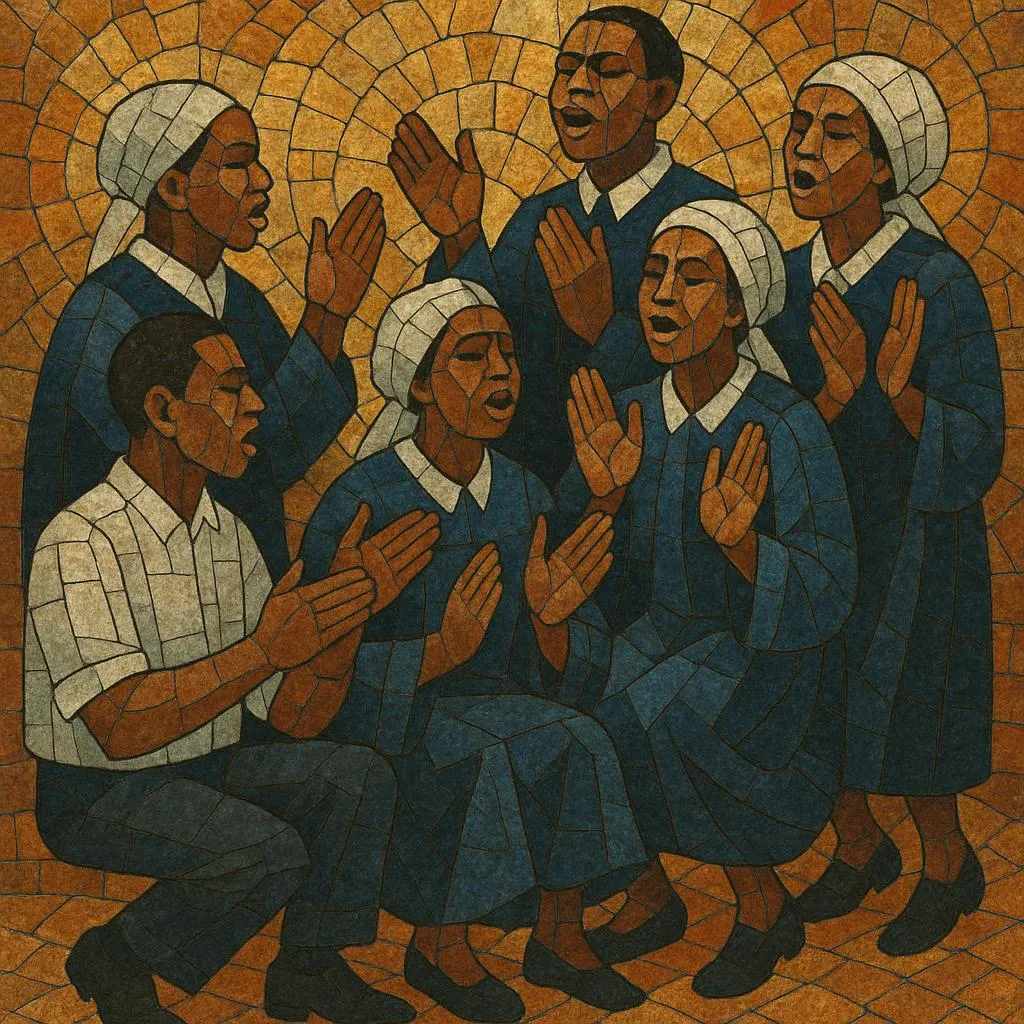
Clap and tap is a South African a cappella church-gospel style in which the choir provides all rhythm through handclapping and percussive foot tapping rather than instruments.
Rooted in Zionist and Apostolic congregations, performances are typically led by a song leader who cues the choir, sets the tempo, and shapes dynamics with gestures. The music favors rich, close-knit SATB (or male-voice) harmonies, responsorial refrains, and steady, danceable ostinatos produced by coordinated claps and heel-toe taps.
Lyrics are devotional—often in Sesotho, Setswana, Sepedi, isiZulu, isiXhosa, and English—and revolve around praise, testimony, and communal encouragement. Choirs commonly wear church uniforms, sing in semicircles, and build intensity through repetition, modulations, and layered counter-melodies. The overall effect is exuberant, participatory worship with a distinct township-choral groove.
History
Clap and tap took shape in the 1960s–1970s within South Africa’s Zionist and Apostolic church communities. These congregations adapted Euro-American hymn traditions and African-American gospel ideals to local choral practice, but—crucially—dispensed with instruments in services, making body percussion the core engine of rhythm.
Choirs organized around a designated leader developed standardized clapping and tapping patterns that lock to mid-tempo 4/4 and lilting 6/8 meters. Harmonies drew on hymnody (I–IV–V progressions, call-and-response refrains) and local choral aesthetics (parallel motion, antiphonal entries, ululation, and spoken exhortations), creating a uniquely Southern African gospel timbre.
As congregational choirs multiplied across Gauteng, Limpopo, North West, and the Free State, weekend rallies and inter-church competitions formalized the style. From the late 20th century onward, cassette, CD, and radio exposure helped codify repertoire and performance conventions. In the 2000s–2010s, digital releases and streaming expanded the audience while choirs continued to foreground uniformed presentation, disciplined staging, and tight ensemble blend.
Clap and tap remains a living worship tradition that simultaneously preserves a cappella church roots and feeds into broader South African gospel. Its rhythmic hand-and-foot engine, modular hymn refrains, and communal leadership model continue to influence contemporary gospel choirs and newer fusions in the region.



