

Your digging level
For this genre
0/8
🏆
Sign in, then listen to this genre to level up
Description
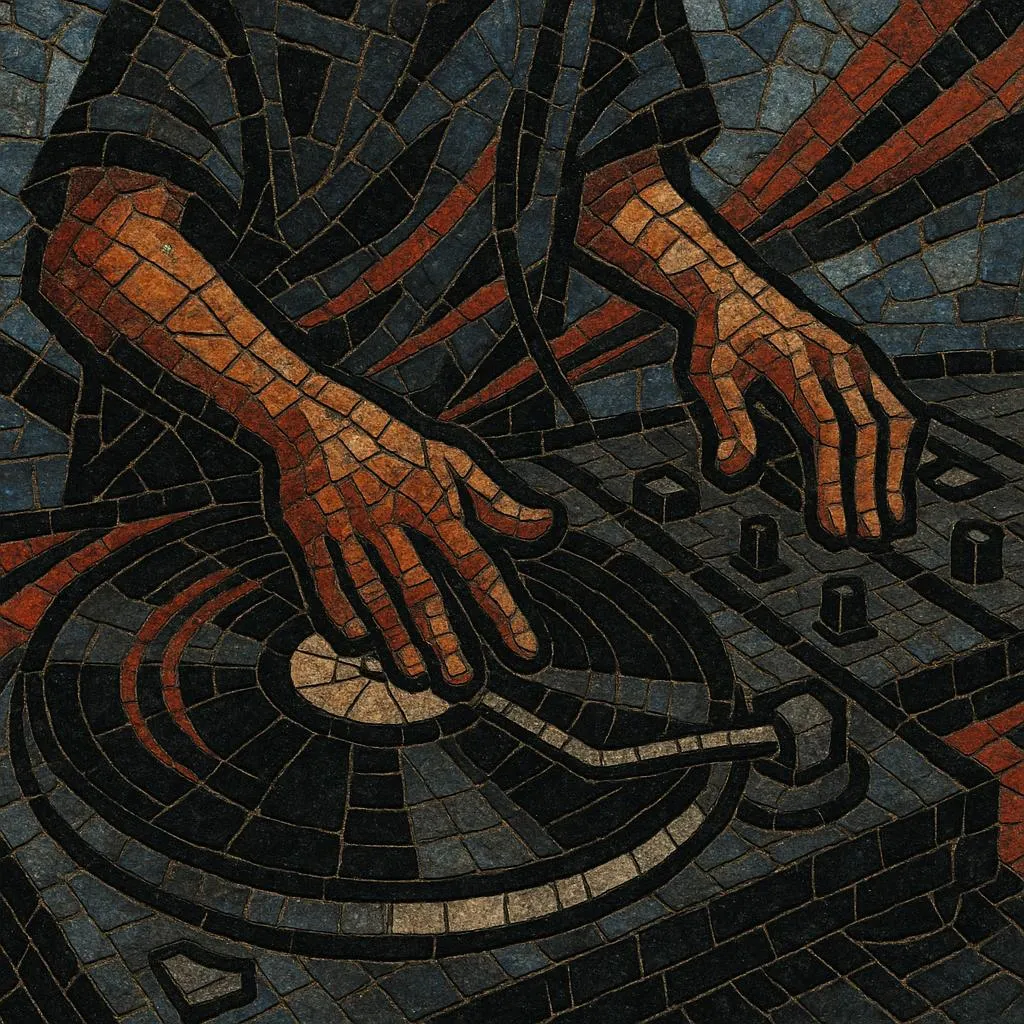
Scratch (or scratching) is the musical art of rhythmically moving a vinyl record back and forth under a turntable's stylus while using a mixer’s crossfader or volume controls to shape percussive and melodic gestures.
Although often described as a technique, scratch developed into a recognizable musical style centered on the turntable as an instrument. Tracks and live routines foreground cut-up vocal phrases, drum hits, tones, and sound effects, arranged in time like drumming, with highly codified gestures (baby, transform, chirp, flare, crab, orbit, etc.). The result ranges from funky, danceable textures to virtuosic, highly percussive displays associated with DJ battles and turntablism.
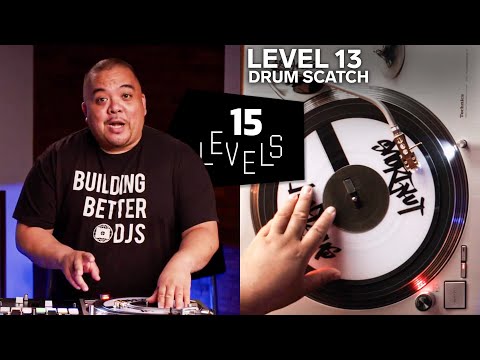
15 Levels of Turntable Scratching: Easy to Complex | WIRED
WIRED
History
Origins (late 1970s)
• Scratching emerged in the Bronx, New York, within early hip hop block-party culture. Grand Wizzard Theodore is widely credited with discovering the technique (c. 1977), manipulating a record while the needle played to create rhythmic, percussive sounds. DJs such as Kool Herc and Afrika Bambaataa established the break-centric context in which scratching took root.
• Grandmaster Flash brought technical refinement and showmanship, and his 1981 single “The Adventures of Grandmaster Flash on the Wheels of Steel” showcased scratching as a recorded musical element rather than a purely live trick.
Recognition and Studio Breakthroughs (1980s)
• Scratching moved from parks and clubs into studios and mainstream culture. A landmark was Herbie Hancock’s 1983 hit “Rockit,” featuring GrandMixer D.ST (DXT) scratching prominently—demonstrating the turntable as a lead instrument in popular music.
• By the mid-to-late 1980s, scratches—often short vocal cuts (“Ahh,” “Fresh”)—became a signature of rap records, while club DJs and radio mixers normalized the sound across dance subcultures.
Turntablism and Battle Era (1990s)
• The 1990s saw the rise of dedicated scratch crews and competitions (DMC World DJ Championships, ITF/IDA). Crews like Invisibl Skratch Piklz, The X‑Ecutioners, Beat Junkies, and Scratch Perverts elevated scratching to a formal performance art known as turntablism.
• Technique expanded rapidly: transform scratches, chirps, flares, crabs, cones/boomerangs, orbits, and beat juggling. Scratch-specific “battle records” provided standardized sounds and “sentences” for practice and performance.
Digital and Hybrid Eras (2000s–present)
• Timecode/DVS systems (e.g., Serato, Traktor) enabled scratching with digital files while preserving turntable feel. Portable turntables, fader innovations, and controllerism blurred lines between DJing, live electronics, and instrumental performance.
• Today, scratch thrives across hip hop, electronic music, pop, experimental scenes, and competitive DJ culture. It remains both a foundational hip hop language and a standalone instrumental tradition.
Core Tools
• Two turntables (or a turntable plus DVS/controller) and a scratch-friendly mixer with a smooth crossfader (often with adjustable curve and cut‑in).
• Slipmats for low-friction record movement, reliable cartridges/needles, and “battle records” or sound packs containing classic scratch samples (e.g., “Ahh,” “Fresh,” tones, drums, sound FX).
• Optional: timecode vinyl (Serato/Traktor), portable faders, and effects (filters, delays) for sound design.
Techniques and Vocabulary
• Start with the baby scratch (no fader) to build timing and phrasing. Add fader cuts for transforms (open/close per hand motion), chirps (short, articulated cuts), flares (one or more fader clicks per hand stroke), and crabs (multiple rapid clicks). Orbits, tears, boomerangs, hydroplanes, and scribbles extend rhythmic variety.
• Practice in 4/4 at 80–110 BPM (classic hip hop) and faster tempos (electro/breaks) to internalize swing vs. straight feels. Use metronomes or drum loops; phrase in 1, 2, 4, and 8 bars.
Musicality and Arrangement
• Treat scratches as drum rudiments: contrast long/short strokes, accents, rests, and dynamics. Compose call‑and‑response between two phrases/samples, and structure routines with intro, build, solo/feature, and payoff.
• Tone play: pitch-shift or use tonal samples to outline simple melodies or riffs. Layer with basslines or chord stabs (from samplers or a bandmate) to give harmonic grounding.
• Sound selection matters: vary vowels, consonants, percussive hits, and sustained tones to broaden your palette. Reserve distinctive phrases for hooks; use FX sparingly to enhance, not obscure, articulation.
Practice and Performance
• Drill fundamentals slowly (clean cuts, consistent cut‑in) before speeding up. Record practice sessions to evaluate timing and clarity.
• In live or battle contexts, balance technical density with groove and storytelling—leave space, build tension, and land phrases on downbeats.
• For studio tracks, layer multiple scratch passes (lead phrase, percussive fills, ad‑libs) and automate filters/FX to keep movement over the arrangement.

3 Basic Scratches | Watch And Learn | Scratch DJ Academy
ScratchDJAcademy

How to Scratch like a Pro DJ (Complete Guide)
DJ Carlo

Best playlists
The Sound of Scratch
Every Noise at Once
Scratch
Chosic

Scratch Mix
Spotify
Best of Scratch
volt.fm
L'ENTOURLOOP - Start From Scratch Mix (Official Video)
LEntourloop
Top tracks
Locked
Share your favorite track to unlock other users’ top tracks



Upcoming concerts
in this genre
