Your digging level
Description
Puerto Rican folk (música folklórica puertorriqueña) is the rural and community-rooted music of Puerto Rico, spanning mountain jíbaro song forms, Afro–Puerto Rican bomba, and street-born plena.
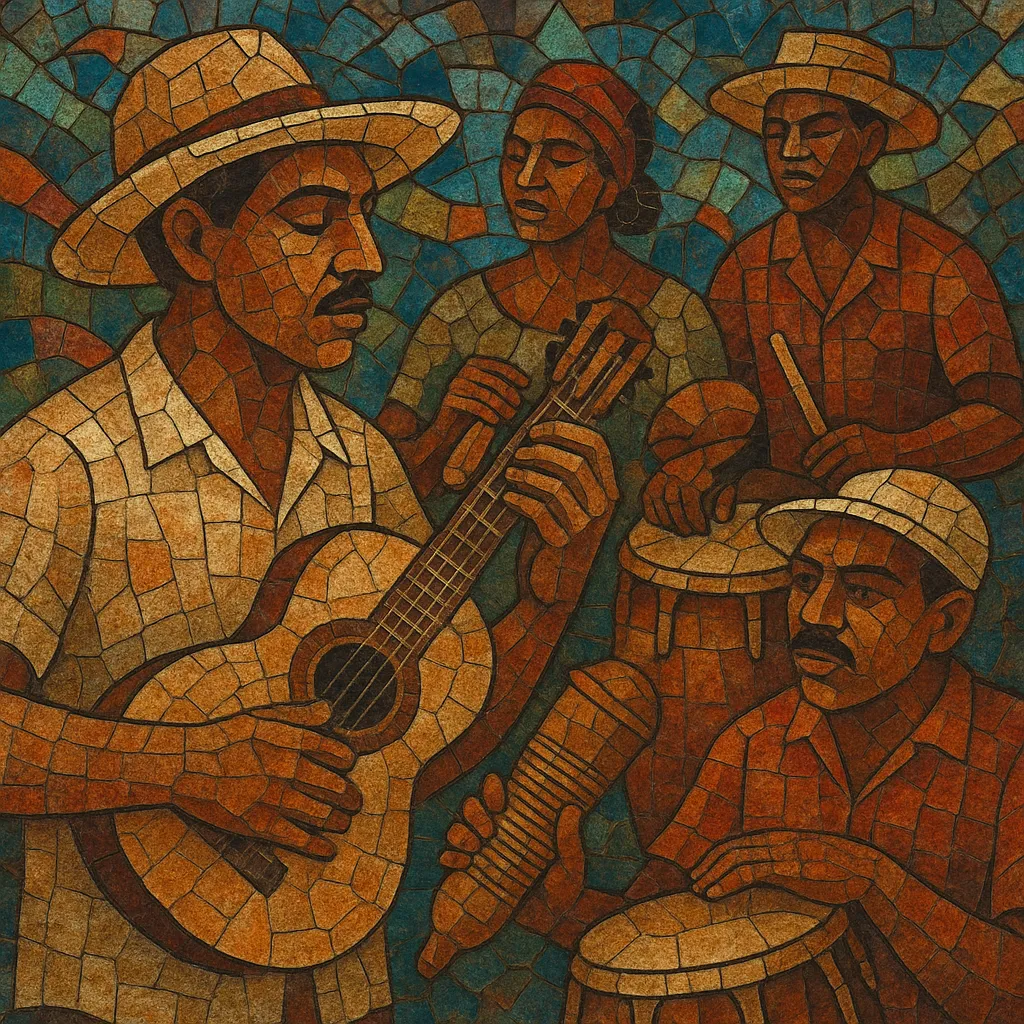
It blends Iberian poetic and harmonic traditions (décima, seis, aguinaldo, villancico) with West and Central African rhythmic languages, plus Indigenous Taíno timbral traces (e.g., güiro). Core instruments include the cuatro puertorriqueño, guitar, tiple and bordonúa; the panderos and güiro in plena; and the barriles (buleador and subidor/primo), maracas, and cua sticks in bomba.
Stylistically it ranges from narrative, stanza-based songs accompanied by simple I–IV–V harmony, to call-and-response dance music driven by syncopated, polyrhythmic percussion. Themes celebrate rural life, love, humor, social commentary, and communal identity.
History
Puerto Rican folk crystallized between the 18th and 19th centuries as Spanish settlers, free and enslaved Africans, and Indigenous descendants intermingled musical practices. In the central mountains, jíbaro communities cultivated décima singing and the seis/aguinaldo song-dance forms on stringed instruments such as the cuatro, tiple, and bordonúa—carrying forward Iberian verse structures and modal flavors while localizing timbre and rhythm.
On the coast, Afro–Puerto Rican communities forged bomba—an interactive music-and-dance tradition in which a solo dancer converses rhythmically with the lead drum (subidor/primo) over supporting barriles, maracas, and wooden cua sticks. Bomba’s patterns (e.g., sicá, yubá, holandés, cuembé) reveal deep West and Central African lineage.
Around the 1910s in Ponce, plena emerged as a "periódico cantado" (sung newspaper), carrying neighborhood news and sharp social commentary. Performed with three sizes of panderos (requinto, seguidor, and primo) plus güiro and voices, plena codified a compact, syncopated 2/4 groove and a participatory call-and-response style.
Radio and early recordings amplified jíbaro trovadores (improvising poets) and virtuoso cuatristas, helping standardize the modern 10-string cuatro. Cultural institutions and festivals after mid-century, together with school ensembles and community groups, preserved and formalized bomba and plena, while new arrangers expanded harmonic palettes.
Migration to New York and other U.S. cities seeded vibrant diaspora scenes. Groups such as Los Pleneros de la 21 connected tradition with urban stages, and ensembles like Plena Libre and Viento de Agua explored contemporary orchestrations. Today, Puerto Rican folk is simultaneously archival and innovative—taught in conservatories and community talleres, featured at patronal festivals, and fused with jazz, salsa, and popular styles while maintaining its core communal and poetic functions.