Your digging level
Description
Música jíbara is the rural mountain music of Puerto Rico, centered on the voice of the trovador and the bright, ringing sound of the Puerto Rican cuatro.
It features poetic décimas (ten-line stanzas) delivered with improvisation, alongside lively instrumental forms such as seis and festive aguinaldos during Christmas parrandas.
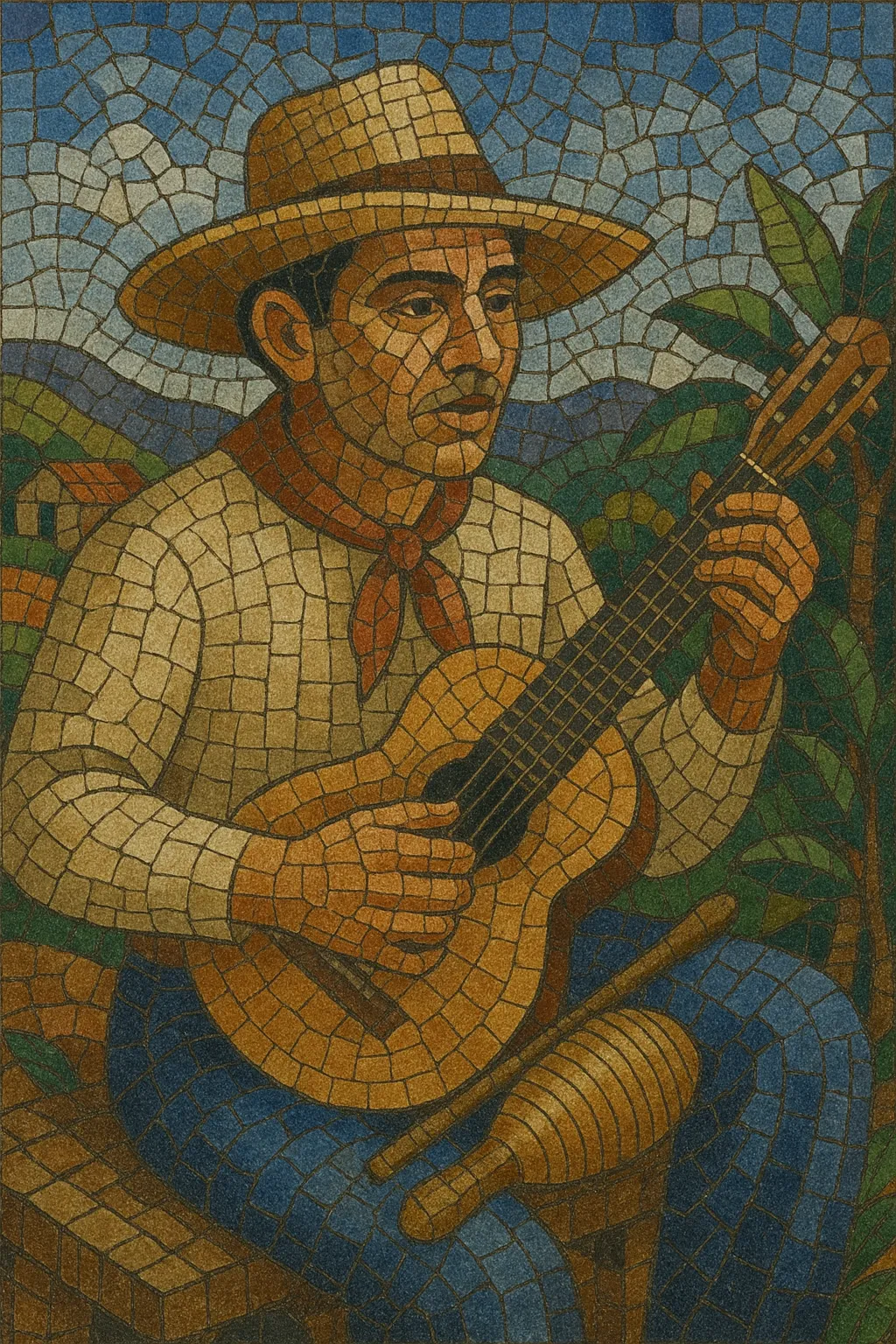
Its sound blends Iberian folk heritage (especially Canarian and Andalusian styles) with creole Puerto Rican identity, using instruments like cuatro, guitar, bordonúa, tiple, and güiro.
Common textures include strummed rhythmic accompaniment, cuatro melodic breaks (paseos), and an expressive, ornamented vocal style that moves between tender nostalgia and celebratory drive.
History
Spanish settlers—particularly from the Canary Islands and Andalusia—brought song forms such as folías, malagueñas, fandangos, jotas, villancicos, and the décima espinela to Puerto Rico. In the island’s central mountain regions, these forms were creolized into a distinct rural style associated with the jíbaro (smallholder farmer). The Puerto Rican cuatro evolved locally and became the signature lead instrument, while the trovador tradition of improvised décima singing took root in town fiestas and family gatherings.
By the early 1900s, named forms like seis (with regional variants) and the Christmas-season aguinaldo were well established. Radio and record labels documented leading trovadores and cuatristas, helping standardize performance practices and spreading the style beyond the countryside. Décima duels (controversias) became a hallmark of the culture, showcasing verbal wit and topical commentary within strict poetic rules.
Migration to the U.S. mainland fostered new audiences. The cuatro’s sound entered popular and salsa contexts—famously through collaborations that brought jíbaro color into holiday recordings and urban dance music. Meanwhile, Puerto Rican nueva canción and singer-songwriter movements drew on décima craft and jíbaro imagery to articulate cultural pride and social reflection.
Festivals, trovador competitions, and music schools continue the tradition, while virtuoso cuatristas expand the instrument’s technique. Modern artists preserve classic forms (seis, aguinaldo, décima) and also blend them with pop, salsa, and folkloric ensembles. Broadcast and digital media have revitalized controversias and seasonal parrandas, maintaining música jíbara as a living emblem of Puerto Rican identity.