Your digging level
Description
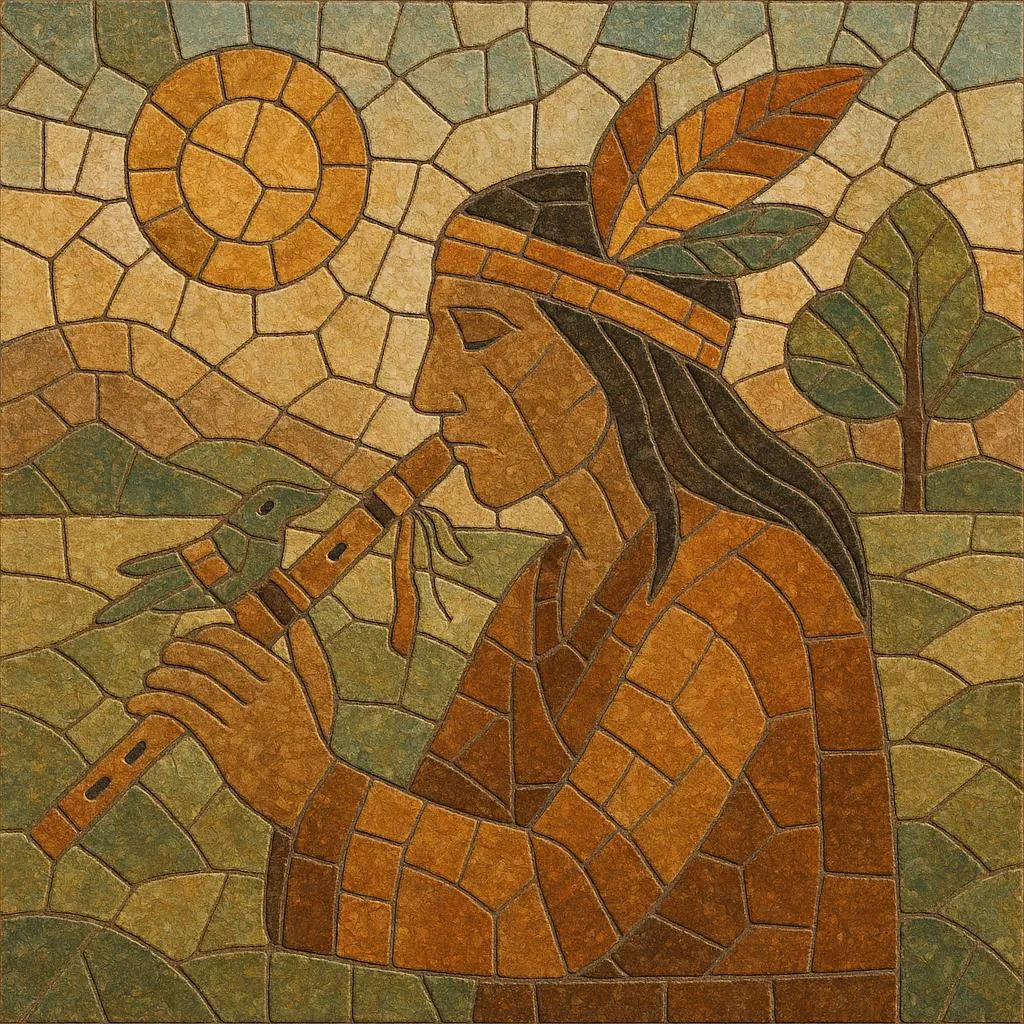
Native American flute music centers on the distinctive end-blown, two-chambered wooden flute found historically across many Indigenous nations of North America—especially the Plains and Woodlands. The instrument’s external block (or "bird") creates a mellow, breathy tone, and its most common tuning supports a minor pentatonic scale that lends a contemplative, intimate sound.
While the flute’s ceremonial, courtship, and storytelling roles stretch back centuries, the modern recorded genre coalesced in the late 20th century, when artists began to present solo flute pieces and flute-led ensembles on albums and in concert halls. Contemporary practice often blends traditional aesthetics—free-flowing, rubato phrasing and nature-evoking ornaments—with modern production, light accompaniment, and spacious reverbs associated with new age and ambient music.
History
The Indigenous end-blown flute long predates recordings and colonization, with deep roots among Plains and Woodlands nations. Historically called a "love" or "courtship" flute in some communities, it also served storytelling, healing, and personal reflection. Its characteristic tone comes from a two-chamber design and external block, enabling expressive breath control, subtle pitch inflections, and nature-evoking ornaments.
The latter 20th century saw a revitalization of flute-making and performance, aided by researchers, makers, and culture bearers. By the 1980s, landmark recordings placed solo Native flute at the center of full-length albums, helping define a modern genre identity distinct from broader “Native American music.” The instrument’s inherently modal sound and rubato phrasing resonated with new age and ambient listeners, bringing the flute to international audiences through festivals, concert halls, and specialty radio.
A wave of virtuoso performers and prolific flute makers broadened keys, tunings, and repertoire. Artists collaborated with percussionists, acoustic guitarists, string players, and subtle electronic textures, codifying an aesthetic that retained traditional phrasing while embracing studio production values. Industry recognition followed: Native-focused awards programs and category distinctions boosted visibility; educational outreach and workshops expanded community knowledge of flute-building, history, and respectful practice.
Today the genre spans solo, meditative releases; concert works with chamber ensembles; and crossovers with ambient, world fusion, and film/TV score idioms. Many artists foreground cultural continuity and language revitalization, while others emphasize sound healing and wellness contexts. Across these branches, core traits persist: breath-led rubato, minor-pentatonic lyricism, evocative ornaments (warbles, grace notes, bird-song figures), and reverberant space that invites reflection.