Your digging level
Description
Music of Pernambuco refers to the vibrant, deeply syncretic musical culture centered on Recife, Olinda, and the Zona da Mata/Agreste of northeastern Brazil.
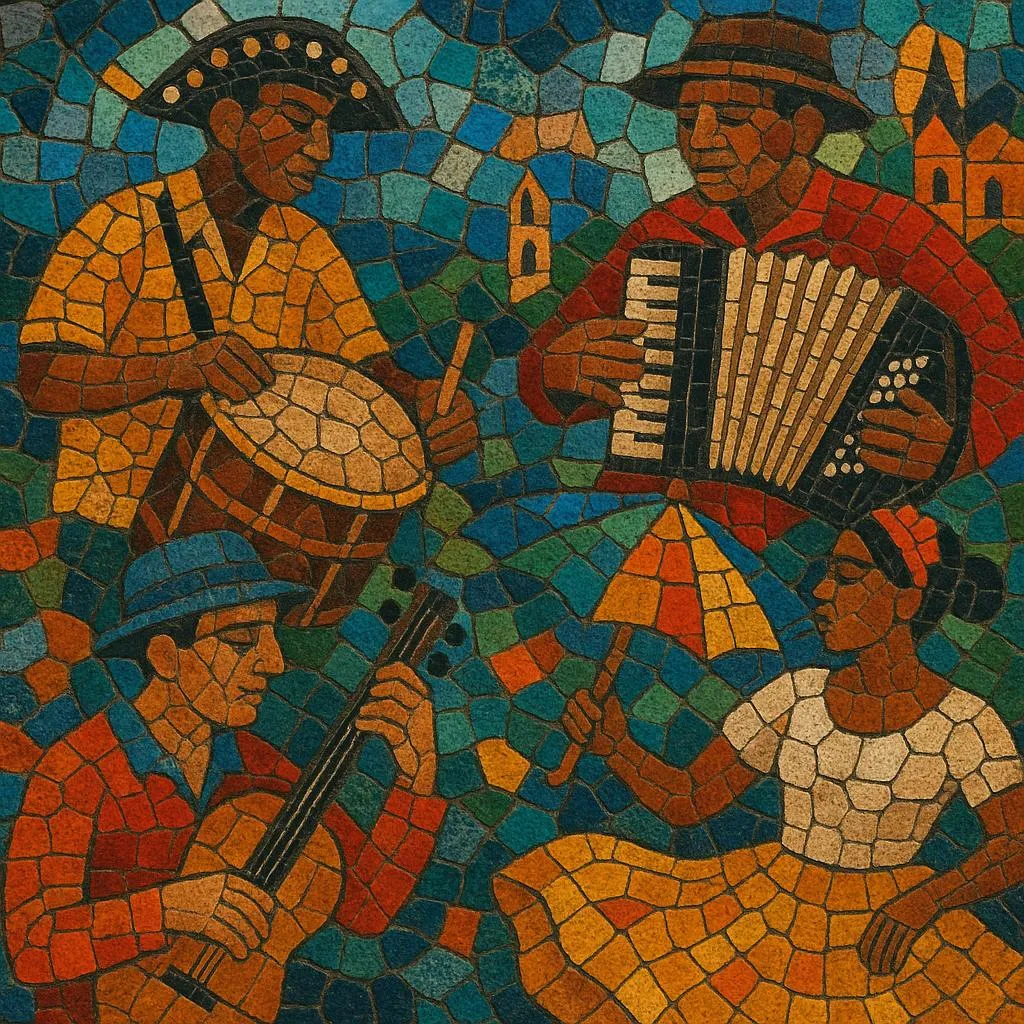
It braids Afro‑Brazilian drumming (maracatu nação, coco), Catholic and popular street festivities (frevo for Carnival), rural dance and verse-dueling forms (ciranda, embolada/repente), and forró/baião accordion traditions. Brass bands and military instrumentation turbocharge frevo’s high‑velocity marches, while large drum battalions of alfaias, gonguês, caixas, and agbês power maracatu grooves. Rabeca (folk fiddle), pifes (fifes), zabumba, triangle, and sanfona (accordion) color rural genres.
In the 1990s, Manguebeat (Chico Science & Nação Zumbi, Mundo Livre S/A) remixed maracatu rhythms with rock, hip‑hop, and funk, signaling Pernambuco’s enduring appetite for innovation. Today, Pernambuco’s sound still stretches from sacred to street, from rural to urban, and from tradition to cutting‑edge pop and club scenes.
History
Pernambuco’s musical identity formed under intense Afro‑Indigenous‑Luso contact. Afro‑Brazilian brotherhoods and courtly processions nurtured maracatu nação (with sacred links to Candomblé), while lundu and European social dances (polka, maxixe, military band repertory) filtered into local bands and parades.
Frevo exploded in Recife and Olinda’s Carnival in the 1890s, recombining brass band technique, maxixe swing, and quick‑stepping street choreography (passo). In parallel, rural expressions—coco, ciranda, cavalo‑marinho, and verse‑dueling embolada—thrived in the Zona da Mata and Agreste, foregrounding rabeca, pife ensembles, handclaps, and call‑and‑response.
From Pernambuco’s backlands and neighboring states, baião and forró (sanfona, zabumba, triangle) were popularized nationwide by Luiz Gonzaga and, later, by Dominguinhos. Their repertoire braided sertão poetics with danceable syncopations, permanently associating Pernambuco with accordion‑driven grooves.
Frevo matured in concertized and jazz‑inflected formats and entered MPB through ambassadors like Alceu Valença and Antônio Nóbrega. Street frevo, frevo de bloco (with strings/chorus), and frevo de rua (brass‑centric) coexisted with neighborhood maracatu nations.
Recife’s Manguebeat movement (Chico Science & Nação Zumbi, Mundo Livre S/A) fused maracatu drums with rock, hip‑hop, and electronic textures, projecting Pernambuco’s grooves onto global stages and inspiring a new wave of regional indie and experimental scenes.
Traditional nations of maracatu, cirandeiras, and frevo orchestras remain vital, while pop and club styles (e.g., brega funk) and contemporary frevo/big‑band projects (SpokFrevo) refresh the canon. The result is a living continuum in which Carnival, sacred drumming, rural dance, and urban innovation constantly recombine.