Your digging level
Description
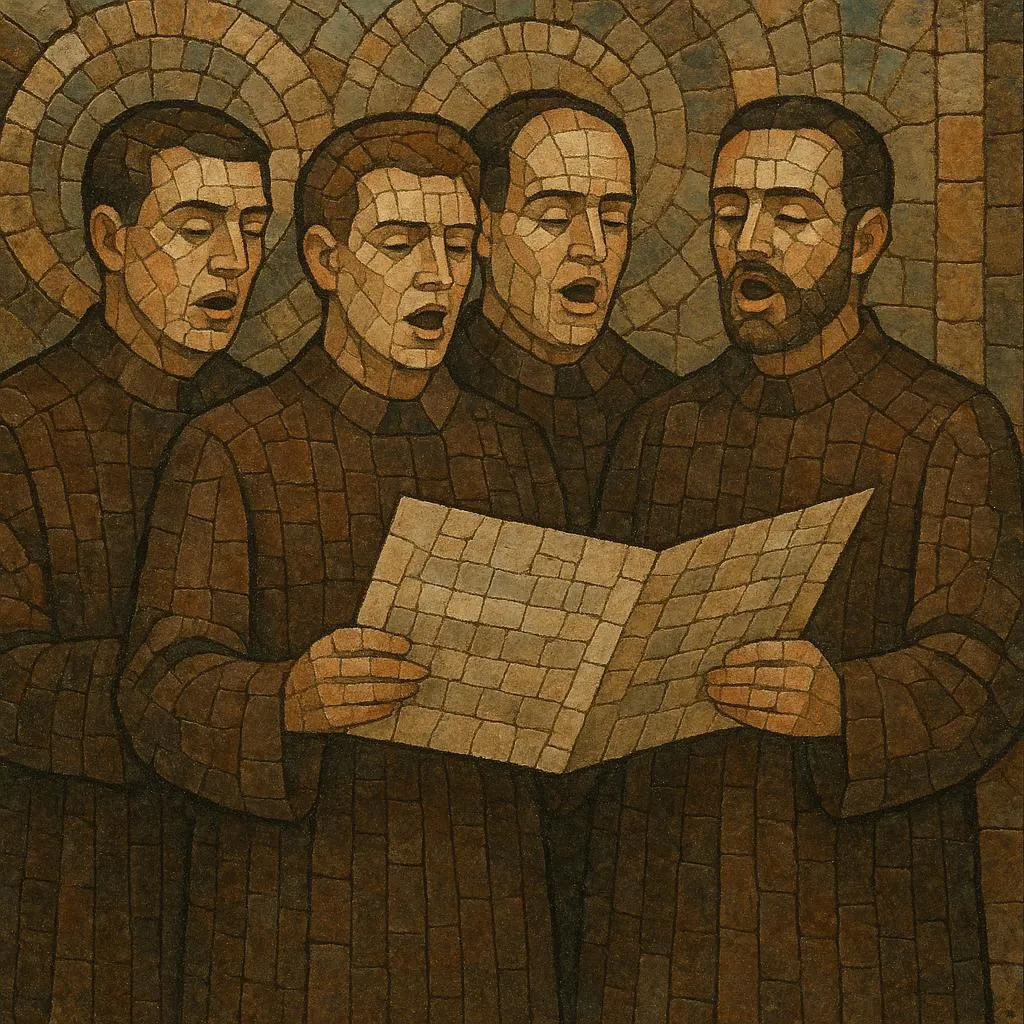
Men's choir refers to choral ensembles composed of adult low voices—typically Tenor 1, Tenor 2, Baritone, and Bass (TTBB)—that sing a cappella or with accompaniment. The sound is characterized by rich, resonant low-frequency sonorities, unified vowels, and a wide dynamic range capable of moving from intimate hymnody to large, ceremonial climaxes.
While male-only sacred choirs existed for centuries in monasteries and cathedral traditions (often with boys on the treble lines), the modern civic and concert "male voice choir" emerged in the 19th century through German Männergesangvereine and similar societies in Wales and elsewhere. Repertoire spans folk-song arrangements, hymns and anthems, patriotic and ceremonial music, romantic part-songs, operatic choruses, and contemporary commissions. Today the tradition includes professional and amateur ensembles, university glee clubs, men-and-boys church choirs, and LGBTQ+ men's choruses that expand the social and stylistic reach of the idiom.
History
Male-only singing has deep roots in monastic chant and cathedral practice, where women were historically excluded from liturgical choirs. These traditions—especially Gregorian chant and various Orthodox and Western chant lineages—established unison and organum-based approaches, text clarity, and ritual function.
The modern civic men's choir took shape in the early to mid‑1800s with the German Männergesangverein movement, encouraging community singing, musical education, and national identity. In parallel, Wales saw the rise of large male voice choirs tied to industrial and mining communities; competitive festivals (e.g., eisteddfodau) strengthened standards and visibility. Romantic composers (e.g., Schubert, Schumann, Brahms, Bruckner, Sibelius) wrote part‑songs and larger works for men's chorus, codifying TTBB voicing and the idiom’s harmonic palette.
University glee clubs in the U.S. and male choruses across Northern and Eastern Europe broadened the scene, while Orthodox and Slavic traditions sustained powerful liturgical repertoires for male voices. After World War II, Welsh choirs became cultural ambassadors, and national broadcasting widened audiences. From the late 1970s onward, LGBTQ+ men's choruses emerged, notably in North America and the UK, using choral singing for community building, activism, and contemporary repertoire—often commissioning new works and arrangements.
Today, men's choirs range from large community ensembles to elite professional groups. They perform everything from early music to jazz‑inflected arrangements and premieres by living composers. International competitions, recordings, and cross‑cultural collaborations (e.g., Nordic and Baltic male-choral traditions, Italian alpine choirs) keep the genre evolving while preserving its signature sonority and communal ethos.