Your digging level
Description
Industrial black metal is a hybrid style that fuses the icy tremolo-picked guitars, blast beats, and shrieked vocals of black metal with the mechanized rhythms, electronics, and abrasive textures of industrial and post‑industrial music.
Typical signatures include programmed or heavily processed drums, distorted or bit-crushed synthesizers, samples and noise layers, and cold, machine-like grooves placed beneath or around black metal riffing. The result emphasizes harsh timbres, dystopian atmospheres, and a mechanistic precision that replaces (or pointedly contrasts) the lo‑fi, organic rawness associated with early black metal.
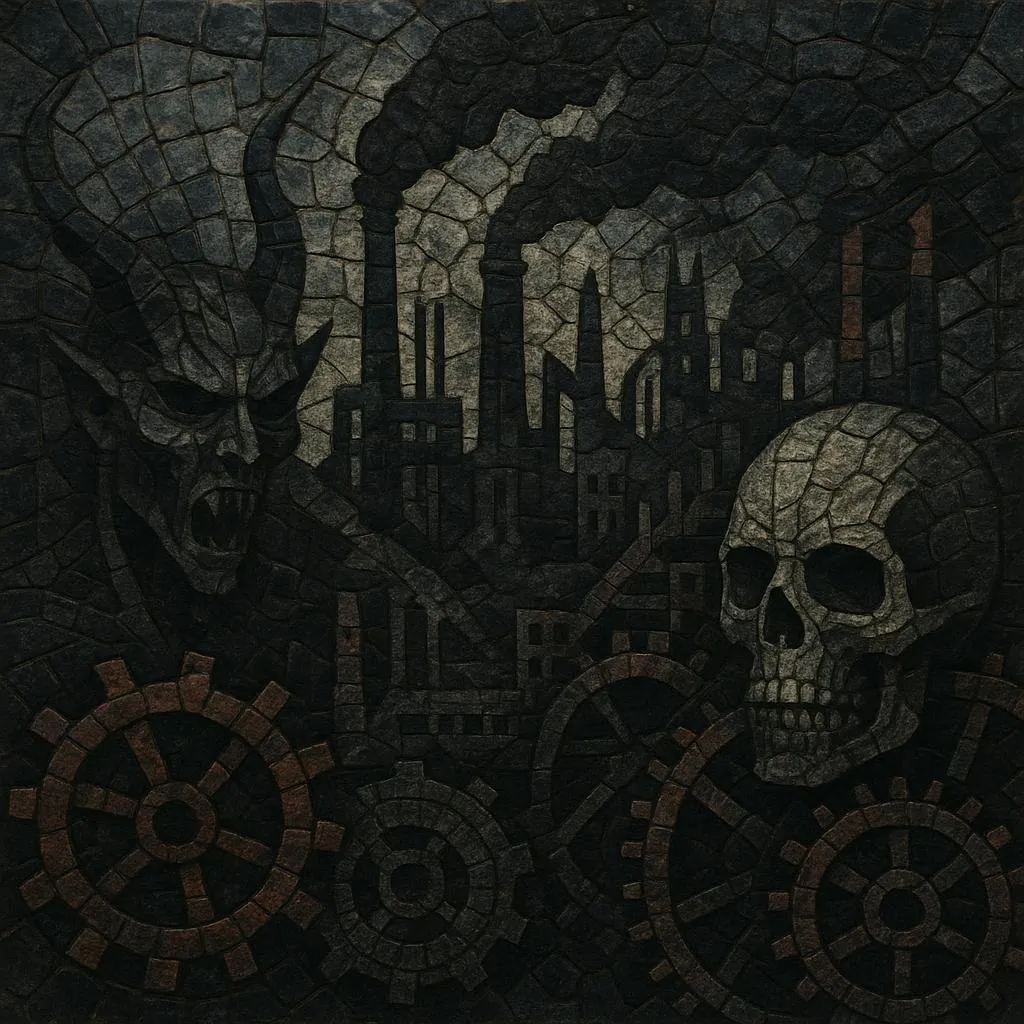
Lyrically and aesthetically, the style often explores themes of technology, urban decay, anti-humanism, cosmic nihilism, and science-fiction horror, frequently adopting cyberpunk or post-apocalyptic imagery and using visual design borrowed from industrial culture.

History
Industrial black metal coalesced in the mid–to–late 1990s, when several European bands began hard‑wiring black metal’s tremolo riffs and caustic vocals to drum machines, samplers, and harsh electronic processing. Norway proved pivotal: Mysticum’s early demos and the landmark album “In the Streams of Inferno” (1996) are frequently cited as foundational for fully integrating programmed beats and noise into a black metal chassis. Around the same time, acts like Dødheimsgard (DHG) and Thorns experimented with industrialized production, while Switzerland’s Samael pivoted from early black metal to an increasingly machine‑driven sound on mid‑90s releases. Italy’s Aborym further codified the template by welding blast‑beat ferocity to sequenced electronics and EBM‑tinged grooves.
The 2000s saw a broader European uptake. France’s Blacklodge, Spektr, and Blut Aus Nord developed distinct approaches, from martial, mechanized pulse to surreal, dissonant, and textural industrialism. The UK contributed cinematic, horror‑tinged hybrids like The Axis of Perdition, which folded in dark ambient, found sound, and soundtrack logic. Norway continued to innovate via DHG’s avant turns and The Kovenant’s sleek, club‑aware industrial metal with lingering blackened DNA. Across these scenes, drum machines, granular distortion, and sampling became integral, not merely decorative.
With DAWs and sound-design tools more accessible, the style diversified further. Artists blurred boundaries with noise, power electronics, and dark ambient, while others emphasized precision, clarity, and cybernetic aesthetics. The influence of industrial black metal can be heard in experimental black metal’s willingness to adopt electronics and in certain cinematic, sci‑fi, or cosmic strains of extreme metal. Live, many acts embraced synchronized visuals, MIDI control, and hybrid kits, reinforcing the genre’s mechanized identity.