Your digging level
Description
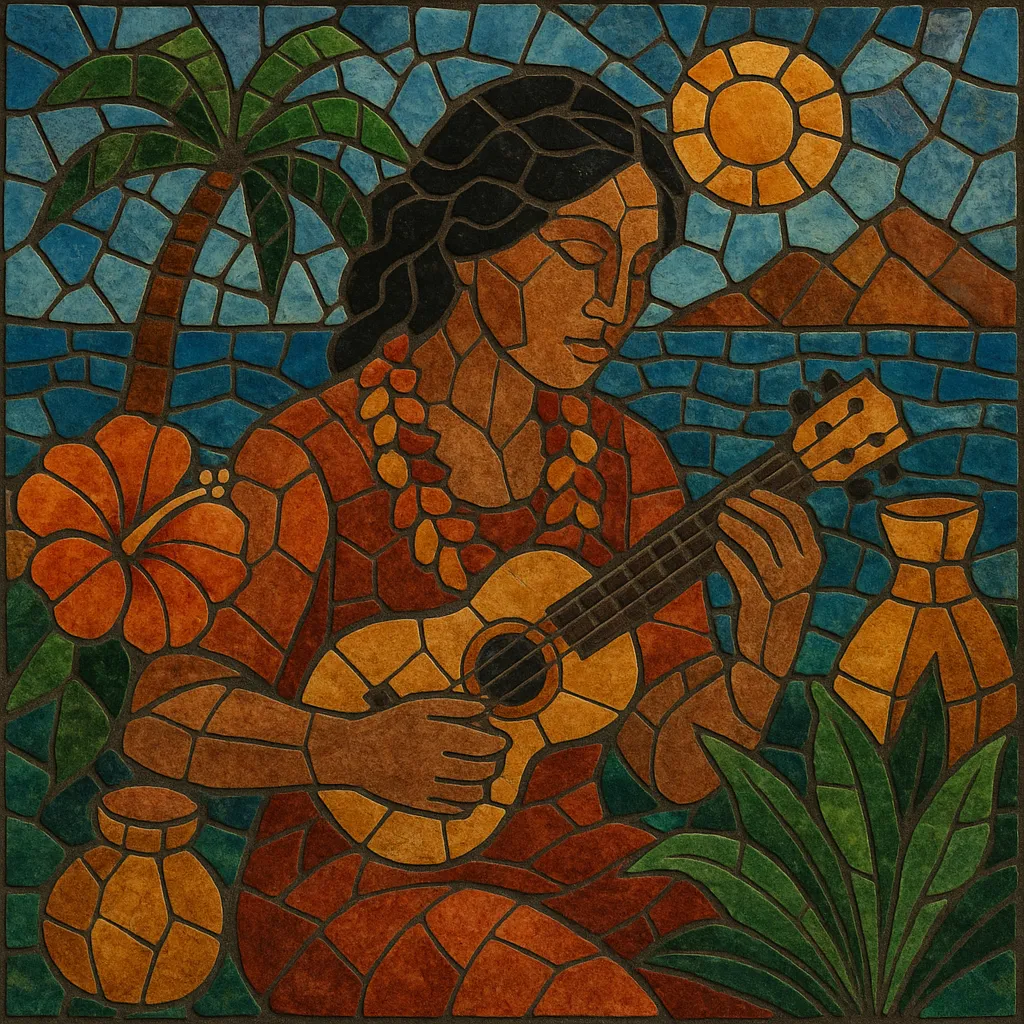
Hawaiian is a family of musical styles from the Hawaiian Islands characterized by lilting melodies, elegant vocal falsetto (leo kī‘eki‘e), and signature string timbres—especially ‘ukulele, slack-key (ki ho‘alu) acoustic guitar, and the Hawaiian steel guitar.
At its core are two complementary streams: chant-based traditions associated with hula (mele and oli, accompanied by pahu and ipu percussion), and song-based styles that fuse Indigenous Hawaiian poetics with Western harmony. Beginning in the late 19th century, Hawaiian musicians adapted guitars to open tunings and developed lap-steel techniques, creating the gliding, portamento-rich sound that became emblematic of the genre. In the 20th century, Hawaiian music ranged from intimate slack-key to “hapa haole” songs (Hawaiian-themed lyrics, often in English) and orchestral tourist-era arrangements, while maintaining a strong emphasis on place, nature, love, and aloha.
History
Indigenous Hawaiian music centers on mele (poetic texts) and oli (chant), often tied to hula and accompanied by traditional percussion like the pahu and ipu. After Western contact in the late 18th and 19th centuries, hymn singing and Western instruments entered the islands. Portuguese immigrants brought the braguinha/rajão in the 1870s, which evolved locally into the ‘ukulele. Hawaiian guitarists adopted open tunings (ki ho‘alu) and created a fingerpicked slack-key tradition.
Around the 1890s, Joseph Kekuku popularized the Hawaiian steel guitar, played horizontally with a steel bar to produce expressive slides and vibrato. Steel guitar quickly became the signature Hawaiian sound and spread worldwide after landmark exhibitions (notably the 1915 Panama–Pacific International Exposition). Hawaiian troupes toured extensively, recording prolifically; “hapa haole” songs and vaudeville/Tin Pan Alley circuits amplified its reach.
Hawaiian music became a staple of U.S. radio, hotels, and films, with crooners and big-band arrangements complementing steel and ‘ukulele. The music’s romantic imagery dovetailed with the rise of tourism. Meanwhile, slack-key guitar masters preserved intimate, family-based styles at home and on recordings.
A cultural resurgence emphasized Indigenous language, hula, and traditional forms, while revitalizing slack-key and songwriting grounded in place and history. Artists like Gabby Pahinui and The Sons of Hawaii catalyzed a deep revival. Falsetto traditions and new compositions flourished, and the ‘ukulele saw renewed prominence.
Hawaiian music remains vibrant across traditional chant, slack-key, and modern songcraft. Global hits (e.g., Israel Kamakawiwo‘ole’s ‘Over the Rainbow/What a Wonderful World’) reaffirmed its worldwide appeal. Substyles like Jawaiian (Hawaiian reggae) and crossovers with pop, folk, and jazz continue to evolve while honoring core aesthetics of melody, openness, and aloha.