Your digging level for this genre

0/8
🏆
Sign in, then listen to this genre to level up

Description

Oceania soundtrack is a film and television scoring style shaped by the landscapes, histories, and cultures of Australia, New Zealand, and the wider Pacific. It blends the classical/orchestral language of cinema with ambient electronics, post‑rock textures, and the colors of regional and Indigenous instruments.

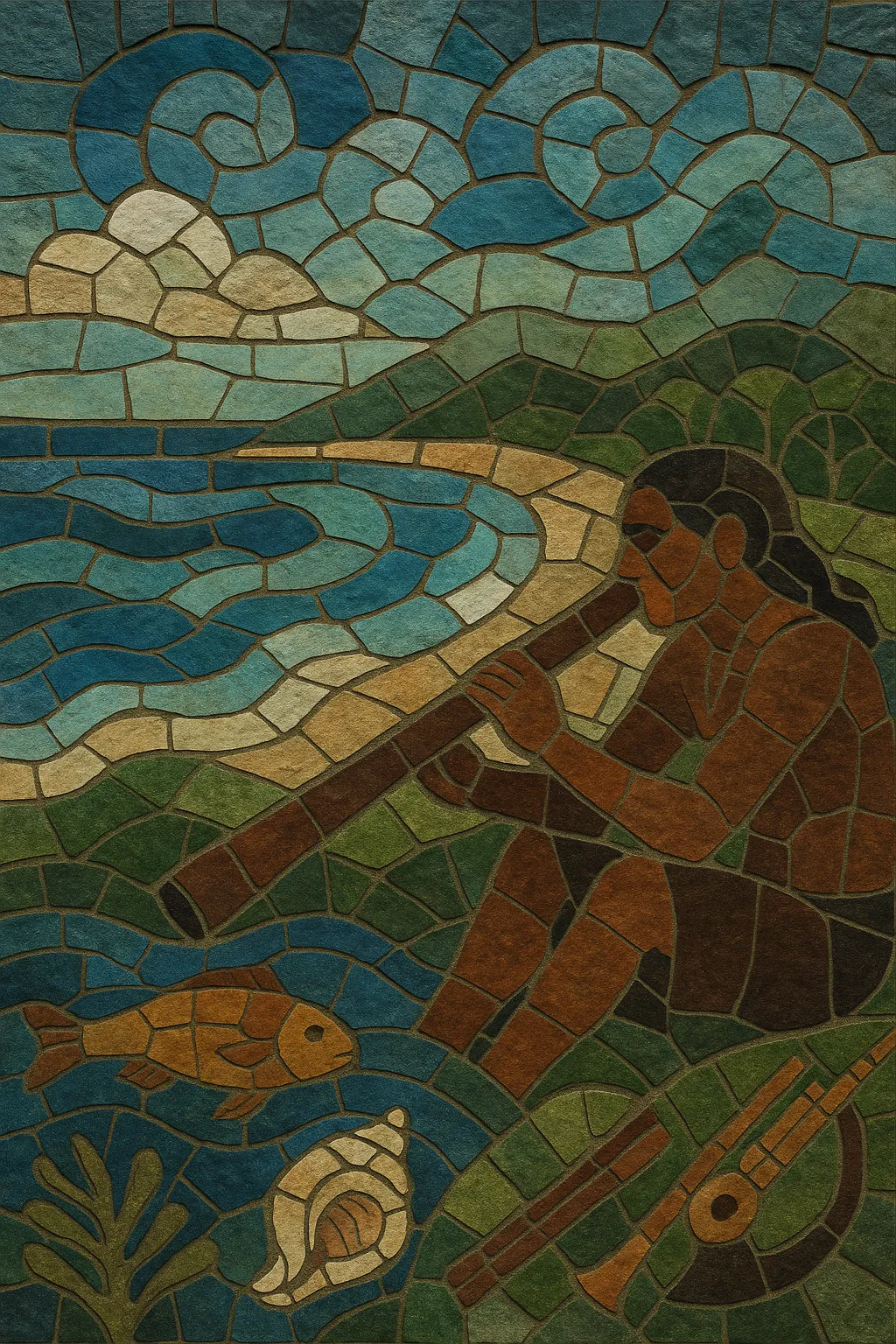
Typical palettes pair strings, winds, and percussion with didgeridoo, clapsticks, taonga pūoro (traditional Māori instruments), conch shells, Polynesian percussion, ukulele, and lap steel/steel guitar. Spacious reverb, drones, and field recordings of wind, ocean, birds, and insects evoke the region’s vast coastlines and bush, while modal writing and open voicings emphasize clarity and horizon‑like breadth.

Dramatically, Oceania soundtrack balances intimate, character‑focused cues with expansive, landscape‑driven themes. It favors melodic leitmotifs, subtle rhythmic ostinati, and organic timbres that respect and reference local traditions.

History

Beginnings (1970s)

The modern Oceania soundtrack aesthetic coalesced during the Australian New Wave of the 1970s, when a revitalized local film industry created demand for distinctive scores. Composers began fusing European film‑music tradition with the sound worlds of Australia and the Pacific, using modal writing, open textures, and environmental sonics to reflect place.

Consolidation and International Reach (1980s–1990s)

By the 1980s and 1990s, Australian and New Zealand screen music found international audiences. Scores for outback dramas and genre films popularized a blend of bold themes and atmospheric writing. Composers increasingly integrated Indigenous and regional instruments alongside orchestra and early digital synthesis, defining a spacious, elemental signature.

Diversification (2000s)

The 2000s saw broader instrumentation and production techniques. Ambient and post‑rock textures, higher‑fidelity field recordings, and hybrid orchestral/electronic workflows became common. Consultation with Indigenous artists and tradition‑bearers grew, guiding more culturally informed and respectful integrations of taonga pūoro, didgeridoo, and Polynesian percussion.

Contemporary Practice (2010s–present)

Today, Oceania soundtrack spans prestige television, cinema, and documentaries. Composers balance intimate character scoring with landscape‑scale sonics—layering orchestra, modular synths, and regional instruments. Emphasis on environmental storytelling, sustainability (location‑based sampling), and cultural collaboration remains central.

Aesthetic Traits
•   Landscape‑driven orchestration, open intervals, and drone foundations •   Hybrid acoustic/electronic textures with generous spatial processing •   Leitmotifs shaped by modal and pentatonic contours •   Respectful incorporation of Indigenous instruments and performance practices

How to make a track in this genre

Palette and Instrumentation
•   Start with a hybrid core: strings (divisi), winds, warm brass pads, piano, and granular/synth layers. •   Add regional colors thoughtfully: didgeridoo and clapsticks (Australia), taonga pūoro like pūtōrino and kōauau (Aotearoa/New Zealand), Polynesian drums, ukulele, conch shells, and lap/steel guitar for littoral hues. •   Record or source environmental beds (ocean surf, wind through trees, birdsong) to sit beneath cues.
Harmony and Melody
•   Favor modal centers (Dorian, Aeolian, Mixolydian) and pentatonic gestures; use open fifths and sustained drones to suggest vast space. •   Write clear leitmotifs with narrow intervals and stepwise motion; develop variations through timbre, register, and harmony rather than dense chromaticism. •   Employ pedal points and slow harmonic rhythm; reserve modulations for narrative milestones.
Rhythm and Form
•   Use subtle ostinati (low strings, mallets, hand percussion) at 60–100 BPM for contemplative movement; consider 6/8 or 12/8 to mimic ocean swell. •   Layer hand percussion (wood, skin, seed) for organic propulsion; avoid over‑quantization to keep a human feel. •   Structure cues around landscape shots vs. character beats: broad A–B arches with dynamic swells into aerial vistas, then thin back to solo timbres.
Texture and Sound Design
•   Blend bowed textures with evolving pads, granular washes, and tape‑like saturation; employ long pre‑delay reverbs and gentle modulation to imply distance. •   Spot‑feature Indigenous instruments rather than constant use; let them carry thematic moments with space around them. •   Side‑chain environmental beds lightly to dialogue; carve orchestral low‑mids (200–500 Hz) to keep drones uncluttered.
Production Tips
•   Capture impulse responses in real locations (halls, canyons, coastal spaces) for authentic ambience. •   Multimic acoustic instruments for re‑amping into spatial convolution; automate reverb send for camera‑matching. •   Keep headroom for theatrical mixes; deliver stems (orchestra, percussion, synths, regional instruments, FX, atmos).
Cultural Considerations
•   Consult and collaborate with Indigenous practitioners when using traditional instruments or forms; follow local protocols and permissions. •   Prioritize authenticity over pastiche: let story and place dictate when regional colors speak.

Top tracks

Locked
Share your favorite track to unlock other users’ top tracks
Influenced by
Has influenced
No genres found
Challenges
Digger Battle
Let's see who can find the best track in this genre
© 2025 Melodigging
Melodding was created as a tribute to Every Noise at Once, which inspired us to help curious minds keep digging into music's ever-evolving genres.
Buy me a coffee for Melodigging