Your digging level
Description
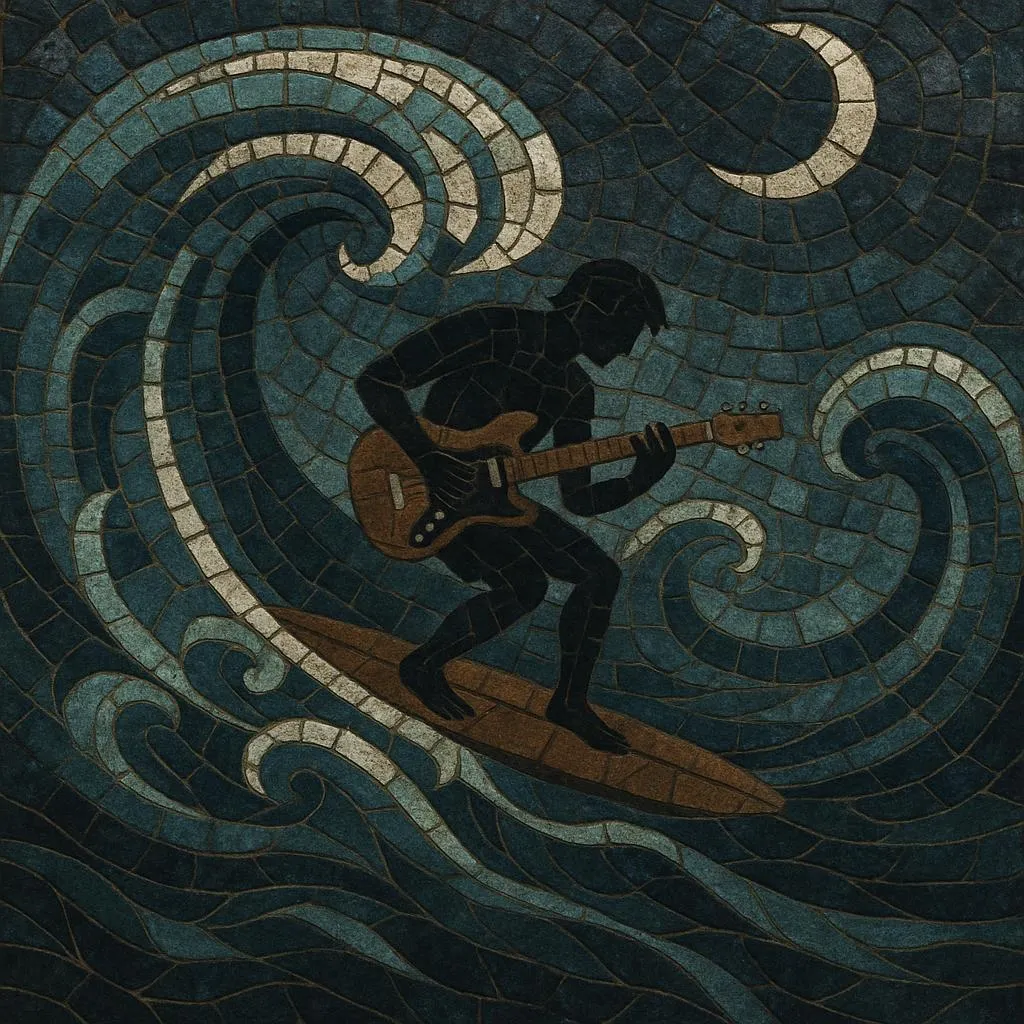
Deep surf music is a darker, more atmospheric branch of instrumental surf that amplifies the genre’s signature spring-reverb “drip,” minor-key melodies, and oceanic ambience.
Compared with the hot‑rod/party side of early surf, deep surf favors mood over speed: slower or mid‑tempo grooves, brooding chord cycles, and low‑register guitar lines that feel cinematic and underwater. You’ll hear heavy outboard spring reverb (often a Fender 6G15 tank), tremolo-picked lead lines, tom-heavy drum patterns, and bass parts that anchor the swell like a tide.
Aesthetically, deep surf overlaps with “surf noir,” tiki/exotica, and spy/suspense sounds. It retains the California surf guitar toolkit (Jaguar/Jazzmaster/Strat into big Fender amps) while embracing minor modes and modal colors (Dorian, harmonic minor, and Phrygian-dominant) for a mysterious, nocturnal surf vibe.
History
Surf guitar coalesced in Southern California around 1961–1963, defined by high‑fidelity Fender amps, outboard spring reverb, and rapid tremolo picking. Within that boom, a moodier strain emerged—players leaned into minor keys, lower registers, and heavier reverb to suggest depth, swell, and nighttime surf breaks. This darker current would later be labeled by collectors and revivalists as “deep surf.”
While classic surf could be bright and kinetic, deep surf emphasizes atmosphere: tom‑driven drum patterns, reverb‑drenched leads with lingering drip tails, and chord moves that evoke suspense and open water (i–♭VII–♭VI, modal vamping, and pedal tones). Its palette drew not only from instrumental rock and rockabilly, but also from exotica and lounge, which brought tiki textures, vibraphone/bongo colors, and cinematic arrangement ideas.
After surf’s initial fade in the mid‑1960s, a robust revival began in the 1980s and 1990s. Bands around the U.S., Europe, and beyond adopted the classic hardware (Fender offsets, reverb tanks, Showman/Twin stacks) and pushed deeper into minor‑key atmospherics, sometimes blending ambient/post‑rock expanses or spy/thriller orchestrations. Festival circuits, boutique labels, and internet communities helped codify “deep surf” as a recognizable tag within the broader surf ecosystem.
Deep surf thrives as a connoisseur’s subset of surf: reverb-forward, cinematic, and often instrumental. Contemporary acts worldwide continue to explore its twilight moods—equally at home in tiki bars, art cinemas, and guitar-gear meetups—preserving the drip while expanding the harmonic and textural language.