Your digging level

For this genre
0/8
🏆
Sign in, then listen to this genre to level up

Description

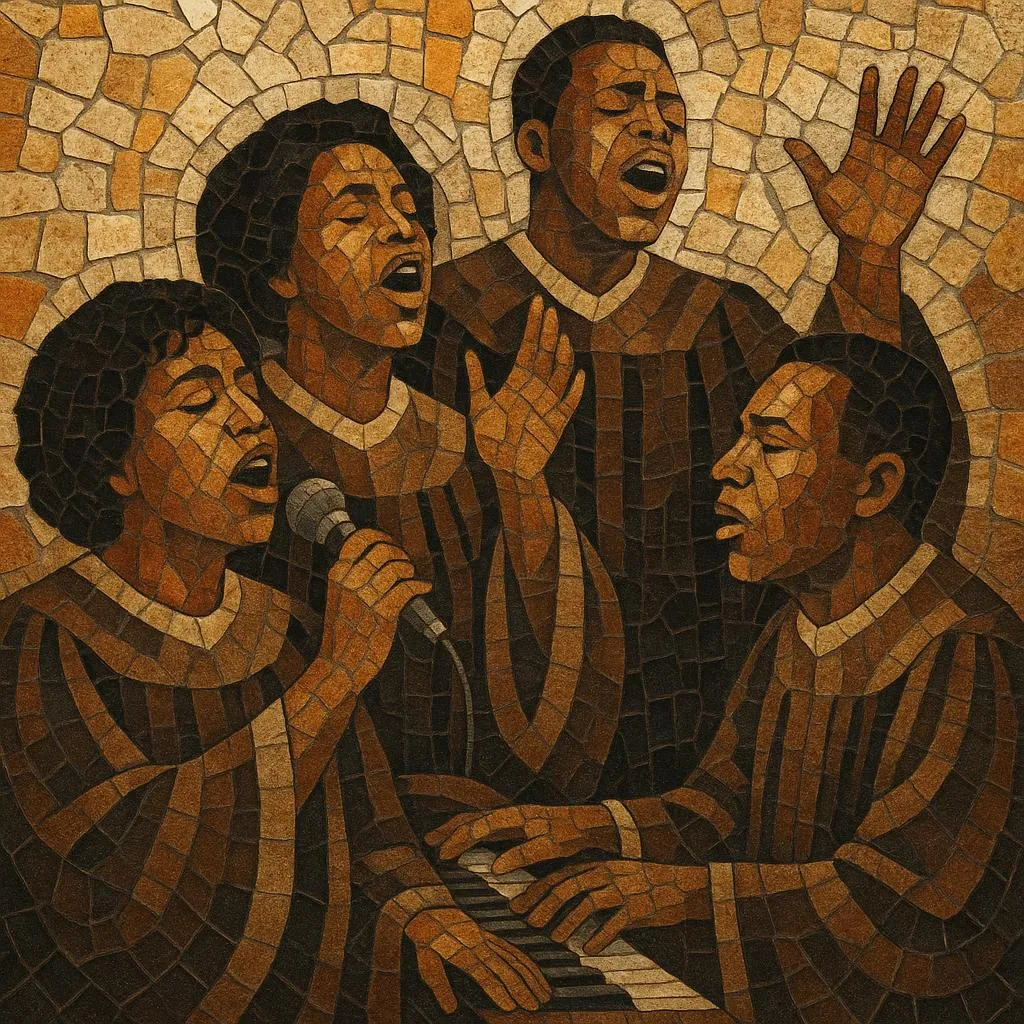
“Gospel singers” refers to the vocal-centered strand of the American gospel tradition, led by soloists, duos, quartets, and choirs whose performances spotlight powerful leads, rich harmony, and call-and-response.

This style ranges from early jubilee quartets and jubilee-style ensembles to storefront-church soloists and professional touring groups. Arrangements are often a cappella or backed by piano/organ, handclaps, and later rhythm sections, with expressive melisma, improvised ad‑libs, and dramatic modulations. Lyrically, it proclaims faith, testimony, comfort, and perseverance.


Sources: Spotify, Wikipedia, Discogs, RYM, MB, user feedback and other online sources

History

Origins (late 19th–early 20th century)

Gospel singing grew out of African American spirituals, hymnody, and the jubilee quartet tradition, especially as university and community ensembles popularized close-harmony “jubilee” repertoire on tours. Church-based soloists and small groups blended testimony and improvisation with formal hymn structures.

Recording era and the Quartet Golden Age (1920s–1950s)

With the rise of the recording industry and radio, professional ensembles and church groups brought gospel singing to national audiences. Tight four-part harmony, bass leads, and nimble falsetto became hallmarks, while call-and-response and handclaps added congregational energy. Touring circuits, conventions, and live broadcasts cemented a vibrant, competitive scene.

Crossover and Civil Rights era (1950s–1970s)

Gospel singers deeply influenced rhythm & blues, doo‑wop, soul, and early rock & roll through vocal style, harmonic language, and performance intensity. Some stars transitioned to secular music, while others remained church-focused yet reached wider audiences through television and large concert stages, providing a spiritual soundtrack to the Civil Rights movement.

Contemporary developments (1980s–present)

Modern gospel singers embrace full band arrangements, contemporary R&B harmony, and sophisticated studio production while retaining improvisation, modulations, and testimonial lyric themes. Choirs, family groups, and soloists coexist with a cappella traditions, sustaining a lineage that connects storefront churches to global stages.

How to make a track in this genre

Core vocal approach
•   Use a dynamic lead voice supported by harmony parts (often SATB or TTBB). The lead testifies and ad‑libs; the group responds with refrains or “backgrounds.” •   Employ melisma, slides, and expressive vibrato; cultivate call‑and‑response between lead and ensemble or congregation.
Harmony and form
•   Build on diatonic I–IV–V foundations with gospel colors (added 6ths/9ths, secondary dominants). Common cadences: IV–V–I and vamping turnarounds. •   Plan a dramatic arc: verses lead to a repeated chorus; intensify with a vamp that can lengthen via ad‑libs and modulations (often up a semitone or whole step) near the finale.
Rhythm and groove
•   Tempos range from slow, devotional ballads to mid/uptempo shouts. Classic feels include 12/8 sways, 4/4 backbeats, and handclaps on 2 & 4. •   Syncopation and anticipations lift the melody; tambourine accents can punctuate cadences and vamps.
Lyrics and message
•   Center lyrics on faith, testimony, salvation, consolation, and perseverance. Use memorable, easily repeated refrains to invite audience participation.
Instrumentation and arranging
•   Traditional: a cappella or piano/organ plus handclaps and tambourine. •   Contemporary: add bass, drums, guitar/keys, and sometimes horns; keep instruments supportive of the lead and choir. •   Arrange dynamics in waves: start intimate, build through modulations and stacking harmonies, resolve with a strong unison or full-voiced cadence.
Rehearsal and performance practice
•   Drill blend, diction, and balance; keep the lead prominent without burying harmonies. •   Rehearse flexible vamps and cue-based endings so the lead can extend sections as the spirit moves.

Top tracks

Locked
Share your favorite track to unlock other users’ top tracks

Upcoming concerts

in this genre
Influenced by
Has influenced

Download our mobile app

Get the Melodigging app and start digging for new genres on the go
© 2026 Melodigging
Melodding was created as a tribute to Every Noise at Once, which inspired us to help curious minds keep digging into music's ever-evolving genres.
Buy me a coffee for Melodigging