Your digging level
Description
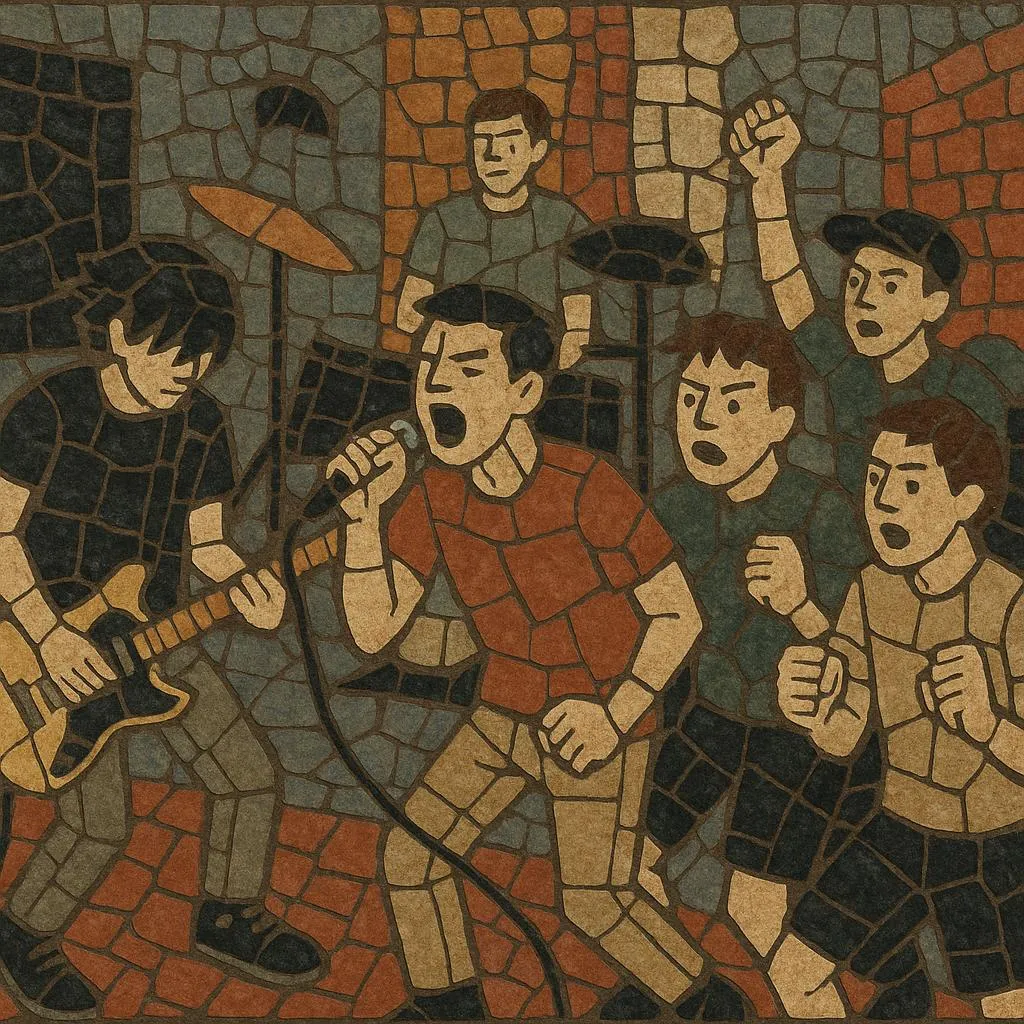
DIY pop punk is a melodic, fast, and hook-driven strain of punk rock built on the do‑it‑yourself ethic: writing songs quickly, recording on a shoestring, self-releasing records, and touring basements, community spaces, and small clubs.
Musically, it pairs the economy and downstroke drive of classic punk with earworm power‑pop melodies, gang vocals, and short song lengths—often two to three minutes. The recordings typically favor immediacy over polish (4‑track cassette, cheap digital setups, live-in-the-room energy), while lyrics lean toward everyday life, friendship, touring, romance, and playful humor.
Culturally, the genre is sustained by zines, small labels, tape trades, message boards, and Bandcamp-era micro-scenes, encouraging inclusivity, affordability, and a participatory fan‑artist relationship.

History
DIY pop punk grew from the first wave punk ethos, applying the homemade ethic to increasingly melodic, pop-structured songs. U.S. and UK underground networks—house shows, photocopied zines, and cassette culture—laid the groundwork for bands to write catchy, two-minute songs and release them on tiny labels.
The 1990s saw a boom in small imprints and mail-order distros that championed melodic, Ramones-inspired pop punk recorded cheaply and distributed widely by post. Community-focused labels and regional scenes (college towns, Midwestern basements, Bay Area DIY) created a touring circuit where bands could exist outside mainstream industry structures.
With online forums and blogs, DIY pop punk became more globally connected. Affordable home recording and CD‑R runs let bands rapidly release splits and 7"s. U.S. and European micro-scenes—supported by festivals and label co-ops—traded bands and compilations, cementing a transatlantic network of tape labels, lathe‑cuts, and hand-stamped vinyl.
Bandcamp and social media further reduced gatekeeping: bands premiered demos, zines bundled download codes, and labels coordinated international pressing swaps. The live ecosystem remains focused on all-ages spaces, community centers, and small clubs, while the sound stays fast, bright, and harmony-heavy—proof that high energy and big hooks don’t require big budgets.




Top albums