Your digging level
Description
Punk 'n' roll is a music genre that combines the speed, attitude, and stripped-down aggression of punk rock with the groove, swing, and back-to-basics riffs of classic rock 'n' roll.
Songs are typically built on simple, driving chord progressions, loud guitars, and a swaggering rhythmic feel that nods to early rock, garage rock, and blues-based rock.
The style emphasizes raw performance energy, gritty vocals, and a party-ready, rebellious atmosphere rather than polish or technical virtuosity.



History
Punk 'n' roll draws from the earliest overlap between punk’s speed and rock 'n' roll’s riff-and-groove foundation, especially garage rock and the raw end of 1950s–1960s rock.
The genre is most closely associated with the 1990s, when bands pushed punk rock toward a louder, dirtier, more rock 'n' roll-oriented sound, often borrowing boogie rhythms and classic riff shapes.
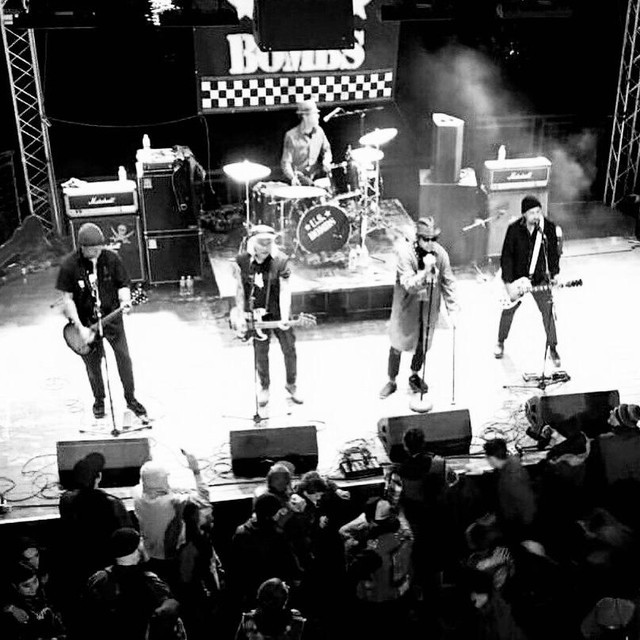
In the 2000s, punk 'n' roll became strongly identified with high-energy club shows and touring circuits, with many bands leaning into swaggering choruses, singalong hooks, and a deliberately unpolished sonic aesthetic.
Punk 'n' roll continues as a cross-scene style, appearing in punk, garage, and hard rock contexts, and often functioning as a “back to the bar-room basics” alternative to more technical punk substyles.
Use a classic rock band setup: electric guitar (often 1–2), electric bass, drum kit, and vocals.
Add occasional extras (tambourine, handclaps, simple lead licks) to boost the rock 'n' roll feel, but keep the core sound raw.
Write at fast-to-mid tempos (often around 140–200 BPM), using straight 4/4 punk drive.
Blend in rock 'n' roll/boogie movement by emphasizing a steady backbeat (snare on 2 and 4) and adding eighth-note pulse or shuffle-like energy without becoming fully swung.
Build songs from simple progressions (I–IV–V, i–bVII–IV, or power-chord sequences) and memorable riffs.
Favor power chords, bluesy pentatonic leads, and short, punchy hooks over complex harmony.
Use direct structures: verse–chorus–verse–chorus–bridge–chorus, with brief intros and outros.
Keep sections short and dynamic; aim for strong choruses that can be shouted back live.
Choose crunchy, saturated guitar distortion that still retains pick attack.
Keep arrangements uncluttered; avoid heavy layering and prioritize “live in the room” energy.
Deliver vocals with grit and attitude, often in a sneer or shout-sing style.
Write lyrics about rebellion, nightlife, trouble, freedom, humor, and swagger; keep phrasing direct and catchy.
Play tightly but aggressively, with forward momentum and stage presence.
Make the groove feel physical: consistent downstrokes, locked bass-and-kick, and big, simple crowd cues (chants, call-and-response choruses).