

Your digging level

For this genre
0/8
🏆
Sign in, then listen to this genre to level up

Description

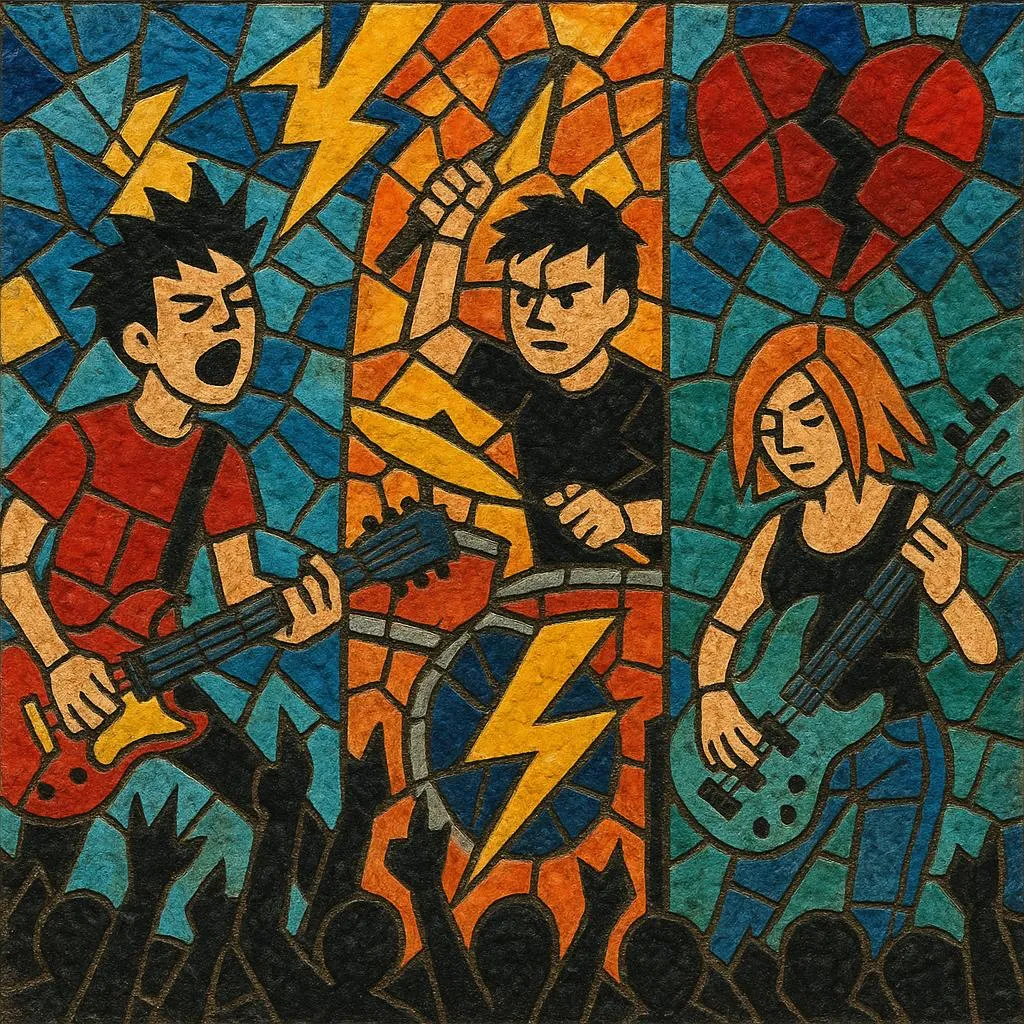
Power‑pop punk is a hook-obsessed, high‑energy hybrid that welds the sugar‑rush melodies and harmonies of classic power pop to punk’s speed, brevity, and overdriven bite.

Songs typically clock in under three minutes, lean on bright power‑chord guitars, ringing leads, and tight vocal stacks, and favor instantly memorable choruses over instrumental excess. Lyrically, it gravitates toward adolescent crushes, romantic frustration, and everyday life, delivered with a mix of urgency and bittersweet charm.


Sources: Spotify, Wikipedia, Discogs, RYM, MB, user feedback and other online sources

History

1970s: Foundations

Power‑pop punk coalesced in the late 1970s as UK and Irish punk bands folded strong pop craft into their attack. Groups like Buzzcocks and The Undertones wrote compact, harmony‑rich songs with punk tempos, while peers such as The Boys emphasized anthemic, Beatles‑aware hooks within a punk framework. In the U.S., power‑pop outfits from the mid‑to‑late ’70s (e.g., The Nerves and their LA circle) supplied a template of taut songwriting and bright guitars that punk scenes eagerly adopted.

1980s–1990s: Underground continuity

Though never a chart‑dominant tag, the style persisted via regional punk and indie circuits (Belfast’s Good Vibrations scene; UK mod/power‑pop crossovers; American DIY power‑pop/punk cross‑pollination). Its hallmarks—concise forms, ringing guitars, and lovesick themes—continued to inform punk‑adjacent singles and compilations, keeping the hybrid’s vocabulary in circulation.

2000s: Revival and codification

A turn‑of‑the‑century revival—most vividly epitomized by The Exploding Hearts—reasserted the aesthetic: vintage‑minded hooks performed with scruffy punk immediacy. Reissues and archival projects for ’70s/’80s bands (The Nerves, The Shivvers, etc.) further cemented a historical throughline between power pop and punk.

2010s–2020s: Ongoing influence

The style’s DNA remains audible across modern pop‑punk, indie‑punk, and “neon”/radio‑friendly punk variants: crisp production, gang vocals, and bright, major‑key choruses delivered at brisk tempos. Contemporary bands continue to mine late‑’70s melodicism while keeping punk’s economy and momentum at the core.

How to make a track in this genre

Song form and tempo
•   Aim for 2:00–3:00; verse–chorus–verse–chorus–bridge–final chorus is common. Keep intros short, and hit the hook within 30–45 seconds. •   Tempos typically sit around 140–190 BPM: brisk enough for punk momentum, slow enough for enunciated, sing‑along hooks.
Harmony and melody
•   Favor bright, diatonic progressions (I–IV–V, I–V–vi–IV, I–vi–IV–V). Use secondary dominants or quick key lifts for chorus lift. •   Write vocal melodies that outline triads, land on chord‑tones, and resolve cleanly. Layer simple thirds/fifths for stacked choruses and “whoa‑oh” tags.
Guitar, bass, and drums
•   Guitars: cranked but clear—compressed overdrive, minimal fuzz. Combine tight down‑stroked power chords with chiming arpeggios or double‑stop leads. Short hook riffs before the vocal re‑enter help cement the chorus. •   Bass: driving eighths that outline roots and occasional passing tones; lock with kick to propel transitions. •   Drums: punchy, no‑frills backbeat (2 and 4). Use rapid eighth‑note hats or open‑hat lifts into choruses; sparing fills that set up hooks.
Lyrics and delivery
•   Themes: crushes, jealousy, missed calls, parties, weekend scenes—personal over political, confessional over abstract. •   Keep lines conversational and rhythmic; deploy internal rhyme and alliteration to make hooks stick.
Arrangement and production
•   Double the lead vocal in choruses and add simple harmonies; gang shouts work for turnarounds. •   Keep arrangements lean (two guitars, bass, drums, lead + backing vox). Prioritize punch, separation, and a bright top end so guitars and vocals carry the tune.

Top tracks

Locked
Share your favorite track to unlock other users’ top tracks

Upcoming concerts

in this genre
Influenced by
Has influenced

Download our mobile app

Get the Melodigging app and start digging for new genres on the go
© 2026 Melodigging
Melodding was created as a tribute to Every Noise at Once, which inspired us to help curious minds keep digging into music's ever-evolving genres.
Buy me a coffee for Melodigging

