

Your digging level for this genre

0/8
🏆
Sign in, then listen to this genre to level up

Description

Cape Verdean folk is the traditional music of the Cape Verde islands, sung primarily in Cape Verdean Creole (Kriolu) and shaped by a creole blend of West African rhythms and Portuguese/Atlantic European song and dance forms.

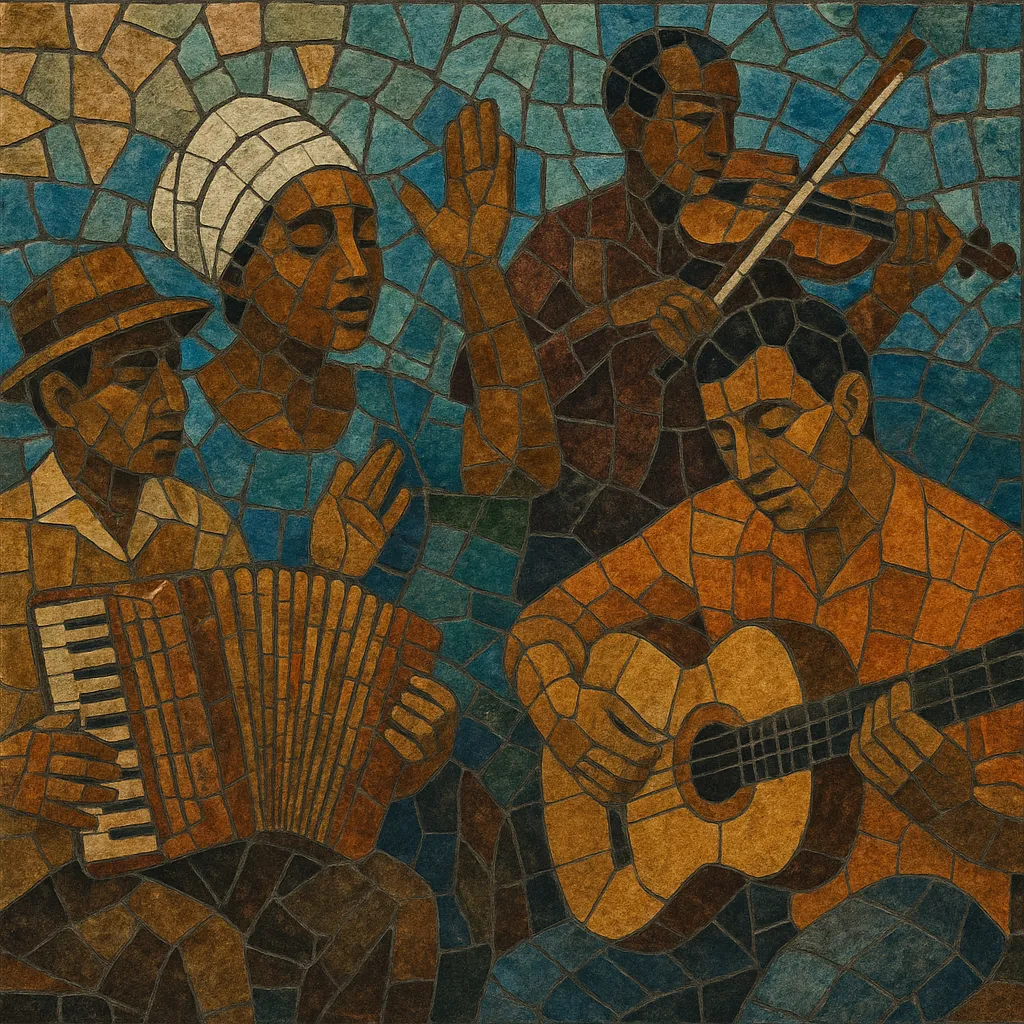
It encompasses a family of styles, most famously morna (slow, minor-key and poetic), coladeira (lively, satirical 2/4), funaná (fast accordion-driven dance with the ferrinho scraper), batuque (polyrhythmic call-and-response led by handclaps and drumming), and tabanka/colá (festive processional music linked to community rituals). Typical instruments include guitar/violão, cavaquinho, violin, clarinet/saxophone, piano, diatonic accordion (gaita), ferrinho, frame drums, and hand percussion.

The genre’s emotional core pivots between the intimate “sodade” (longing) of morna and the joyous dance energy of coladeira and funaná, reflecting centuries of seafaring, migration, and island life.

History

Origins (19th century)

Cape Verdean folk crystallized in the 1800s out of centuries of contact between West African traditions (brought by enslaved and free Africans) and Portuguese/Atlantic European song and dance. African circle dances and polyrhythms informed batuque and tabanka, while European ballroom forms like the mazurka, polka, and waltz, alongside Portuguese fado and the Afro‑Lusophone lundu, helped shape the song craft and harmonies that became morna and coladeira.

Early composers and classic styles (late 19th–mid 20th century)

By the late 1800s, morna had taken recognizable form on islands such as Boa Vista and Brava. Poets/composers like Eugénio Tavares and later B. Leza enriched morna with sophisticated harmonic movement and chromatic passing chords. Parallel traditions flourished: coladeira for witty, upbeat social commentary; batuque for communal, call‑and‑response drumming; and festal processional forms such as tabanka/colá tied to local calendars.

Diaspora, independence, and revival (1960s–1990s)

Migration spread Cape Verdean music to Lisbon, Rotterdam, New England, and beyond. Urban bands added clarinet, saxophone, and piano to the guitar/cavaquinho core, while funaná—long marginalized—re-emerged powerfully through players like Codé di Dona. Following independence in 1975, folk idioms became emblems of national identity, nurtured by local radio, festivals, and community groups.

Global recognition and contemporary developments (1990s–today)

Cesária Évora’s international success in the 1990s brought morna’s intimate poise to global stages, catalyzing interest in the broader folk palette. Modern artists blend folk with jazz, pop, and Lusophone dance currents (zouk/kizomba), while heritage ensembles safeguard batuque, tabanka, and colá. Today, Cape Verdean folk thrives both at home—on stages and street festivals—and across the diaspora, balancing preservation and innovation.

How to make a track in this genre

Core instrumentation
•   Morna/coladeira: voice, acoustic guitar (violão), cavaquinho, violin, clarinet/saxophone, and optionally piano/strings. Keep textures intimate; guitar arpeggios and cavaquinho comping are central. •   Funaná: diatonic accordion (gaita) leads with driving right-hand riffs; the ferrinho (scraped iron bar) locks a sharp, off‑beat groove. Add bass and light percussion for modern settings. •   Batuque/tabanka: handclaps, frame drums, and call‑and‑response vocals; emphasize polyrhythm and communal energy.
Rhythm & groove
•   Morna: slow (often 3/4 or lilting 6/8), gentle swing, subtle rubato; think heartbeat tempo with a sighing pickup into phrases. •   Coladeira: sprightly 2/4 with light syncopation; guitar or cavaquinho patterns emphasize upbeat strums, supporting witty, conversational vocals. •   Funaná: fast 2/4, accentuated off‑beats from ferrinho and propulsive accordion ostinati; keep drums tight, with snare/hi-hat driving dance energy. •   Batuque: layered handclap patterns (often in two-beat cycles) underpin antiphonal vocals; let groove and dynamics grow organically.
Harmony & melody
•   Morna favors minor tonalities and bittersweet inflections; use circle-of-fifths motion, secondary dominants, and borrowed chords (parallel major/relative major) for color. B. Leza–style passing chords and chromatic voice-leading enrich cadences. •   Coladeira leans on diatonic progressions (I–IV–V with tasteful II/V turnarounds) and bright dominant extensions; keep voicings open and buoyant. •   Melodies are lyrical and ornamented (slides, appoggiaturas, gentle melismas), with careful word-setting to match Kriolu prosody.
Lyrics & themes
•   Write in Cape Verdean Creole if possible. Evoke “sodade” (longing), the sea, islands, migration, love, and everyday stories. Coladeira can be playful or satirical; batuque/tabanka emphasize collective voice and social bonds.
Arrangement & performance tips
•   Prioritize intimacy: spacious tempos, breathing room, and conversational phrasing. •   Use dynamic swells into refrains; in morna, allow the singer rubato over steady accompaniment. •   For dance styles (coladeira/funaná), keep bass and percussion tight but not heavy; let accordion/cavaquinho articulate rhythmic hooks. •   Record with warm, natural tones; minimal processing suits the acoustic character.

Top tracks

Locked
Share your favorite track to unlock other users’ top tracks
Influenced by
Has influenced
Challenges
Digger Battle
Let's see who can find the best track in this genre
© 2025 Melodigging
Melodding was created as a tribute to Every Noise at Once, which inspired us to help curious minds keep digging into music's ever-evolving genres.
Buy me a coffee for Melodigging
